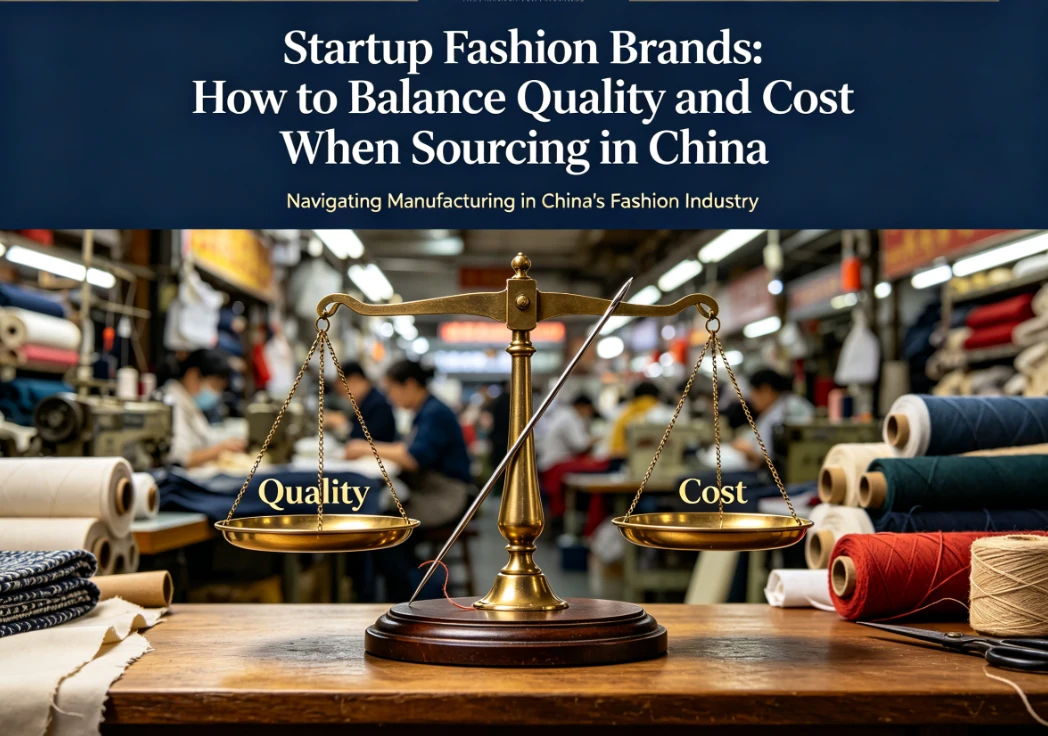
For startup fashion brands, sourcing in China is always a tough balancing act. Go for top-tier quality, and production costs go up, squeezing your margins. Chase low prices, and you risk flawed products, bad reviews, and a damaged reputation.
Unlike established fashion labels with big budgets and stable supply chains, startup fashion brands have limited cash, small order volumes, and unpredictable demand. Finding that sweet spot between quality and cost is what will help you survive and grow in the early stages.
China’s apparel supply chain offers great options for emerging brands. You’ve got low-budget mass production, boutique-level craftsmanship, and flexible small-batch customization. That means startup fashion brands have real choices. But here’s the problem: many new brand owners lack industry experience. They either spend too much on unnecessary high-end materials and bleed cash, or they pick ultra-cheap factories and end up with inconsistent quality. Without a smart sourcing strategy, balancing quality and cost can become the biggest hurdle for startup fashion brands.
In this practical guide, I’ll break down why most new fashion brands fail at this, and share actionable, startup-friendly solutions. You’ll learn how to control sourcing costs while keeping product quality stable—protecting your brand image and maximizing early profits.
Why Startup Fashion Brands Struggle to Balance Quality and Cost
The imbalance for most startup fashion brands comes down to flawed sourcing logic, not a lack of budget. A lot of new entrepreneurs go to extremes.
Some think high price equals high quality. They go all-in on premium fabrics and complex craftsmanship for trial orders. That leads to excessive early spending and wasted capital.
Others focus only on low unit prices to cut costs. They ignore the hidden risks: inferior materials, rough stitching, color fading, and batch variations.
On top of that, startup fashion brands usually place small trial orders and don’t have long-term factory relationships. Most medium and large factories prioritize bulk orders. They offer little flexibility and no special pricing for small-batch startup orders.
Meanwhile, many small local factories have low costs but lack proper quality control systems. That makes it hard to guarantee stable product quality. Without targeted screening and negotiation skills, startup fashion brands can hardly achieve a real balance between quality and cost.
Key Strategy 1: Grade Your Products to Match Cost Investment
The most efficient way for startup fashion brands to balance quality and cost is to tier your products. Not every style needs the same high-end treatment.
Sort your collections into three buckets: core selling styles, basic casual styles, and trial trendy styles. Then allocate costs based on each product’s role.
For core flagship styles that define your brand, prioritize quality. Invest in stable fabrics, clean craftsmanship, and good accessories. These styles build your brand reputation, so spending a bit more is worth it.
For basic daily styles and fast-fashion test pieces, optimize costs while keeping acceptable quality. Choose cost-effective blended fabrics, standard craftsmanship, and basic accessories. Don’t blow your budget on expensive materials and complex details that customers won’t even notice.
This tiered approach helps startup fashion brands avoid unnecessary cost waste while keeping overall quality solid.
startup fashion brands
Key Strategy 2: Optimize Fabric Selection (The Core of Quality & Cost)
Fabric is the biggest chunk of your sourcing costs, and it also determines garment quality. Many startup fashion brands either pick cheap, bad fabrics that lead to complaints, or go way over budget on high-end materials that don’t fit their product positioning.
For new brands with limited budgets, cost-effective, proven fabrics are your best bet. Cotton-polyester blends, standard cotton, and regular French terry work fine for most casual and streetwear styles. These fabrics have stable quality, good wash resistance, and reasonable prices. You avoid the high cost of imported premium fabrics and the quality risks of ultra-cheap recycled materials.
Also, you can ask factories about using bulk stock fabrics. Many Chinese apparel factories keep large quantities of quality conventional fabrics for mass orders. These materials are stable, come in plenty of colors, and cost much less than custom-dyed fabric. For startup fashion brands doing trial orders, this is a very practical way to save money without hurting quality.
Key Strategy 3: Simplify Customization to Cut Hidden Costs
Overly complex customization is one of the biggest hidden cost traps for startup fashion brands. A lot of new brands go overboard with personalized details early on: custom hardware, unusual cuts, multi-layer printing, and super-fine embroidery. These custom processes need separate mold setup, repeated testing, and manual fine-tuning. That drives up both production costs and MOQ requirements.
To balance quality and cost, stick to the principle of “high-value visible customization.” Keep the brand details that people actually see—logo printing, woven labels, and brand tags. Those boost brand recognition. But simplify the invisible, low-value stuff like special internal stitching, extra decorative hardware, or overly complicated lining details.
Simpler customization lowers production difficulty and unit costs. It also reduces defect rates for small batches and shortens production timelines. This way, startup fashion brands can keep their unique identity and product quality without bleeding cash on excessive customization.
Key Strategy 4: Choose Startup-Friendly Low-MOQ Factories
Picking the right factory is the foundation for balancing quality and cost. Large mass-production factories have low unit prices but high MOQs—not a fit for startup fashion brands with small trial orders. Ultra-small workshops have low MOQs, but their unstable craftsmanship and weak quality control lead to frequent problems and hidden losses.
The best partners for new brands are professional low-MOQ boutique factories in China’s mature apparel manufacturing areas. These factories specifically serve emerging startup fashion brands. They support flexible small-batch production of 50–200 pieces per style. They have standardized processes and basic quality inspection systems, so product quality is reliable.
Compared to large factories, these low-MOQ factories have lower entry barriers and no rigid bulk order requirements. Compared to small workshops, their craftsmanship and quality are much better. They perfectly meet the small-batch trial needs of startup fashion brands and deliver a balanced output of quality and cost.
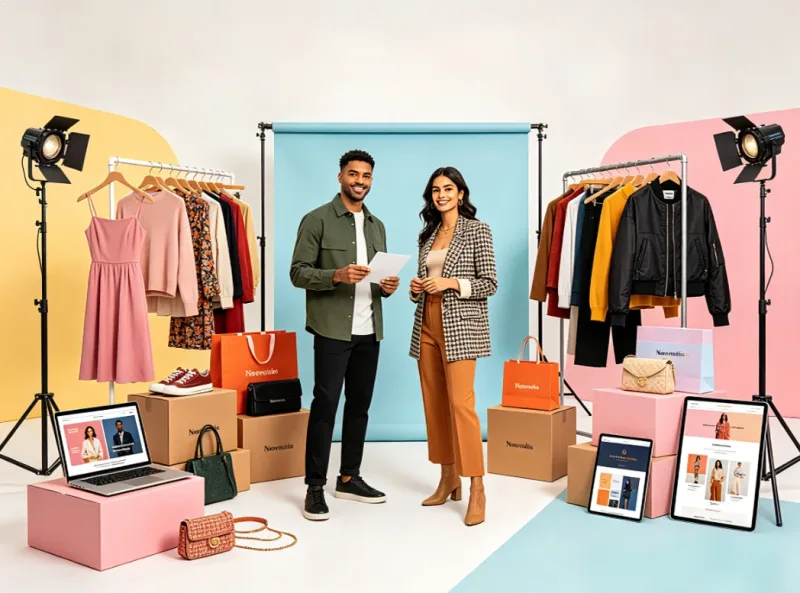
startup fashion brands
Key Strategy 5: Set Up a QC Process to Avoid Losses
Many startup fashion brands only look at unit production costs. They ignore the quality loss costs that come from defective bulk goods. A bad batch leads to returns, bad reviews, inventory pile-up, and re-production costs. Those hidden losses are way bigger than any money saved by cutting corners.
Setting up a simple, efficient QC process is essential for balancing quality and cost. Here’s what to do:
Before bulk production – confirm pre-production samples. Lock down fabric, color, stitching, and detail standards.
During production – ask factories to do semi-finished inspections. Catch problems early.
After production – do finished product sampling before shipment.
This streamlined QC process doesn’t add much cost. But it effectively prevents batch quality issues, avoids re-production and after-sales losses, and lowers your overall sourcing costs for startup fashion brands.
Key Strategy 6: Smart Negotiation for Startups
Most Chinese apparel factories are willing to give better terms to brands with long-term potential. Yes, startup fashion brands have small initial orders. But you have growth potential. Good negotiation can get you better quality and better prices without increasing order quantities.
When you negotiate, clearly explain your brand’s growth plan: you’re starting with small test orders to validate the market, and you’ll scale up once sales are stable. Most factories will be willing to optimize craftsmanship details, waive some mold fees, or offer discounted unit prices for growing startup fashion brands.
Also, combine multiple styles into one order. That reduces the factory’s setup costs, so they’re more likely to lower unit prices and improve quality control for each style.
Common Mistakes That Ruin Quality & Cost Balance
Many startup fashion brands fall into these sourcing traps early on:
Over-pursuing low prices – Choosing unqualified small workshops to save money, then dealing with constant quality problems and after-sales losses.
Overspending on early details – Stacking high-end fabrics and complex customization on trial orders, leading to cash flow pressure and low ROI.
No fixed production standards – Randomly switching fabrics and factories to cut costs, resulting in chaotic quality and inconsistent brand style.
Skipping sample confirmation – Rushing into bulk production, then ending up with large batches of defective products and huge inventory losses.
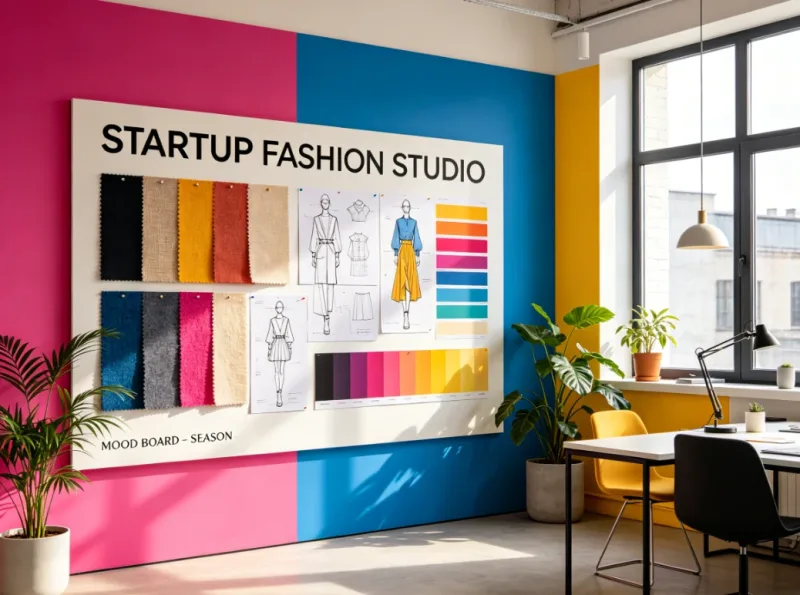
startup fashion brands
Letzte Imbisse
Balancing quality and cost isn’t about blindly lowering prices or endlessly improving quality. For startup fashion brands, the goal is to build a sourcing system that’s cost-effective, stable, and repeatable.
By tiering your products, optimizing fabric choices, simplifying high-value customization, working with the right low-MOQ factories, and setting up a solid QC process, you can control sourcing costs while keeping product quality consistent.
In the early stage of building a brand, smart cost control keeps your cash flow healthy. Stable quality builds your initial customer reputation. The right balance between the two is the most solid foundation for startup fashion brands to survive the trial phase and grow for the long term.
How SourcingYuan Helps Startup Brands Balance Quality and Cost
At SourcingYuan, we specialize in one-stop China sourcing services for startup fashion brands. We understand the early-stage pain points: limited budgets, small order volumes, and unstable supply chains. We focus on helping startups find the best balance between quality and cost.
We connect you with verified, startup-friendly low-MOQ factories. We match cost-effective fabric solutions to your brand positioning. We simplify unnecessary customization costs. And we handle sample confirmation and batch QC inspection. We help you avoid hidden sourcing risks and wasted spending, so every batch meets market standards within your budget.
From factory screening and price negotiation to sample optimization, bulk production supervision, and logistics—we cover the whole sourcing process. Let us lower your trial-and-error costs.
📧 E-Mail: lee@sourcingyuan.com
We reply to all business inquiries promptly. If you’re building your own fashion brand and want stable, cost-effective China sourcing solutions, reach out. Let us create a custom quality-cost balanced sourcing plan for your startup line.
Teile diesen Artikel, Wähle Deine Plattform!
Wir bringen Sie mit zuverlässigen Fabriken in Kontakt, holen die besten Angebote ein und liefern direkt an Ihre Haustür.