
If you are managing apparel sourcing from China, the shipment phase is where everything comes together—or falls apart. The goods are produced, inspected, and packed. Now they need to travel from a factory in Guangdong to a warehouse or store in another country. Shipping clothing from China involves more than booking a container. It requires correct documentation, customs clearance, packaging that survives transit, and a logistics partner who understands apparel.
This guide covers the final stage of apparel sourcing: export packaging, documentation, customs clearance, and international transportation. It is written for buyers who need practical, on-the-ground knowledge—not theory. Whether you are shipping 500 pieces by air or 50,000 pieces by sea, the process is the same, and the details matter.
To learn the full supply chain workflow, explore our complete Leitfaden zur Bekleidungsbeschaffung.
Packaging for Garment Export: More Than Just Boxes
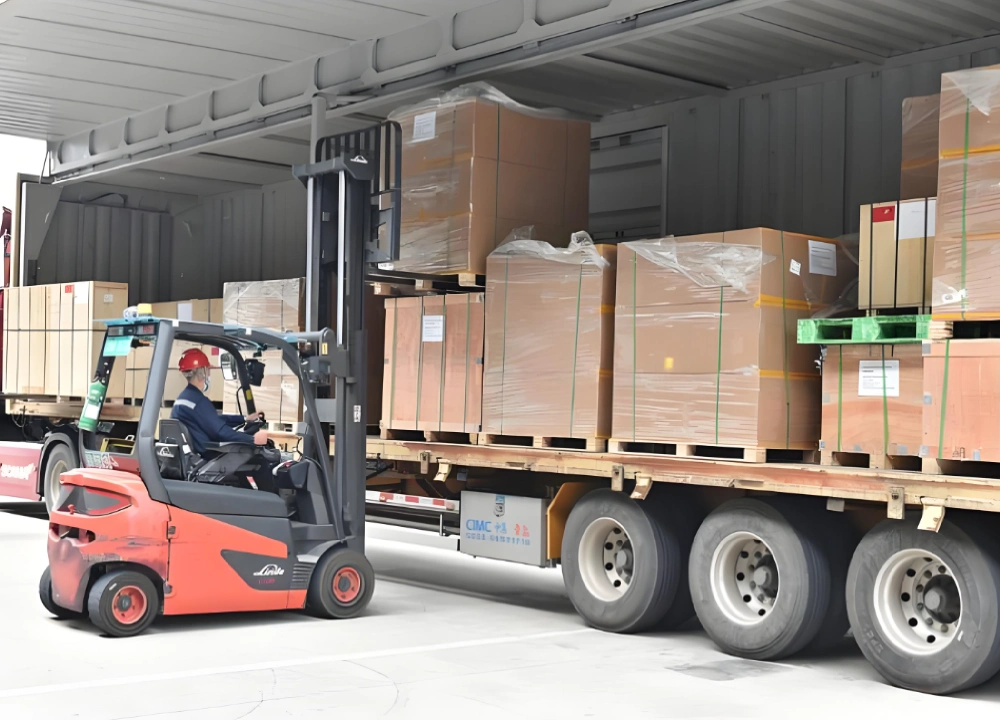
Proper packaging is a critical detail in every apparel sourcing project.
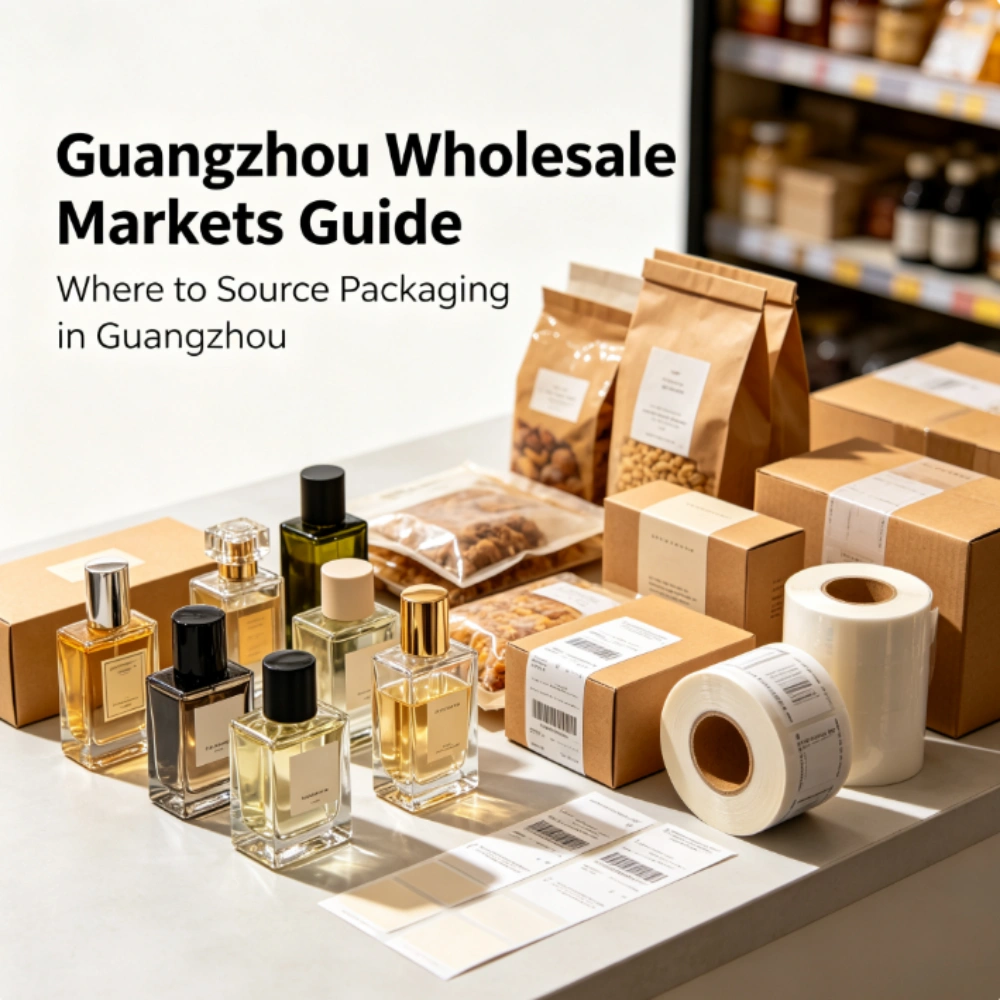
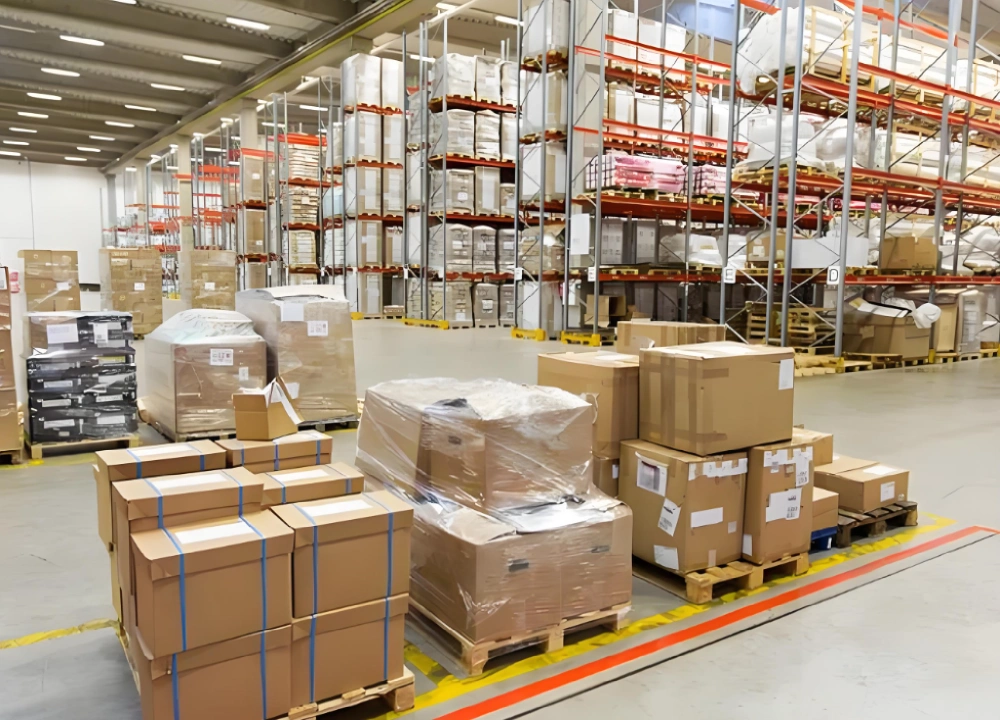
Clothing export packaging is not an afterthought. Poor packaging leads to damaged goods, customs delays, and rejected shipments. Good packaging protects the product, satisfies the buyer’s requirements, and complies with export regulations.
Packaging Requirements for Apparel
| Verpackungselement | Was ist zu beachten? | Häufige Fehler |
|---|---|---|
| Mehrzwecktaschen | Suffocation warnings, recycled content, size | Missing warnings, non-compliant materials |
| Tags aufhängen | Branding, size, price, origin | Wrong information, missing tags |
| Kartons | Strength, size, weight limits | Weak cartons, oversized boxes |
| Versandzeichen | Carton numbers, total count, dimensions | Missing or incorrect marks |
| Feuchtigkeitsschutz | Desiccants, moisture barrier bags | No protection for humid sea transit |
A Real Example: The Cost of Weak Cartons A European brand sourcing denim jackets shipped a container from Guangzhou to Rotterdam. The factory used standard single-wall cartons instead of double-wall cartons. During the 30-day sea transit, humidity weakened the cartons. When the container arrived, several cartons had collapsed, and the garments inside were wrinkled, damp, and in some cases stained.
The buyer had to sort the entire shipment, re-press and re-pack a significant portion, and negotiate a discount with the retailer. The cost of upgrading to double-wall cartons would have been a few hundred dollars. The cost of the failure was thousands—plus a delayed delivery.
The lesson: packaging is not the place to save money during apparel sourcing.

Export Carton Marking
For international shipments, cartons must be marked clearly. Standard markings include:
Buyer’s name or logo
Carton number (e.g., 1/50, 2/50)
Gesamtzahl der Kartons
Abmessungen und Gewicht
Herkunftsland
Zielhafen
Incorrect or missing markings can cause customs delays or misrouted shipments.

Export Documentation for Apparel
Documentation preparation is a core task in apparel sourcing.Apparel export documentation is the paperwork that allows your goods to leave China and enter the destination country. Missing or incorrect documents are one of the most common causes of customs delays.
Core Documents for Apparel Export
| DokumentAAA | Zweck | Wer bereitet es vor? |
|---|---|---|
| Handelsrechnung | Declares value, description, quantity, buyer/seller | Exporteur |
| Packliste | Details zu Kartoninhalt, Gewichten und Abmessungen | Exporteur |
| Konnossement (B/L) oder Luftfrachtbrief (AWB) | Beförderungsvertrag, Eigentumsnachweis | Freight forwarder/carrier |
| Ursprungszeugnis | Bestätigt das Herstellungsland | Chamber of Commerce or CCPIT |
| Versicherungszertifikat | Deckt Waren während des Transports ab | Versicherungsunternehmen |
| Prüfbescheinigung | Confirms quality or compliance | Fremdinspektor |
Documents Required by Destination
Different countries require different documentation. For example:
EU: EUR.1 certificate for preferential tariffs, REACH compliance for chemicals
USA: CPSIA compliance for children’s clothing, FTC labeling rules
Mittlerer Osten: Arabic labeling, halal certification for certain products
Your freight forwarder or customs broker can advise on destination-specific requirements for your apparel sourcing project.
The “Three Consistencies” Rule
Chinese customs and international trade practice requires “three consistencies”:
- Documents consistent with each other (invoice matches packing list)
- Documents consistent with goods (what is declared is what is shipped)
- Goods consistent with documents (no hidden items)
Any inconsistency can trigger a customs inspection, delay, or penalty.
For a deeper look at how inspection fits into the shipment process, our guide on [Wie man die Qualität von Bekleidung vor dem Versand prüft: Ein Leitfaden für die Bekleidungsbeschaffung] covers pre-shipment verification in detail.
![Chinese customs and international trade practice requires “three consistencies”: 1.Documents consistent with each other (invoice matches packing list) 2.Documents consistent with goods (what is declared is what is shipped) 3.Goods consistent with documents (no hidden items) Any inconsistency can trigger a customs inspection, delay, or penalty. For a deeper look at how inspection fits into the shipment process, our guide on [How to Inspect Apparel Quality Before Shipment: An Apparel Sourcing Guide] covers pre-shipment verification in detail.]( covers pre-shipment verification in detail." link="" linktarget="_self" hide_on_mobile="small-visibility,medium-visibility,large-visibility" sticky_display="normal,sticky" class="" id="" max_width="" sticky_max_width="" align_medium="none" align_small="none" align="none" mask="" custom_mask="" mask_size="" mask_custom_size="" mask_position="" mask_custom_position="" mask_repeat="" style_type="" blur="" stylecolor="" hue="" saturation="" lightness="" alpha="" hover_type="none" magnify_full_img="" magnify_duration="120" scroll_height="100" scroll_speed="1" margin_top_medium="" margin_right_medium="" margin_bottom_medium="" margin_left_medium="" margin_top_small="" margin_right_small="" margin_bottom_small="" margin_left_small="" margin_top="" margin_right="" margin_bottom="" margin_left="" bordersize="" bordercolor="" borderradius="" z_index="" caption_style="off" caption_align_medium="none" caption_align_small="none" caption_align="none" caption_title="" caption_text="" caption_title_tag="2" fusion_font_family_caption_title_font="" fusion_font_variant_caption_title_font="" caption_title_size="" caption_title_line_height="" caption_title_letter_spacing="" caption_title_transform="" caption_title_color="" caption_background_color="" fusion_font_family_caption_text_font="" fusion_font_variant_caption_text_font="" caption_text_size="" caption_text_line_height="" caption_text_letter_spacing="" caption_text_transform="" caption_text_color="" caption_border_color="" caption_overlay_color="" caption_margin_top="" caption_margin_right="" caption_margin_bottom="" caption_margin_left="" animation_type="" animation_direction="left" animation_color="" animation_speed="0.3" animation_delay="0" animation_offset="" filter_hue="0" filter_saturation="100" filter_brightness="100" filter_contrast="100" filter_invert="0" filter_sepia="0" filter_opacity="100" filter_blur="0" filter_hue_hover="0" filter_saturation_hover="100" filter_brightness_hover="100" filter_contrast_hover="100" filter_invert_hover="0" filter_sepia_hover="0" filter_opacity_hover="100" filter_blur_hover="0"]https://www.sourcingyuan.com/wp-content/uploads/2026/09/Apparel-sourcing-garment-factory-production-and-packing-warehouse.webp "Apparel sourcing garment factory production and packing warehouse")
Customs Clearance for Apparel
Clothing customs clearance is the process of declaring goods to customs, paying duties and taxes, and obtaining release for export or import. For apparel, this involves several specific steps.
Export Customs Declaration for Apparel in China
Export customs declaration for apparel in China follows a defined process:
- Confirm whether goods are regulated:Check if the apparel requires export licenses or special permits.
- Choose declaration method: Self-declaration or through a customs broker.
- Verify HS codes and declared value:Apparel HS codes are typically in Chapter 61 (knitted) and Chapter 62 (woven). Declared value should reflect the transaction value.
- Submit declaration: Through the China International Trade Single Window or via a broker.
- Customs review and inspection:Customs may inspect the goods and documents.
- Release and loading: Once cleared, goods can be loaded for export.
Import-Zollabfertigung
At the destination, the importer or their customs broker handles clearance. Key steps include:
Einfuhranmeldung einreichen
Paying duties, VAT, or other taxes
Providing compliance documentation (e.g., CPSIA, REACH)
Organisation der endgültigen Zustellung
Delays often occur when documents are incomplete or when the declared value does not match customs’ assessment.

HS-Codes für Bekleidung
| Produkt | HS-Code (Beispiel) | Notizen |
|---|---|---|
| Baumwoll-T-Shirts | 6109.10 | Gestrickt |
| Men’s cotton trousers | 6203.42 | Webstoff |
| Damenkleider | 6204.44 | Webstoff |
| Synthetic jackets | 6201.93 | Webstoff |
Choosing the correct HS code reduces risks during apparel sourcing.Using the wrong HS code can result in overpayment of duties or customs penalties.
Versandarten: Seefracht, Luftfracht und Expressversand
Garment shipping logistics offers several options, each with trade-offs in cost, speed, and volume.
| Methodik | Am besten geeignet für | Transitzeit | Kostenniveau |
|---|---|---|---|
| Seefracht (FCL) | Großaufträge (10+ CBM) | 20–40 Tage | Niedrig pro Einheit |
| Seefracht (LCL) | Kleine Bestellungen (1–10 CBM) | 25–45 Tage | Medium |
| Luftfracht | Urgent orders, high value | 5–10 Tage | Hoch |
| Express (DHL/FedEx/UPS) | Muster, Kleinpakete | 3–7 Tage | Höchste |
FCL gegen LCL
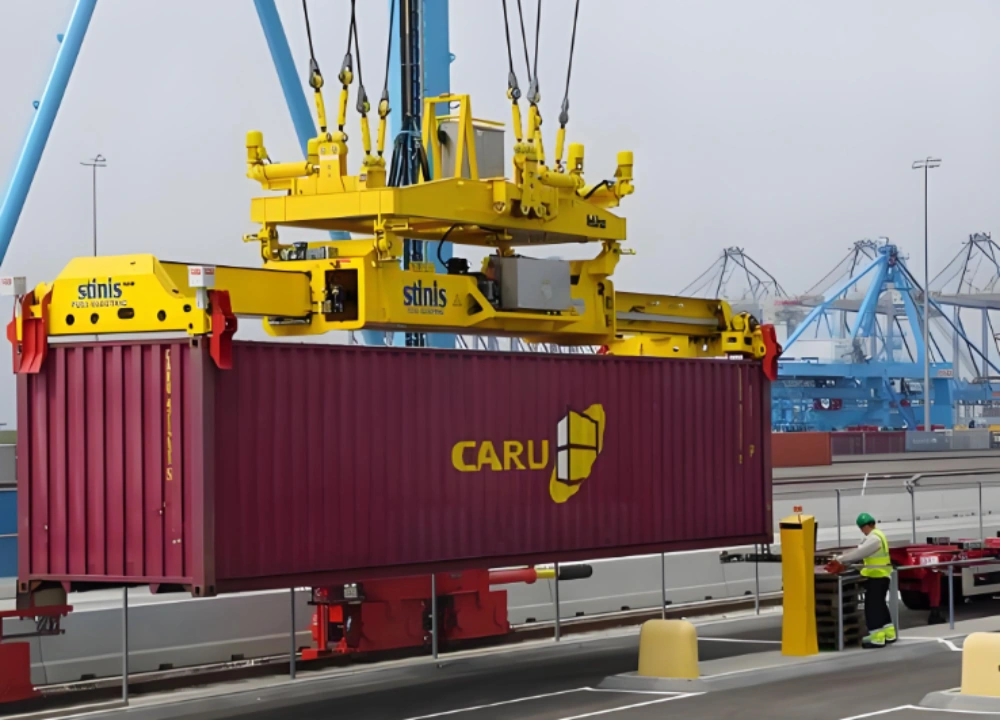
FCL (Full Container Load): You book an entire container. Best for large orders, faster transit, less handling. Container sizes: 20ft (~28 CBM), 40ft (~58 CBM), 40HQ (~68 CBM).
LCL (weniger als Containerladung): Your goods share a container with other shipments. Best for smaller orders, but slower and more handling.
Luftfracht vs. Express
Air freight is for larger shipments (100kg+) that need speed.
Express is for samples and small parcels, with door-to-door service and faster customs clearance.

A Real Example: Choosing LCL for a 3 CBM Order
A US-based brand ordered 1,200 units of hoodies—about 3 CBM. FCL was not economical for that volume. LCL was the practical choice. The forwarder consolidated the shipment with other cargo, handled export clearance in Guangzhou, and delivered to the buyer’s warehouse in Los Angeles. Transit time was 32 days. The cost was higher per unit than FCL but far lower than air freight. For a first order of this size, LCL was the right balance of cost and speed in apparel sourcing.
Auswahl eines Spediteurs
Selecting a reliable freight forwarder is key for smooth apparel sourcing.Clothing freight forwarder China services vary widely. Some are generalists; others specialize in apparel. The right partner can save you time, money, and stress.
Wonach schauen
Experience with apparel: Understands garment packaging, labeling, and compliance
Destination expertise: Knows the customs requirements of your target market
Konsolidierungsleistungen: Can combine multiple suppliers into one shipment
Transparente Preise: Keine versteckten Gebühren
Kommunikation: Responds within 24 hours, provides tracking updates
Consolidation: A Key Service
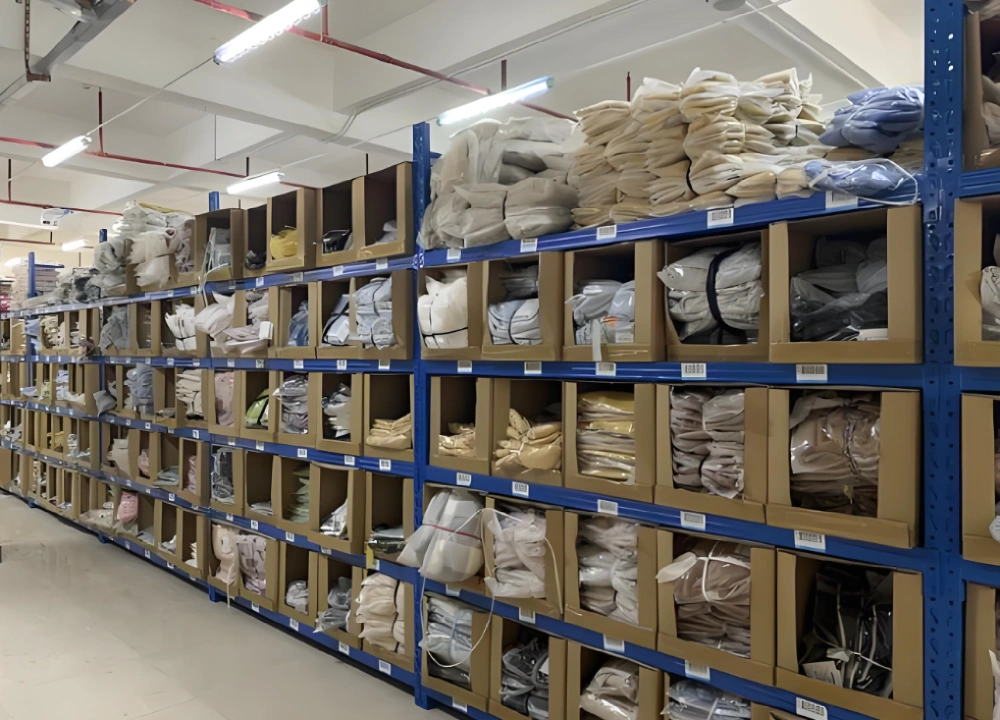
If you are sourcing from multiple suppliers, consolidation is essential. A forwarder with warehousing can receive goods from different factories, inspect them, repack if needed, and consolidate into one shipment. This reduces cost and simplifies customs clearance.
Bei Sourcingyuan, coordinate consolidation for our clients—receiving goods from multiple apparel factories in Guangzhou, Foshan, and Dongguan, checking quantities and packaging, and arranging shipment with the forwarder. Our team is on the ground and can visit factories and warehouses when issues arise.

Versandkosten verwalten
Cost control is always a priority within apparel sourcing.Apparel shipping costs depend on volume, weight, destination, and method. Here are the main components:
| Kostenkomponente | Was es beinhaltet |
|---|---|
| Fracht | Sea, air, or express charges |
| Ursprungsgebühren | Export clearance, terminal handling, documentation |
| Zielgebühren | Import clearance, terminal handling, delivery |
| Zölle & Steuern | Based on HS code and destination rules |
| Versicherung | Typischerweise 0.3–0.5 % des Frachtwerts |
| Mehrwertdienste | Consolidation, repacking, labeling |
So senken Sie die Kosten
Sendungen konsolidieren: Combine multiple orders into one
Optimize carton sizes: Leerraum reduzieren
Vorausplanen: Avoid air freight for non-urgent orders
Preise aushandeln: Fragen Sie nach Mengenrabatten
Use LCL when appropriate: Für kleine Mengen
For a deeper look at how production monitoring fits into the shipment timeline, our guide on [Wie man die Produktion überwacht und die Qualität bei der Bekleidungsbeschaffung sichert] covers the full production cycle.
Fazit
Shipping garments from China is the final stage of apparel sourcing, and it is where many buyers lose control. Packaging that fails, documents that are incomplete, customs that delays—these are avoidable with the right preparation and the right partners.
Use the packaging standards in this guide. Prepare the documentation before the goods are ready. Choose the shipping method that matches your volume and timeline. And work with a forwarder who understands apparel.
If you need support with consolidation, factory coordination, or shipment preparation, our team at Sourcingyuan works with apparel buyers from our Guangzhou office. We receive goods from multiple factories, check packaging and quantities, and coordinate with forwarders—so your shipment leaves China correctly the first time.
Über den Autor
Jeff Lee
Gründer von Sourcingyuan
Jeff Lee ist der Gründer von Sourcingyuan, einem in China ansässigen Unternehmen für Beschaffung und Produktentwicklung. Er verfügt über mehr als zehn Jahre Erfahrung in der Unterstützung ausländischer Unternehmen bei der Produktbeschaffung, der Entwicklung neuer Produkte, der Auswahl zuverlässiger Hersteller, dem Produktionsmanagement und dem Aufbau von Lieferketten in China.
Ähnliche Artikel, die Ihnen gefallen könnten 📚
Sie möchten einen kompletten Workflow für die Bekleidungsbeschaffung aufbauen? Diese Leitfäden decken den gesamten Prozess ab:
👕 [Wie man die Produktion überwacht und die Qualität bei der Bekleidungsbeschaffung sichert]
🤝 Need help with shipping or consolidation? Sourcingyuan helps apparel buyers from our Guangzhou office. Kontaktieren Sie uns, um loszulegen.
Teile diesen Artikel, Wähle Deine Plattform!
Wir bringen Sie mit zuverlässigen Fabriken in Kontakt, holen die besten Angebote ein und liefern direkt an Ihre Haustür.