China Industrial Clusters dominate China’s furniture manufacturing industry, shaping regional production advantages, complete supply chains, and export capabilities across the country. If you are sourcing furniture from China, the first question is not “which factory” but “which cluster.” China Industrial Clusters in the furniture sector are geographically concentrated ecosystems where manufacturers, material suppliers, and logistics providers have co‑developed over decades. Understanding China furniture manufacturing clusters tells you where the capability, capacity, and cost structure live — and where your product category is best served.
This guide maps China’s major furniture production hubs, what each specializes in, and how international buyers can navigate this landscape. Whether you need upholstered sofas for hospitality projects, office chairs for corporate contracts, or budget solid‑wood bedroom sets, knowing the cluster is the first step toward efficient sourcing.
Obtenga más información sobre Clústeres industriales de China to grasp the big picture of China’s manufacturing ecosystems.

Why Furniture Clusters Matter for Sourcing
China Industrial Clusters create these concentrated supply chain advantages for global importers.China’s furniture industry is not evenly distributed. It is concentrated in regional clusters, each with its own product specialization and supply chain depth. This concentration creates practical advantages for buyers.
Supply chain completeness.
In Foshan’s Longjiang, over 2,300 furniture manufacturers operate alongside more than 5,000 material suppliers, with production spanning over 30,000 product types. The raw material procurement radius is under 10 kilometers. It supports a fast‑paced production rhythm that you cannot easily replicate outside a cluster.
Specialization by product.
Different China furniture manufacturing clusters excel at different furniture categories. Anji produces office chairs. Nankang produces solid wood bedroom furniture. Shengfang produces metal and glass furniture. Matching your product to the right cluster puts you in a competitive supply environment from the start.
Infraestructura exportadora.
Many clusters have built dedicated export channels. Nankang’s Ganzhou International Land Port enables direct timber imports from over 50 countries and furniture exports to more than 100 countries. Such infrastructure helps cut logistics costs and shorten lead‑times.
For related sourcing tactics, review: ¿Cómo puedes aprovechar los clústeres industriales de China para encontrar mejores proveedores?

Major Furniture Manufacturing Clusters in China
The table below summarizes the key furniture clusters by region, specialization, and scale.Every regional hub included here forms an essential part of China Industrial Clusters.
| Región | Ubicaciones clave | Especialización | Core Advantage for Buyers |
|---|---|---|---|
| Pearl River Delta, Guangdong | Foshan (Lecong, Longjiang), Dongguan (Houjie, Dalingshan), Zhongshan (Dachong) | Sofas, upholstery, hotel furniture, office furniture, solid wood & classical furniture | Complete supply chain, export‑ready, nearby seaports |
| Zhejiang | Anji, Yuhuan, Haining, Dongyang | Office chairs, solid wood suites, sofa fabrics, rosewood furniture | Strong specialized niche products for export |
| Jiangxi | Nankang, Ganzhou | Budget solid wood bedroom & dining furniture | Large‑scale, cost‑effective, inland port for timber import |
| North China (Hebei) | Shengfang (Bazhou), Xianghe | Metal, glass, panel furniture | Low‑cost mass production, export to 130+ countries |
| Southwest China (Sichuan) | Chengdu, Xindu, Chongzhou | Panel furniture, modern solid wood furniture | Custom furniture capability, national‑level cluster |
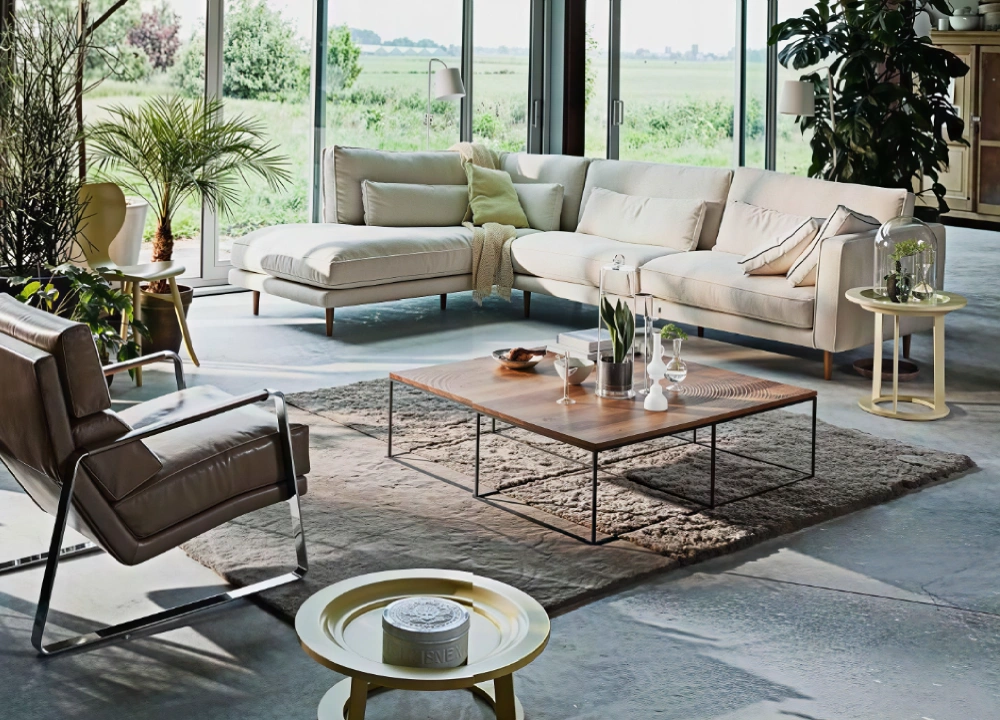
Foshan (Longjiang & Lecong): The Full‑Spectrum Furniture Ecosystem
Foshan is China’s largest furniture manufacturing and trading hub.
Longjiang is the manufacturing heart. It hosts more than 2,300 furniture manufacturers plus 5,000+ material suppliers, covering over 30,000 product categories. It earns the title “China’s Furniture Design and Manufacturing Town” and “China’s Furniture Materials Capital.”
Lecong sits right next to Longjiang. It is the world’s biggest furniture trading center. It has over 180 shopping centers and more than 10,000 merchants. Annual transaction volume exceeds 80 billion RMB.
Nota importante: Lecong is mainly a showroom and wholesale marketplace. Most actual production factories are located in nearby Longjiang.
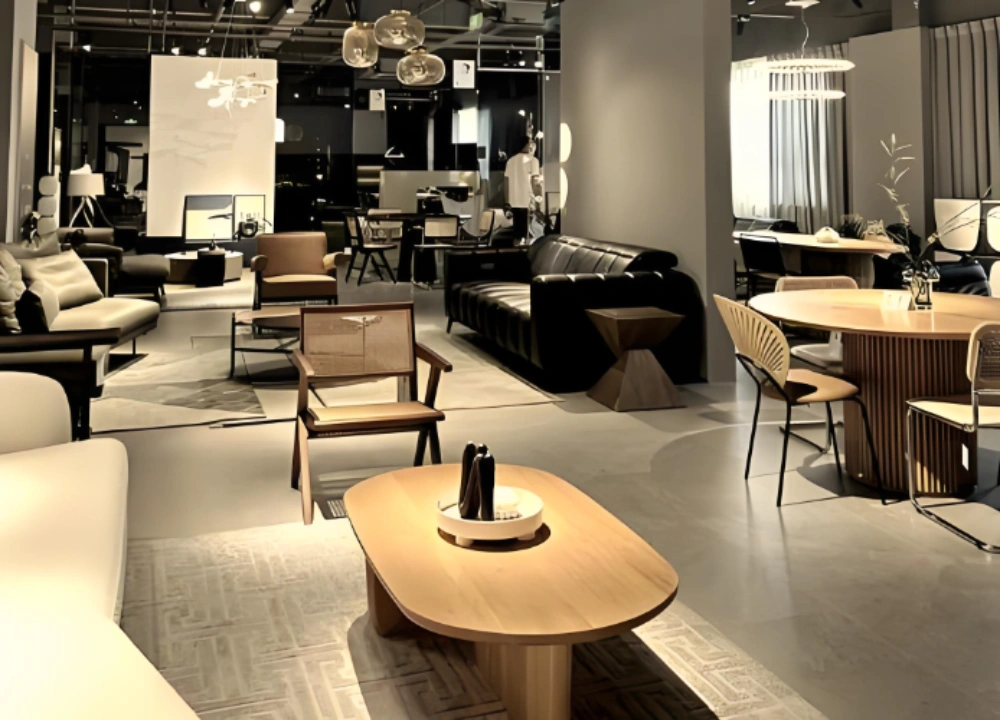
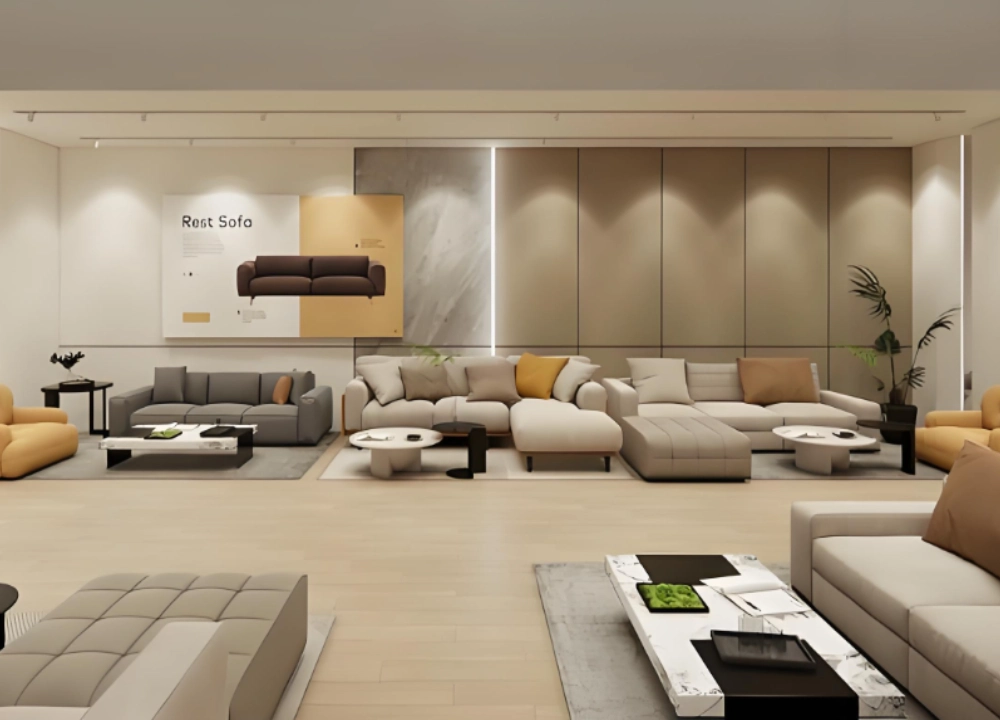
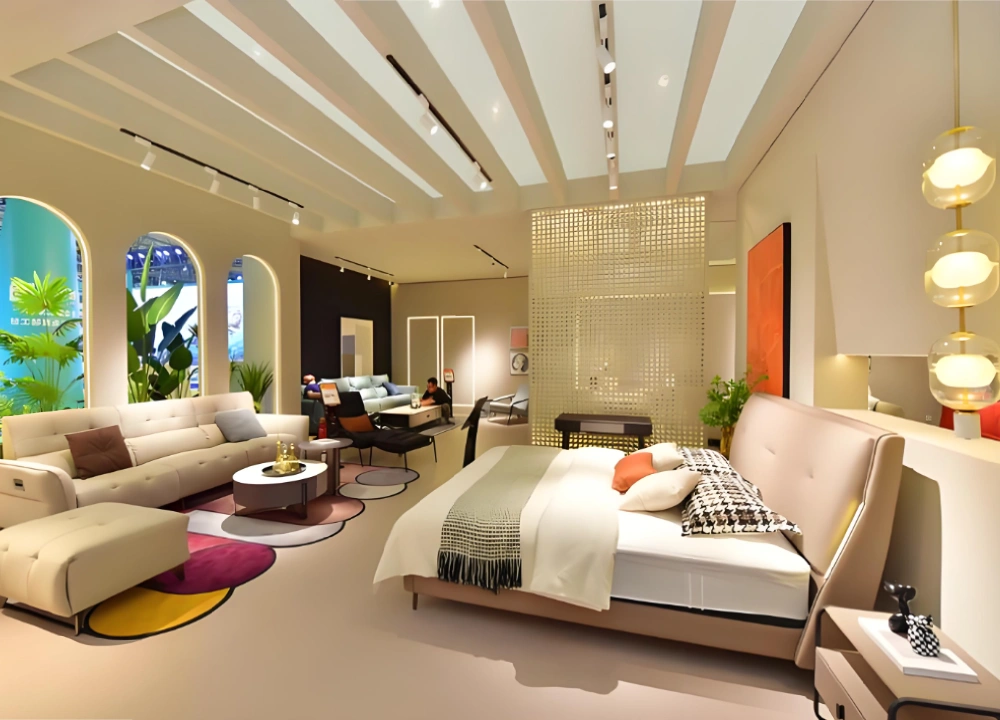
For international buyers, Foshan works best for upholstered sofas, hotel‑grade furniture and full‑house export orders. Proximity to Guangzhou and Shenzhen ports simplifies overseas shipment.
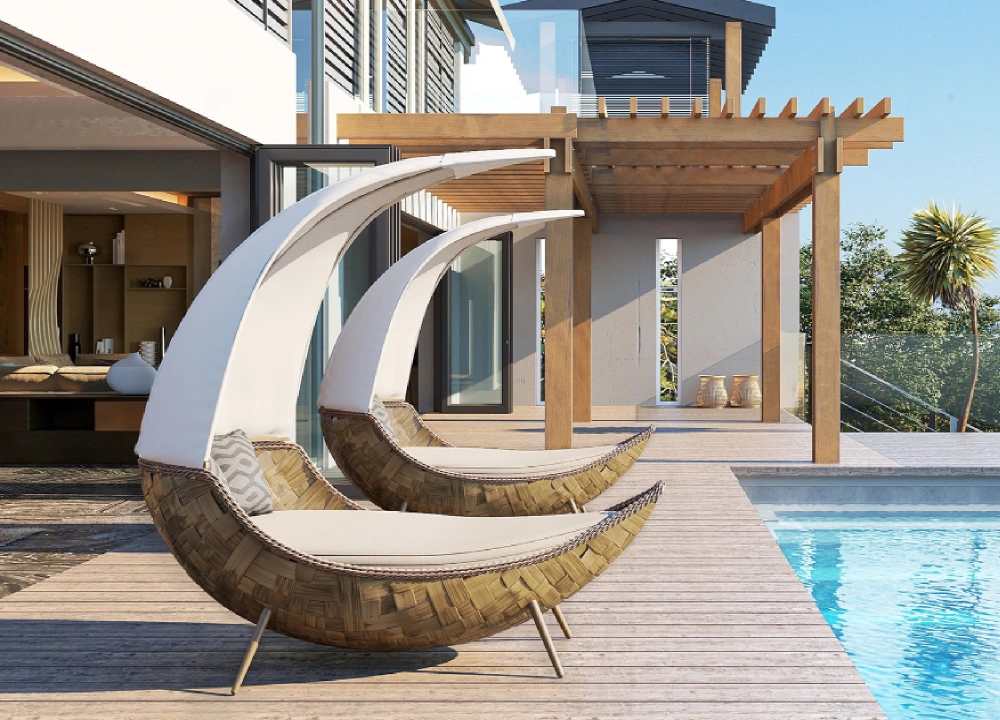
This mature Foshan furniture manufacturing cluster also supports customized outdoor furniture China cluster production, catering to global outdoor living and commercial space projects.
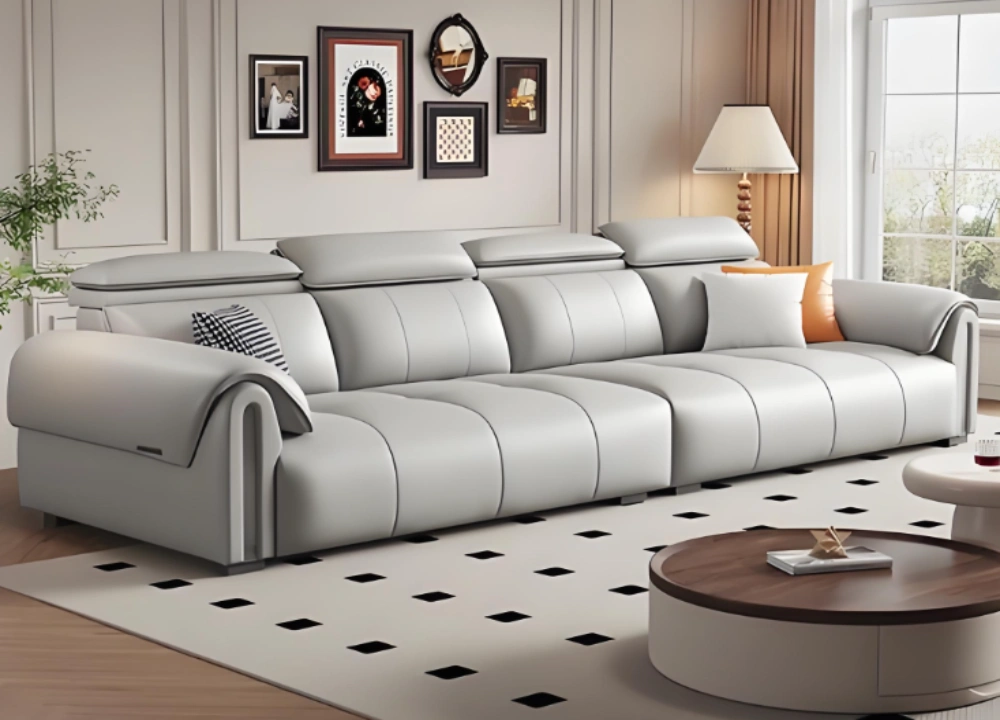
Dongguan (Houjie): The “Furniture Capital” for Office and High‑End Residential
Dongguan’s Houjie town is widely known as “China’s Furniture Capital.”
Nearly 600 furniture factories, over 2,000 furniture brands and 800+ supporting enterprises operate locally. Its bi‑annual furniture exhibition ranks among the world’s top three furniture industry events.
Its bi‑annual furniture exhibition ranks among the world’s top three furniture industry events. Houjie’s strength lies in office furniture and premium residential furniture. It has long‑term experience as an OEM export base.

Anji (Zhejiang): The Global Office Chair Capital
Anji, a county within Huzhou (Zhejiang), is the world’s dominant production base for office chairs.
More than 1,000 chair‑making enterprises employ close to 30,000 people. Total industry output exceeds 50 billion RMB every year. One out of every three swivel chairs sold globally comes from Anji. It takes one‑third of China’s domestic market and over half of national chair exports.
Local output has expanded from basic office seating to AI‑powered ergonomic chairs and multi‑functional sofas. Over 20 local manufacturers have won iF, Red Dot and MUSE international design awards. If you source office seating, Anji should be high on your priority list.
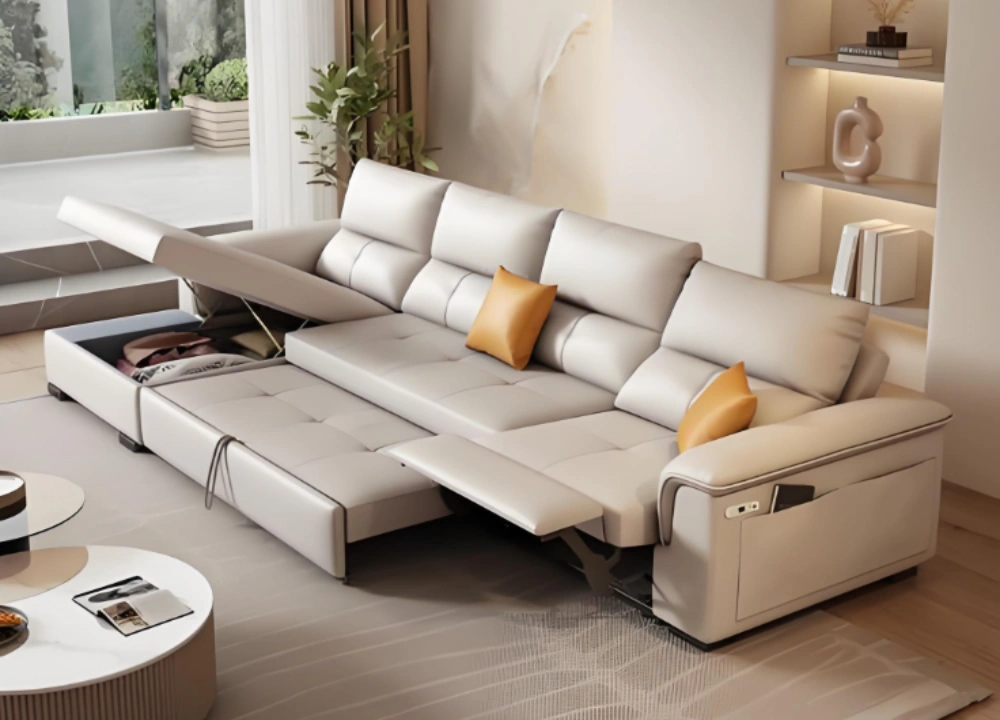
Nankang (Jiangxi): China’s Solid Wood Furniture Capital
Nankang (Ganzhou, Jiangxi) is China’s largest solid‑wood furniture manufacturing hub.
Though it has no local timber resources, Nankang built a complete industrial ecosystem. It counts over 20,000 manufacturing and supporting enterprises, with 500,000 industry workers. 2025 total cluster revenue surpassed 290 billion RMB.
Ganzhou International Land Port is the core driver. As China’s first inland timber import port, it connects six border crossings and runs more than 1,700 China‑Europe freight trains. Timber arrives from 50+ nations, and finished furniture ships out to 100+ countries. It cuts timber import lead‑time from three months down to 10‑15 days and reduces logistics cost by 18%.
Nankang focuses on affordable rubber‑wood bedroom and dining‑room sets, including beds, dining tables and wardrobes. It suits buyers looking for large‑volume, cost‑effective solid‑wood orders.

Shengfang (Hebei): The Metal and Glass Furniture Base
Shengfang (Bazhou, Hebei) is northern China’s leading metal‑glass furniture production base.
More than 4,000 local furniture enterprises produce 100 million units every year. 2025 cluster revenue hit 53 billion RMB. Goods ship to over 130 countries and regions.
Its core products include metal‑frame furniture, glass‑top tables, panel items and outdoor furniture. The cluster runs its collective brand “Shengfang Furniture” plus a shared testing platform with 20 laboratories and over 200 pieces of professional test equipment. Factories can obtain internationally‑recognized product test reports locally. It is the northern alternative to southern Guangdong furniture clusters for budget metal‑glass furniture.
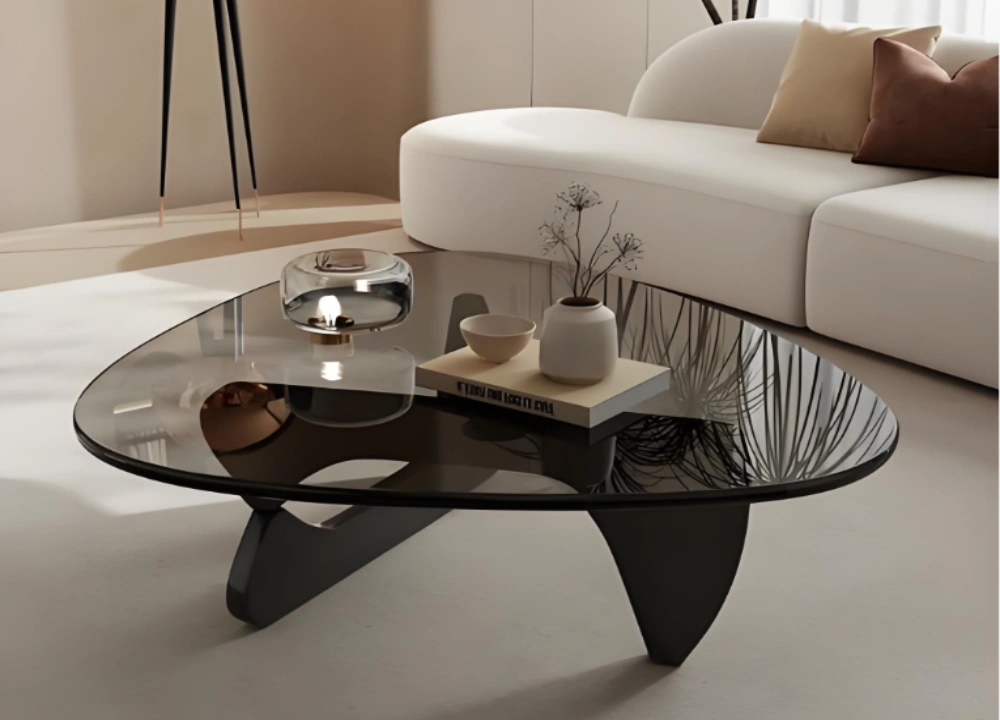
Chongzhou (Sichuan): The Southwest Panel Furniture Cluster
Chongzhou, close to Chengdu, is western China’s national‑level SME characteristic furniture industrial cluster.
It adopts a supply‑chain model: one core domestic chain owner, several secondary chain leaders, hundreds of key supporting firms and thousands of upstream‑downstream partners. Local component supporting rate tops 95%.
Its main output covers panel furniture and modern‑style solid‑wood furniture. Well‑known local brands include Quanyou and Mingzhu. Over 300 enterprises have completed digital upgrades. There are four national green factories and nine digital workshops in the region. It is a solid choice for buyers seeking modern minimalist or custom‑built panel furniture outside coastal China.

Otros clústeres destacados
- Yuhuan (Zhejiang): Solid‑wood bedroom suites, American‑ and European‑style furniture, traditional export‑focused production zone.
- Lecong (Jiangsu): Eastern China furniture trade hub with 41 malls and more than 5,000 brands; mainly for trading instead of mass manufacturing.
- Pangcun (Henan): China’s steel furniture base, supplies 70% of domestic steel furniture; products exported to over 120 countries.

Cómo utilizar el conocimiento del clúster en su estrategia de abastecimiento
Step 1: Match Product to Cluster Before Contacting Suppliers
Identify which cluster fits your furniture category. Source office chairs in Anji, hotel furniture in Longjiang, solid‑wood bedroom sets in Nankang. This puts you into competitive, specialized supplier pools.
Step 2: Verify Supplier Location Against the Cluster
Some suppliers claim to be “Foshan furniture manufacturers” yet outsource actual production to factories in other provinces. Always request the real factory address and cross‑reference it with cluster information. If addresses mismatch local strengths, ask for a clear explanation.Always cross-check supplier locations against the layout of China Industrial Clusters.

Paso 3: Utilizar la densidad de clústeres para la consolidación.
If you source mixed furniture items (sofas, chairs, tables), try to source within one single cluster. You can consolidate goods in a local warehouse and ship together, lowering logistics complexity and freight cost.
Paso 4: Aprovechar el apoyo local
When you explore China Industrial Clusters, local support can remove many sourcing obstacles.Navigating furniture clusters without local on‑the‑ground resources brings many challenges. You will face language barriers, supplier validation and quality‑control hurdles.
At Sourcingyuan, our Guangzhou‑based team supports international furniture buyers. We handle supplier screening in Longjiang and Houjie, quality inspection and cargo consolidation. We serve residential, commercial and hospitality‑related furniture projects and understand which clusters balance capability, cost and export readiness.
Matching Product to Cluster: A Buyer’s Reference
| Categorías del producto | Grupo(s) principal(es) | ¿Por qué esta región? |
|---|---|---|
| Upholstered sofas & hotel furniture | Foshan (Longjiang) | Dense manufacturing network, material supply within 10km |
| Office chairs & ergonomic seating | Anji (Zhejiang) | World’s largest office chair base, 1/3 of global swivel chairs |
| Solid wood bedroom & dining furniture | Nankang (Jiangxi) | Largest solid wood base, timber import port, cost‑effective volume |
| Office & high-end residential furniture | Dongguan (Houjie) | “Furniture Capital,” world‑class exhibition, export experience |
| Metal & glass furniture | Shengfang (Hebei) | 4,000+ enterprises, 100M units/year, export to 130+ countries |
| Panel & modern furniture | Chongzhou (Sichuan) | National‑level cluster, 95% local supporting rate, custom capability |
A Real Example: Sourcing Hotel Furniture for a Middle East Project
A Dubai‑based hospitality group needed 500 upholstered armchairs and 200 sofa sets for a hotel lobby renovation. Requirements included fire‑retardant foam, custom fabric and specific frame construction.
The buyer first contacted a Guangzhou trading company. They got a quotation but could not confirm factory location or foam certification.
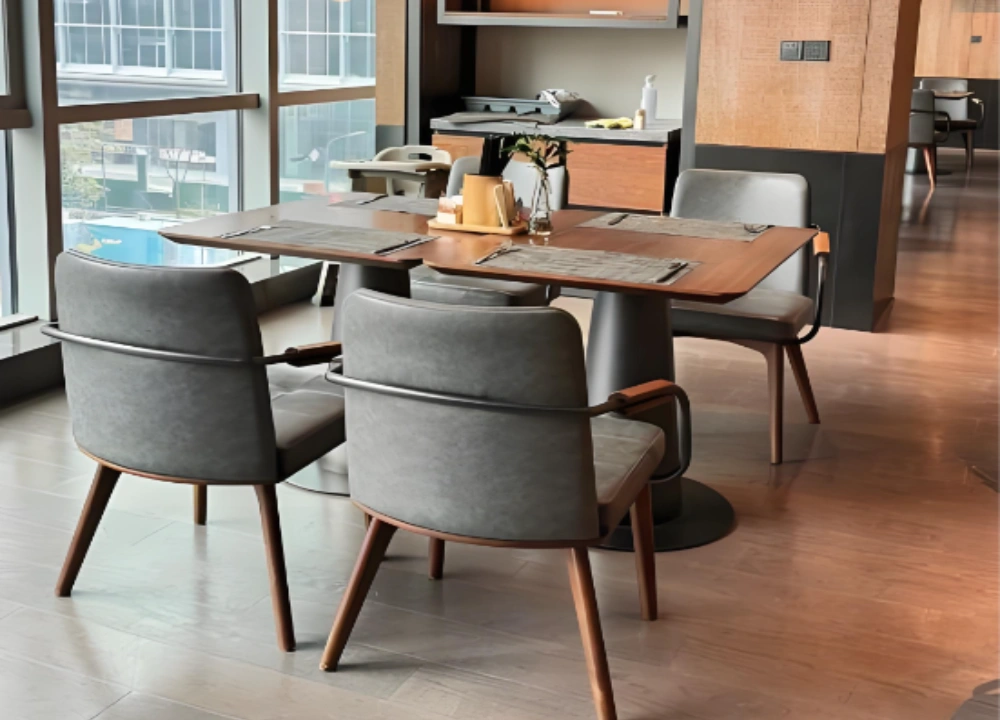
The buyer switched to a Longjiang‑based real manufacturer. This factory runs in‑house upholstery and foam production. They provided foam test reports, arranged video factory tours and quoted a price 12% lower than the trader. On‑site factory visits were also available.
This is exactly the value of sourcing within China Industrial Clusters.

Lo más importante es...
China Industrial Clusters are the foundation of the country’s furniture manufacturing strength. What gives these clusters power is more than raw factory numbers. It comes from dense, interconnected business relationships across the whole supply chain.
In Longjiang, sofa producers source foam, fabric and hardware within a 10‑kilometer radius. In Anji, chair makers access injection molding, metal tube bending and packaging firms inside one industrial zone. In Nankang, solid‑wood factories import timber via inland port and ship finished furniture to Europe by rail. This dense ecosystem brings speed, cost advantages and stable quality that standalone factories struggle to match.
China furniture manufacturing clusters are not just collections of factories. They are complete ecosystems shaping product specializations, supply‑chain depth and export capacity. Each cluster has built its own identity through decades of development: Foshan for upholstery and hotel furniture, Dongguan for office‑premium residential, Anji for office chairs, Nankang for solid wood, Shengfang for metal‑glass furniture, Chongzhou for panel‑style modern furniture.
For international buyers, mapping cluster strengths marks your first step toward efficient procurement. But cluster knowledge alone cannot guarantee good results. You still need to validate supplier competence, confirm export track‑records and manage quality through the whole production‑to‑shipment workflow.
If you want to move past cluster research into real‑world procurement, Sourcingyuan supports global furniture buyers out of our Guangzhou office. We help you navigate clusters: from Longjiang and Houjie supplier identification to quality checks and consolidation. We know showrooms, the real factories behind them and full logistics workflows for container‑size furniture shipments. Whether you order single samples or full hotel‑project containers, your sourcing journey starts with understanding clusters — and good local partners drive successful outcomes.

Sobre la autora
jeff lee
Fundador de Sourcingyuan
Jeff Lee es el fundador de Sourcingyuan, una empresa china de abastecimiento y desarrollo de productos. Cuenta con más de 10 años de experiencia ayudando a empresas extranjeras a obtener productos, desarrollar nuevos productos, identificar fabricantes confiables, gestionar la producción y establecer cadenas de suministro en China.
Artículos relacionados que podrían gustarte 📚
Explorar Clústeres industriales de China across manufacturing sectors with our sourcing guides.
🤝 Need help navigating China’s furniture clusters?
¡Comparte esta historia, elige tu plataforma!
Te conectamos con fábricas confiables, obtenemos las mejores cotizaciones, entregamos directamente a tu puerta.