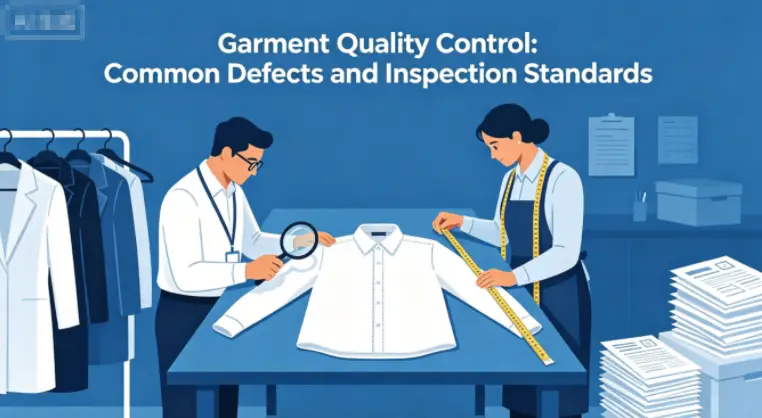
Garment quality control is one of the most critical steps in garment manufacturing and global apparel sourcing. For clothing importers, brand owners, distributors, and sourcing companies, strict garment quality control directly determines product sales, customer satisfaction, brand reputation, and after-sales return rates.
Most clothing quality complaints and order rejections are caused by three major manufacturing problems: unqualified sewing workmanship, defective printing effects, and unstandardized embroidery details. Without strict garment quality control during mass production and pre-shipment inspection, minor defects will evolve into batch quality issues, resulting in order returns, financial losses, and supply chain delays.
This professional guide summarizes the most common garment sewing defects, garment printing defects, and garment embroidery defects in apparel production, as well as international apparel inspection standards. It helps global buyers, sourcing agents, and factory QC teams conduct accurate garment quality control, identify faulty products, stabilize production quality, and maintain long-term garment supply chains.
1. Common Garment Sewing Defects & Quality Control Standards
Sewing is the basic foundation of all finished garments. Poor sewing workmanship is the most frequent quality problem in clothing factories. Even if fabric quality and pattern cutting are perfect, unqualified stitching will directly downgrade the whole garment.
Common Sewing Defects
In mass garment production, QC inspectors often encounter typical sewing defects including skipped stitches, loose stitches, floating threads, uneven stitch density, crooked stitching lines, and exposed bottom threads. Other frequent issues include inconsistent seam width, asymmetric left and right stitching, untrimmed long thread ends, obvious joint marks, broken stitches, and loose overlocking edges.
Structural sewing defects such as uneven collar height, distorted neckline, misaligned shoulder seams and side seams, unsmooth hem and cuffs, and distorted zipper stitching also seriously affect garment appearance and wearing performance. In addition, misplaced buttons, loose fasteners, uneven buttonholes, and rough buttonhole edges are common minor sewing defects that easily cause customer complaints.
Sewing QC Inspection Standards
Qualified garment sewing must be neat, flat, and uniform in all stitching areas. All stitching lines must be straight without skipping stitches, floating threads, or broken stitches. The stitch density must be consistent on the same garment part with a controlled tolerance range.
All seam allowances must be even and symmetrical. The alignment deviation of collars, shoulders, plackets, and hems must be within the standard error range. All thread ends must be cleanly trimmed without exposed long threads and obvious joint traces.
The overlocking and edge wrapping must be tight, flat, and free from loosening and twisting. Zippers must slide smoothly without skewing, arching, or jamming. Buttons and fasteners must be firmly fixed with standard buttonhole size and clean edges. The whole garment must be free from cracks, damage, and distorted stitching after stretching and wearing tests.
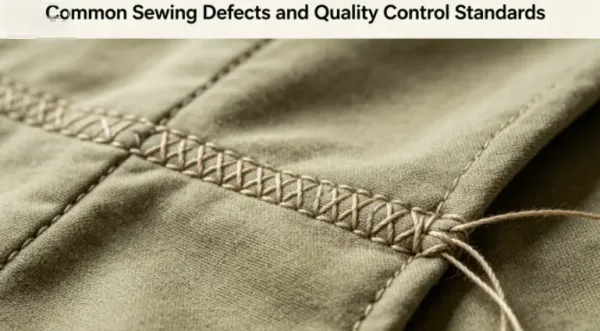
Common Garment Sewing Defects & Quality Control Standards
2. Common Garment Printing Defects & Quality Control Standards
Printing is a key decorative and functional process for casual wear, sportswear, and fashion apparel. Printing quality directly affects the visual grade and market competitiveness of finished garments. Unqualified printing is one of the main reasons for batch order rejection in apparel sourcing.
Common Printing Defects
The most frequent printing defects include incorrect printing position, left-right asymmetry, pattern offset, size deviation, missing printing, missing color, misregister, double images, and blurred lines. Many low-quality printed garments also suffer from bubble generation, printing wrinkles, excessive stickiness, edge burrs, and glue overflow.
During mass production, color difference between batches, partial dark or light color spots, oil stains, dust spots, and scratch marks on printed areas are common problems. In addition, large-area printing often appears cracking, peeling, and glue falling after stretching, washing, and friction, which belongs to serious functional printing defects.
Printing QC Inspection Standards
Qualified garment printing requires accurate positioning, centered and symmetrical patterns, and controllable position deviation. The entire printed pattern must be complete with clear lines, full color, no missing color, no ghosting, and no misalignment.
The printing surface must be flat, smooth, and free of bubbles, wrinkles, cracks, peeling, and overflow glue. The pattern edges must be clean and neat without serrated burrs.
For batch inspection, all garments must maintain uniform color tone without visible color difference. The printing adhesive force must meet international standards: no cracking, no peeling, and no fading after washing and rubbing tests. The printed area must be clean, free from oil spots, dust, scratches, and stains. For elastic fabrics, the printing pattern must not deform or crack after stretching.
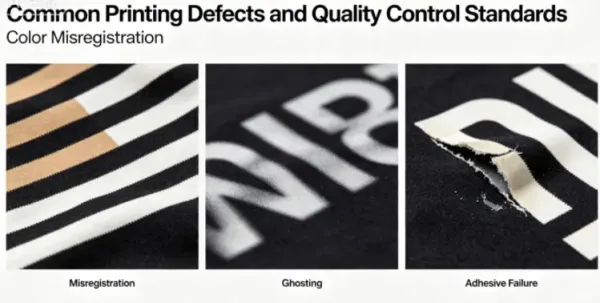
Common Garment Printing Defects & Quality Control Standards
3. Common Garment Embroidery Defects & Quality Control Standards
Embroidery is a high-end garment decoration process widely used in fashion clothing, uniforms, sportswear, and luxury apparel. Fine embroidery greatly improves garment added value, while unqualified embroidery will directly reduce product grade and cause customer returns.
Common Embroidery Defects
Typical embroidery defects include offset embroidery position, skewed patterns, misaligned positioning, missing stitches, and incomplete patterns. During embroidery production, uneven needle density, messy stitching, loose embroidery threads, broken threads, and overlong floating threads frequently occur.
Other common problems include color difference, mixed color, obvious thread joint marks, excessive bottom thread mess, residual backing paper, and piercing rough edges that irritate the skin. Unbalanced embroidery tension also causes fabric wrinkling, local bulging, and fabric deformation, which are common defective issues in bulk orders.
Embroidery QC Inspection Standards
Standard garment embroidery must be accurately positioned, symmetrical, and neat in overall layout. The embroidery pattern must be complete and full without missing stitches, incomplete patterns, or distorted shapes.
The needle spacing must be uniform and dense with no messy stitches, excessive floating threads, or loose threads. All embroidery threads must have consistent color tone without color difference or mixed color in the same batch.
The embroidery area must be flat and compliant with the fabric, no bulging, no wrinkling, and no fabric deformation caused by over-tight stitching. The bottom threads must be neatly trimmed, and all backing paper residues must be completely cleaned to avoid skin irritation.
All thread joints must be hidden without obvious traces. The embroidery threads must be firm and durable without loose threads or broken threads after tension testing.
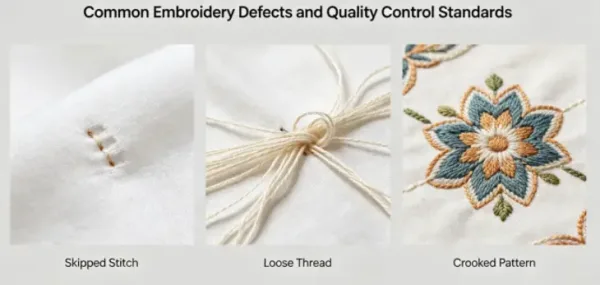
Common Garment Embroidery Defects & Quality Control Standards
4. Garment Quality Control Grading Standards for Defects
In international apparel sourcing and factory inspection, garment defects are divided into three grades: minor defects, major defects, and critical defects, which determine whether the batch order is acceptable or rejected.
Minor Defects: Tiny thread ends, slight color difference invisible from normal distance, negligible minor asymmetry. These defects do not affect wearing function, appearance, and product sales, which are acceptable within the standard proportion.
Major Defects: Obvious sewing distortion, unqualified printing peeling, partial missing embroidery, visible color difference, untrimmed messy threads, and functional zipper or button failure. Goods with major defects need rework and sorting.
Critical Defects: Fabric damage, holes, large-area printing falling off, massive embroidery missing, serious deformation, peculiar smell, and non-compliant safety indicators. Products with critical defects are directly rejected and prohibited from shipment.
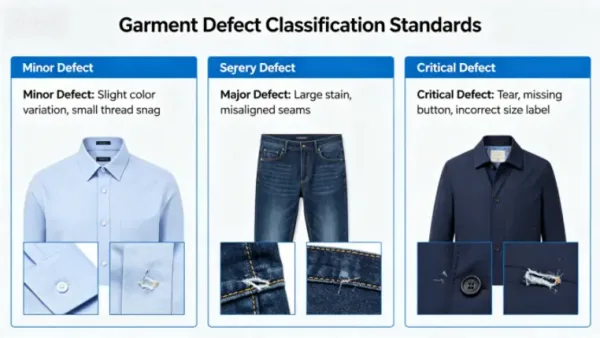
Garment Quality Control Grading Standards for Defects
5. Why Professional QC Inspection Is Indispensable for Apparel Sourcing
Many global buyers face unstable garment quality due to insufficient factory management and lack of professional garment quality control. Sewing, printing, and embroidery are the most error-prone processes in garment production. Professional garment quality control services help standardize factory production, conduct in-process and pre-shipment inspection, and eliminate defective goods before delivery.
Standardized garment quality control effectively reduces return risks, avoids batch losses, stabilizes product consistency, and helps apparel brands maintain long-term market competitiveness in global sourcing.
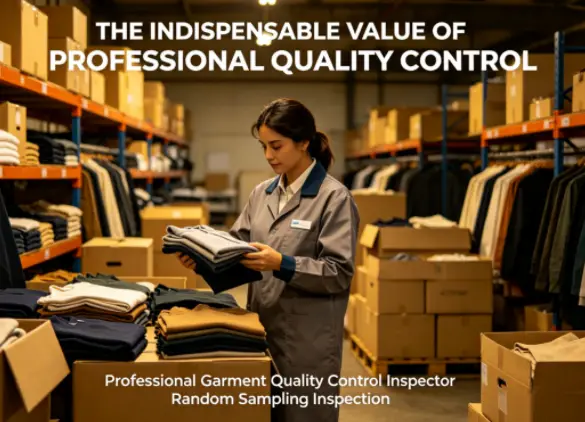
Why Professional QC Inspection Is Indispensable for Apparel Sourcing
Sewing, printing, and embroidery are the three core craftsmanship that determine garment quality and appearance. Mastering common garment sewing defects, garment printing defects, garment embroidery defects and international garment quality control standards allows global buyers to monitor Chinese garment factories efficiently, standardize production requirements, and greatly improve overall order quality.
If you are looking for reliable product sourcing companies and professional garment QC inspection services in China, Sourcingyuan provides full-process apparel sourcing, factory audit, production supervision, and pre-shipment inspection solutions to ensure every shipment meets international quality standards.
Share This Story, Choose Your Platform!
We connect you with reliable factories, get the best quotes, deliver straight to your door.