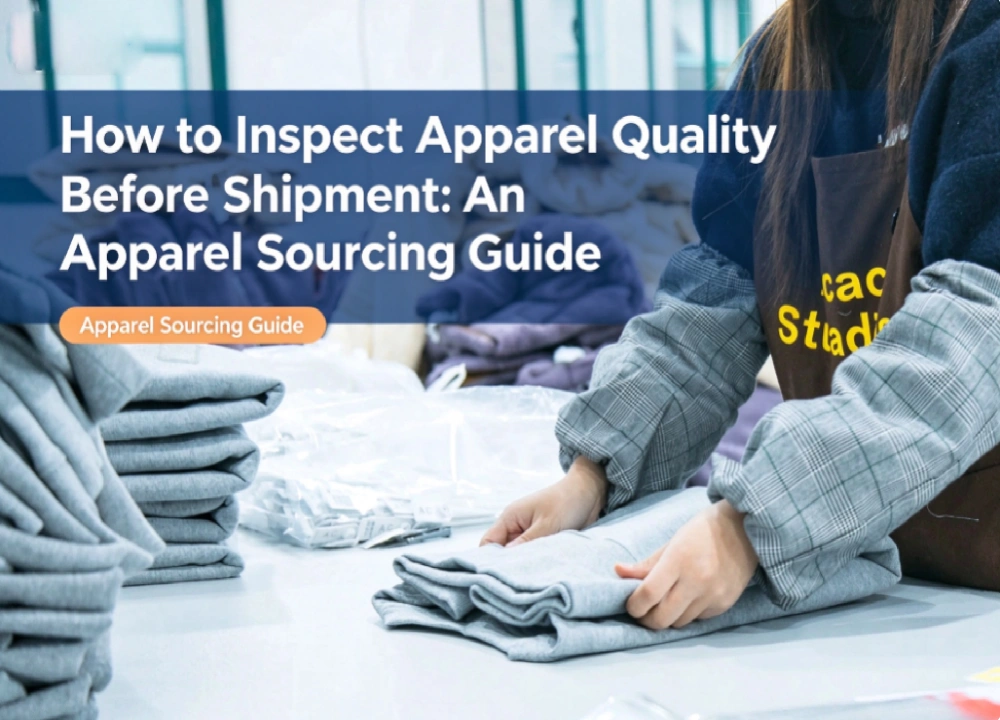
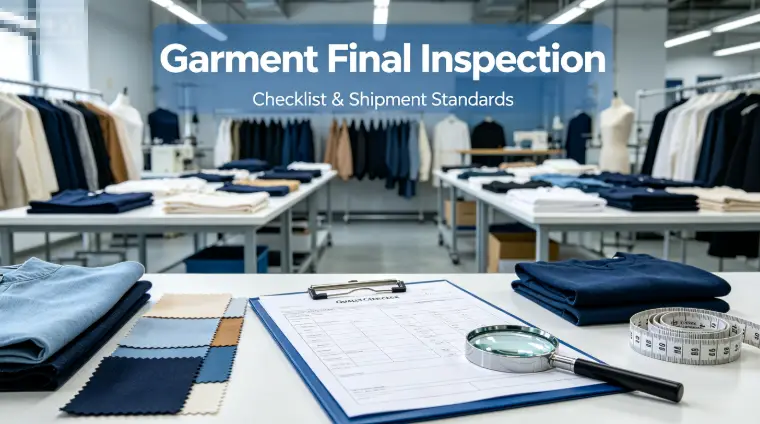
In apparel foreign trade, garment final inspection is the last and most critical quality barrier before factory delivery. Standard garment final inspection can effectively avoid defective goods, customer complaints, return orders and customs rejection.
Many garment factories only focus on sewing production but ignore standardized garment final inspection and unified shipment standards, resulting in unstable batch quality. This article sorts out the complete operation process, detailed checklist and official shipment standards for garment final inspection, helping foreign trade suppliers achieve zero-risk delivery.
1. Importance of Standard Garment Final Inspection
Garment final inspection refers to the full inspection and random sampling of finished garments before shipment, covering appearance, size, workmanship, accessories, packaging and compliance marks. Professional garment final inspection can unify batch consistency and eliminate subtle defects that are easily ignored during mass production.
For overseas buyers, standardized garment final inspection is the core basis for judging factory professionalism and supply stability. Factories with complete garment final inspection systems have lower after-sales rates, more stable customer cooperation and stronger market competitiveness in long-term foreign trade orders.
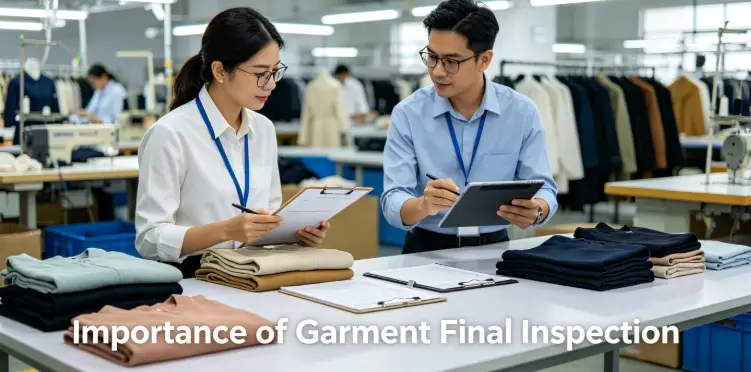
Importance of professional garment final inspection
2. Full Size & Specification Inspection Standards
Size error is one of the most common problems in bulk orders, so size checking is the first priority of garment final inspection. All finished garments must strictly follow customer size charts and tolerance rules.
During garment final inspection, inspectors need to measure key data including chest width, shoulder width, sleeve length, body length, waist and hip circumference. All dimension errors must be controlled within the international tolerance range. Any oversized or undersized products that exceed the standard tolerance will be classified as defective products and isolated, which is an essential rule of formal garment final inspection.
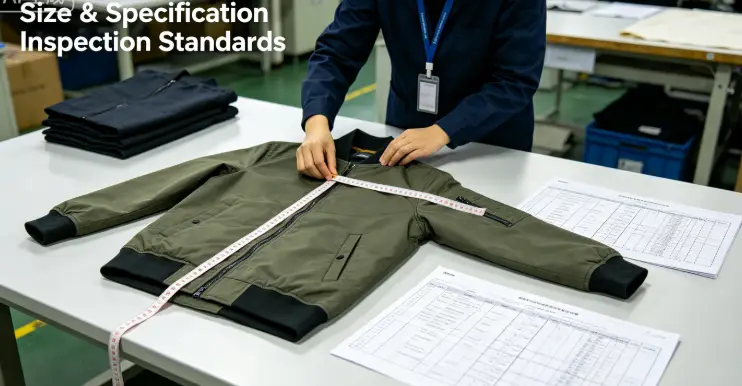
Size and specification checking for garment final inspection
3. Appearance Workmanship & Fabric Defect Inspection
Appearance quality directly determines the grade of garments and is the key inspection module of garment final inspection. Inspection covers fabric surface, sewing details, stitching uniformity and overall flatness.
In the process of garment final inspection, inspectors need to check fabric flaws such as color difference, staining, yarn jumping, hole damage and wrinkling. At the same time, check sewing tightness, thread ends, broken stitches and uneven stitching. Unclean thread ends, messy stitching and obvious fabric defects are not allowed in qualified products. Strict appearance inspection ensures the high appearance quality of bulk goods for garment final inspection.
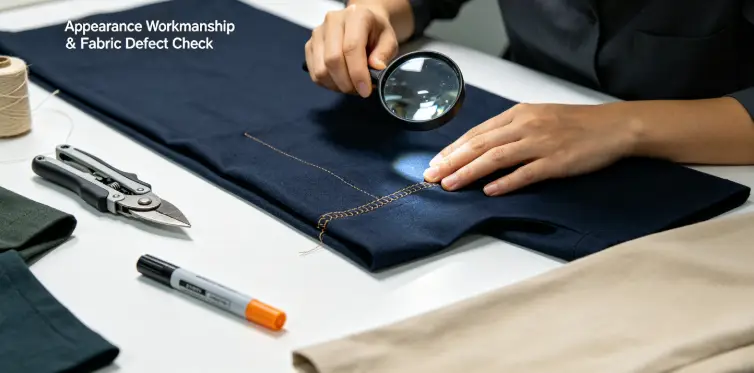
Workmanship and fabric defect inspection standards
4. Accessories, Labels & Compliance Inspection
Accessories and label compliance are easily overlooked details in garment final inspection, but they are the main cause of customer rejection and customs non-compliance.
Garment final inspection must verify whether all accessories are complete and qualified, including zippers, buttons, snaps, drawstrings and embroidery. All hanging tags, washing labels, size labels and origin marks must be pasted correctly, with clear printing, accurate information and consistent position. For export orders, inspectors need to confirm that labels meet EU, US and international trade compliance standards to avoid customs detention caused by non-standard details in garment final inspection.
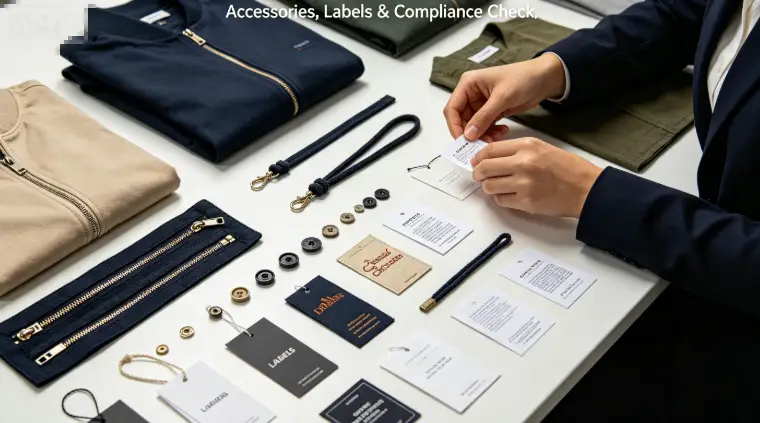
Labels and accessories compliance inspection for garments
5. Packaging, Quantity & Shipment Standard Rules
Qualified garment final inspection includes not only product quality inspection, but also standardized packaging and quantity verification before delivery.
In the final stage of garment final inspection, workers need to confirm single-piece packaging, dust-proof and wrinkle-proof processing, carton hardness and sealing standards. The quantity of each carton must be accurate, with no missing pieces or mixed sizes. Outer carton shipping marks, barcode information and packing list data must be completely consistent. All packaging and shipment operations must follow unified foreign trade standards to ensure intact and compliant delivery after garment final inspection.
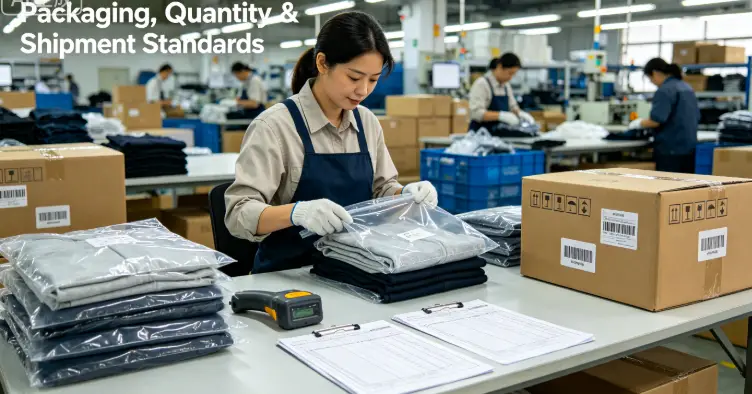
Packaging and quantity pre-shipment inspection
6. Defect Classification & Rework Processing Standards
A complete garment final inspection system needs clear defect classification standards to distinguish minor defects, major defects and critical defects.
During garment final inspection, minor flaws such as tiny thread ends can be repaired uniformly; products with obvious color difference, wrong size and broken accessories belong to major defects and need full rework; products with safety hazards and non-compliant labels are critical defects and are strictly prohibited from shipment. Classified processing during garment final inspection can effectively control defective rate and ensure batch order quality stability.
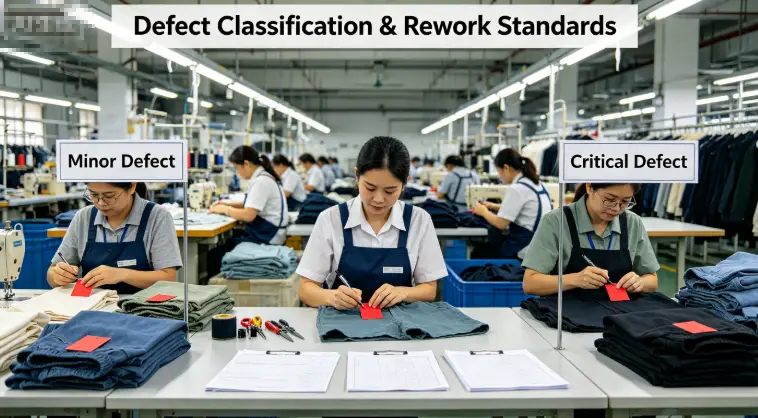
Defect classification and rework standards for garments
7. Build Standardized Pre-shipment Inspection & Delivery System
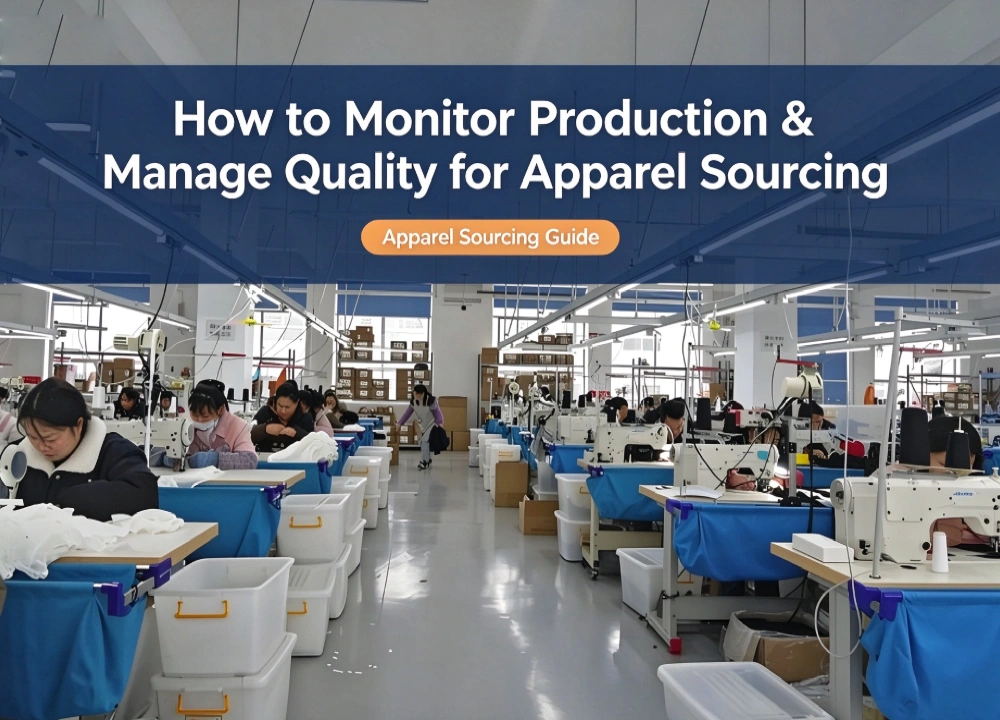
Excellent foreign trade garment factories do not rely on manual random inspection, but build a complete closed-loop garment final inspection and shipment management system.
Standardized garment final inspection runs through the whole process of finished product sorting, quality checking, rework confirmation and packaging warehousing. By implementing unified inspection standards, fixed inspection procedures and complete inspection records, factories can greatly reduce shipment risks. Scientific and standardized garment final inspection not only improves order pass rate, but also enhances buyer trust, helping apparel suppliers maintain long-term stable cooperative advantages in global export business.
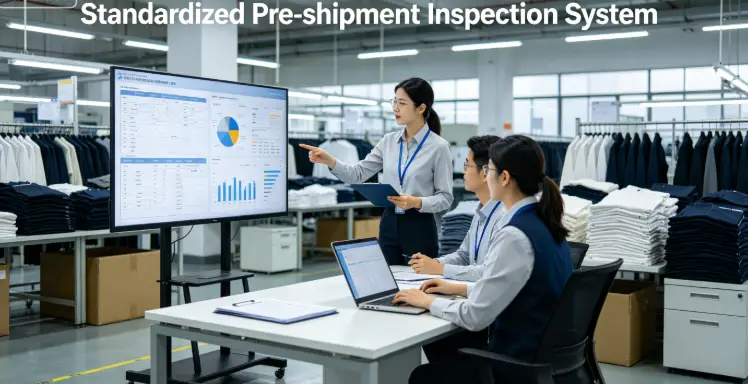
Build standardized garment final inspection system
Share This Story, Choose Your Platform!
We connect you with reliable factories, get the best quotes, deliver straight to your door.