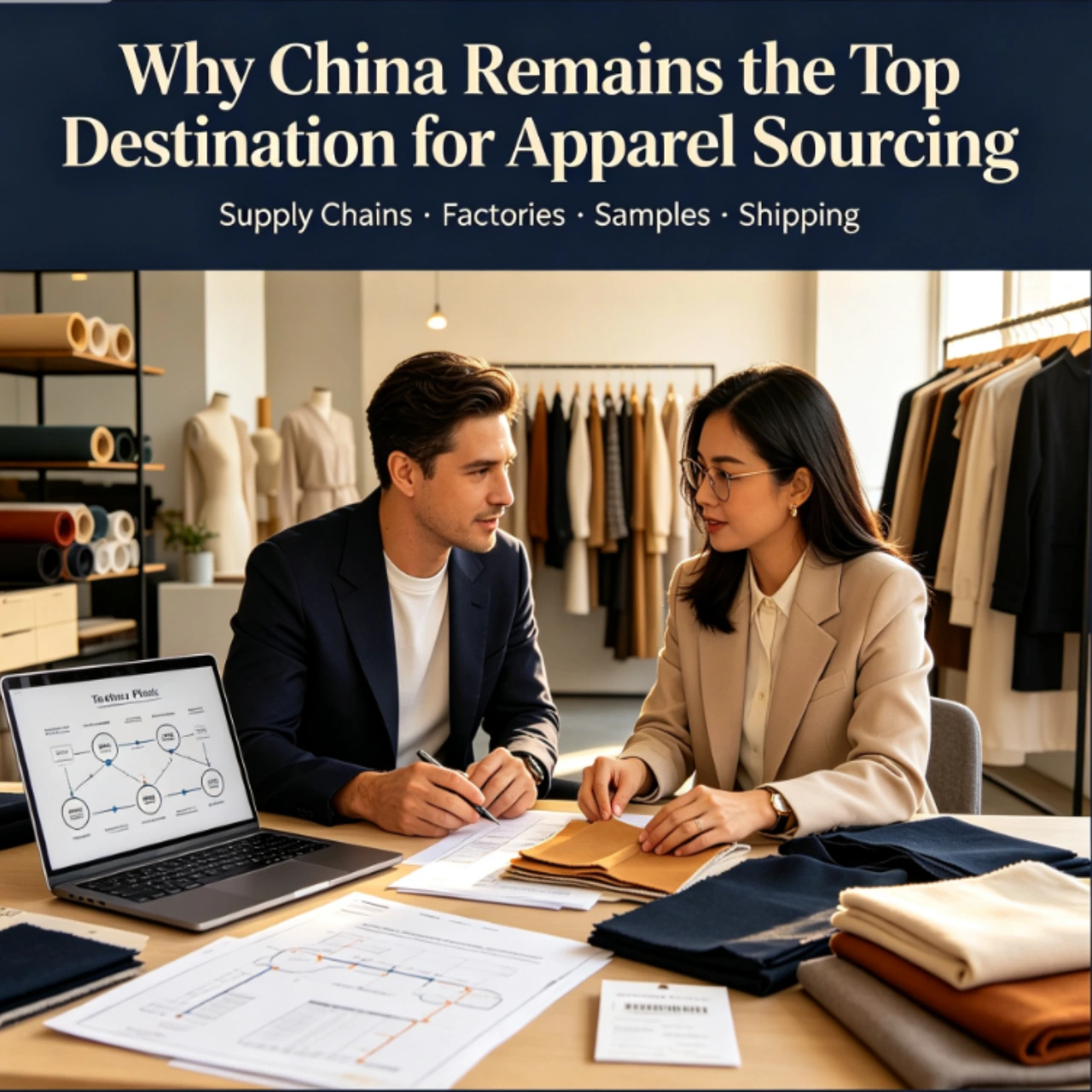
China is still the world’s most comprehensive apparel sourcing base, with unmatched integrated supply chains, flexible MOQs and industrial technology that Vietnam, Bangladesh and Turkey cannot fully replicate.
If you’re sourcing apparel for a new fashion brand or scaling an existing line, you’ve likely asked: “Should I source from China, or look elsewhere?” Vietnam, Bangladesh, and Turkey all offer options. But China remains the global leader—and for good reason. When you learn how to source apparel from China, you quickly discover that the country isn’t just one option among many—it is the world’s largest China garment manufacturing hub.
China accounts for over 30% of global clothing exports, with the textile and garment sector valued at over $293 billion annually. According to China General Administration of Customs official trade statistics, in the first half of 2026 alone, China’s textile and apparel exports reached $145.96 billion, up 1.4% year-over-year—with June exports growing 7.2% to $29.27 billion.For new fashion brands and established retailers alike, China offers a combination of advantages that no other single country can match.
The Infrastructure Advantage: Why China Is the World’s China Clothing Manufacturing Hub
China isn’t just a garment-producing country—it is the world’s most advanced China clothing manufacturing hub. And apparel sourcing isn’t about a single city or factory—it’s about ecosystems. In Guangdong Province alone, more than 5,000 garment factories operate within a 50km² radius around Guangzhou. This concentration means a fashion brand can source fabric, arrange cutting and sewing, and ship finished goods—all within a single industrial cluster.
The practical benefit is speed. In central China’s Tianmen, Hubei Province, the local garment industry has embraced an “integrated ecosystem” approach: over 800 textile businesses operate in one community, processing more than one million packages daily at incredibly low logistics costs. “Submit your design in the morning, take your finished garments by afternoon,” promises one community leader—a speed that reflects the true capability of China’s vertically integrated supply chain.
This level of integration is what makes apparel manufacturing China uniquely powerful. Rather than waiting for fabrics from one region, trims from another, and logistics from a third, buyers can manage everything within a single cluster—reducing lead times from months to weeks.
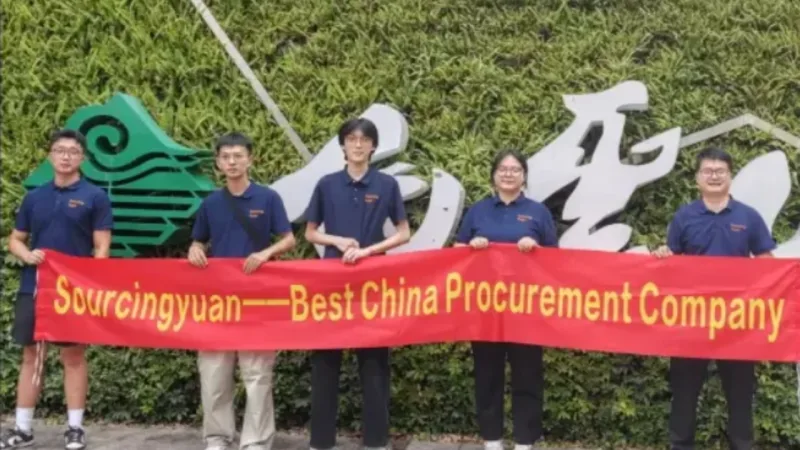
China Sourcing Agent in Guangzhou
From SourcingYuan’s Experience: Navigating Guangzhou’s Apparel Ecosystem
At SourcingYuan, our team is based in Guangzhou, one of the most important apparel sourcing hubs in China, giving us direct access to major fabric markets like Zhongda and wholesale markets like Shahe and Shisanhang.
Our team in Guangzhou’s Shahe Apparel Market during a supplier sourcing session
The advantage is simple: we can coordinate with garment factories, source materials, and manage apparel development projects directly on the ground—rather than communicating remotely across time zones. As a Guangzhou clothing sourcing agent, our team bridges the language and cultural gap for international brands.
We’ve seen how this physical presence makes a difference. For a European fashion brand developing a new clothing line, we coordinated supplier identification, sample development, and multiple rounds of technical revisions. By communicating directly with factories in Guangzhou and ensuring tech packs were clearly understood, we helped the client move from design to production preparation without the miscommunication that often derails remote projects.
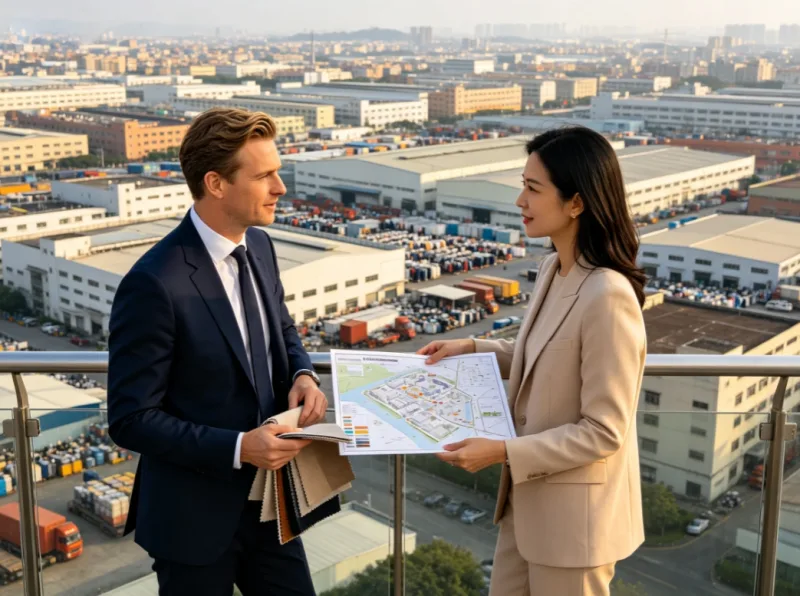
Integrated Guangdong garment industrial cluster for apparel sourcing
Regional Specialization: The Right Factory for Every Product
Not every part of China makes the same thing. Understanding regional strengths helps you find the right garment sourcing partner:
| Region | Specialty | Ideal For |
| Guangdong (Guangzhou, Shenzhen, Dongguan) | Fast fashion, sportswear, technical garments | Brands needing rapid turnaround, low MOQs |
| Zhejiang (Hangzhou, Ningbo, Yiwu) | Knitwear, silk, high-end casual wear | Premium collections, knit-focused lines |
| Fujian (Xiamen, Quanzhou) | Activewear, outdoor apparel, sportswear | Performance fabrics, moisture-wicking |
| Jiangsu (Suzhou, Wuxi) | Woven garments, formalwear, sustainable textiles | High-quality tailoring, compliance-focused brands |
| Henan, Hunan, Hubei | Emerging e-commerce fashion hubs | Cost-effective production, digital-first fulfillment |
Each hub operates as a vertically integrated ecosystem. For example, Shaoxing textile sourcing centers around the China Textile City, the world’s largest textile distribution hub, which reported $34.96 billion in transactions in the first half of 2026 alone. The China Textile City’s AI fabric 3.0 platform allows buyers to search for fabrics by simply taking a photo—and the system instantly matches them with suppliers while providing fabric composition, MOQ details, and supplier locations. This is the reality of Shaoxing textile sourcing today: technology-driven, fast, and highly efficient.
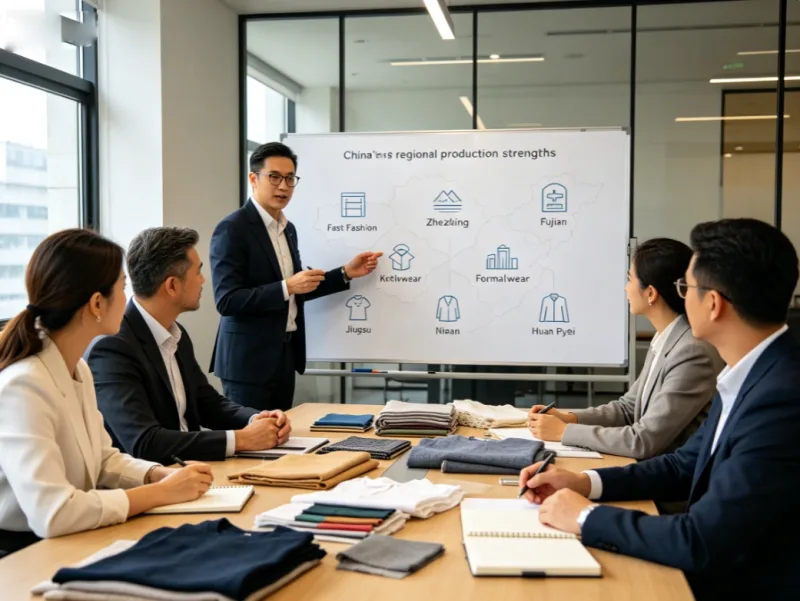
Regional garment specialization guide for apparel sourcing
Technology That Accelerates Production
China’s apparel industry has moved far beyond “cheap labor.” Digital transformation is reshaping garment production from design to delivery:
AI fabric-sourcing robots can scan and match fabric samples in minutes—a process that once required days of walking through markets. As documented in China National Textile and Apparel Council industry research, intelligent design software, automated cutting systems and digital production monitoring have fueled the rise of small-batch fast-response manufacturing nationwide.
Intelligent design software creates multiple variations from a simple sketch or keyword prompt.
Automated cutting systems, smart dyeing, and digital production monitoring allow for “small-batch, fast-response” manufacturing (小单快反) that has made Chinese suppliers the backbone of brands like SHEIN.
The rise of hubs like Tianmen shows how deeply technology is integrated into the fabric of the industry. The city’s supply chain platform connects over 20,000 users and 3,000 certified businesses, facilitating over 400 supply-demand matches worth more than 10 million yuan in just a few months.
From SourcingYuan’s Experience: Real-Time Remote Support for International Brands
For international brands, sourcing directly from China can feel daunting. Language barriers, time zone differences, and cultural gaps can slow the process.
Based in Guangzhou, our team can conduct real-time remote video tours—taking you directly to factory production lines, exploring popular market stalls like Shahe and Shisanhang, and facilitating face-to-face communication with suppliers.
What we see is what you see; what you ask is what we ask. Decision-making has never been more efficient and intuitive.
From early-stage creative inspiration and design sketches to final product images and promotional videos, we provide full support. Our team has helped brands across apparel, electronics, and other categories manage complex multi-supplier projects from our Guangzhou office. This is the value a Guangzhou clothing sourcing agent brings—turning local knowledge into global advantage.
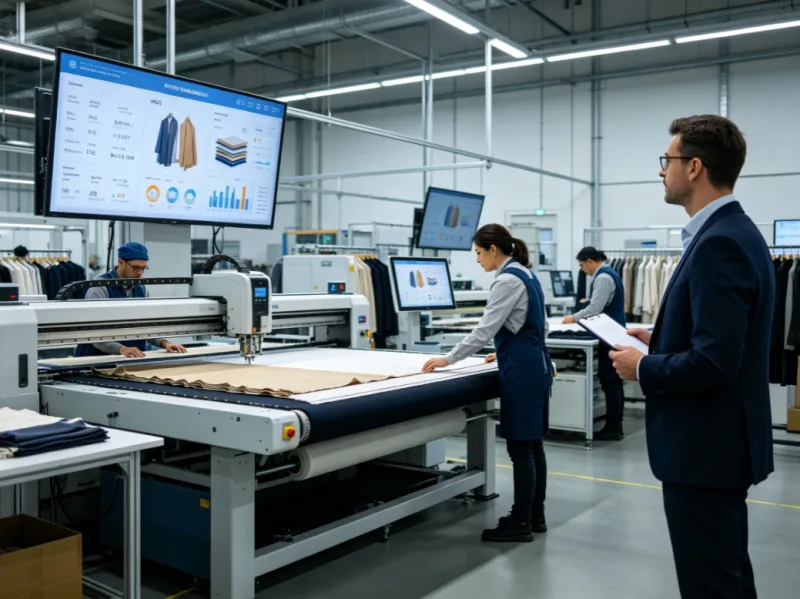
AI digital production technology for apparel sourcing
MOQ Flexibility: A Game-Changer for New Brands
One of the biggest barriers for new fashion brands is minimum order quantity (MOQ). Traditional garment factories often require 500–1,000 pieces per design—a big risk for unproven products.
China’s manufacturing clusters have adapted. While many factories still offer standard MOQs, an increasing number accept small-batch orders. Some suppliers source clothes from China with MOQs as low as 50 units, making it feasible to test new styles without overcommitting.
For brands seeking even lower risk, wholesale markets in Guangzhou and Yiwu offer access to “ready-made” stock that can be purchased in smaller quantities. The Yiwu clothing wholesale market, for example, spans 420,000 square meters and offers both wholesale and retail options, with 26.3% of sales going to export markets. This combination of custom and off-the-shelf options makes China uniquely flexible compared to sourcing destinations that require high volumes. The top apparel sourcing companies in China leverage these advantages daily to help international brands bring their products to market efficiently.
From SourcingYuan’s Experience: Solving the “Small-Batch High-End” Dilemma
Australian fashion brand client’s 22mm heavyweight silk shirts
We recently helped an Australian women’s fashion brand launch 22mm heavyweight silk shirts—but they had strict requirements: only 30 pieces per style, with silk imported exclusively from Italy.
This was a classic “small-batch, high-end” challenge. Many factories wouldn’t touch such a small order, especially with premium imported materials. Our team selected two factories in Zhejiang and Guangdong capable of producing small-batch high-end silk products, and supervised the entire process from sample making to quality control.
The result? The final shirts quickly gained popularity in the local market due to their superior texture. The client subsequently placed additional orders for 5 more product lines.
This case illustrates what China does best: not just low-cost mass production, but flexible, quality-focused manufacturing for brands at any stage. With the right local support, even small orders with premium requirements can be successfully produced.
How SourcingYuan Manages Multi-Supplier Apparel Projects
A European client sources baby, children’s, and men’s clothing from multiple factories across China. At SourcingYuan, we turn this complex multi-supplier coordination into a streamlined, controlled workflow.
Here’s how we do it:
Step 1: Tech Pack Integration
We work with Chinese designers to update and refine Tech Packs, ensuring all specifications are clearly understood before production begins.
Step 2: Supplier Matching
For each product category, we identify and verify factories that match the technical requirements—baby clothing needs different capabilities than menswear, and we know which suppliers excel in each.
Step 3: Sample Management
We follow up on samples through multiple revision rounds, providing detailed feedback to ensure the sample matches the client’s expectations before mass production starts.
Step 4: Quality Inspection
Our team inspects goods at each critical production stage—pre-production, during production, and pre-shipment—to catch any issues before they become costly problems.
Step 5: Warehousing & Consolidation
With offices and warehouses in Guangzhou, Henan, and Changzhou, we receive goods from different regions, inspect them individually, and consolidate everything in one location.
Step 6: Re-Packing & Shipment
We re-pack goods according to the client’s requirements and ship everything together—reducing overall shipping costs and minimizing the risk of lost or delayed shipments.
The result? A complex multi-supplier project becomes a single, controlled outcome—one complete shipment, on time, to spec.
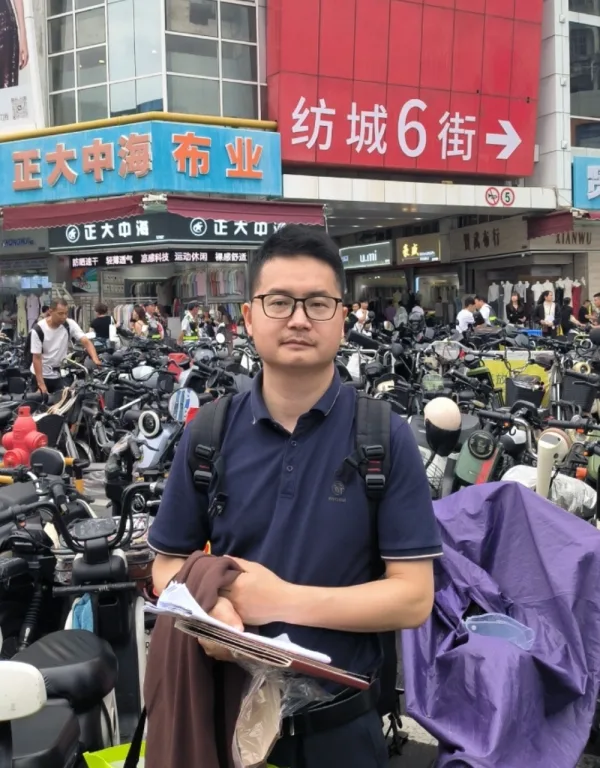
Lee personally visited the fabric market in Guangzhou
FAQ
1.Is China still the best country for apparel sourcing?
Yes. China accounts for over 30% of global clothing exports and offers unmatched vertical integration, technological infrastructure, and MOQ flexibility. While Vietnam, Bangladesh, and Turkey offer advantages for specific product categories, no single country matches China’s combination of scale, speed, and adaptability. In the first half of 2026, China’s textile and apparel exports reached $145.96 billion, confirming its continued dominance.
2.Why is Guangdong so important for apparel sourcing?
Guangdong Province is the heart of fast fashion and sportswear production. Home to cities like Guangzhou, Shenzhen, and Dongguan, the region has over 5,000 garment factories within a 50km² radius, enabling rapid turnaround from fabric sourcing to finished goods. Its proximity to Hong Kong also facilitates faster shipping and communication.
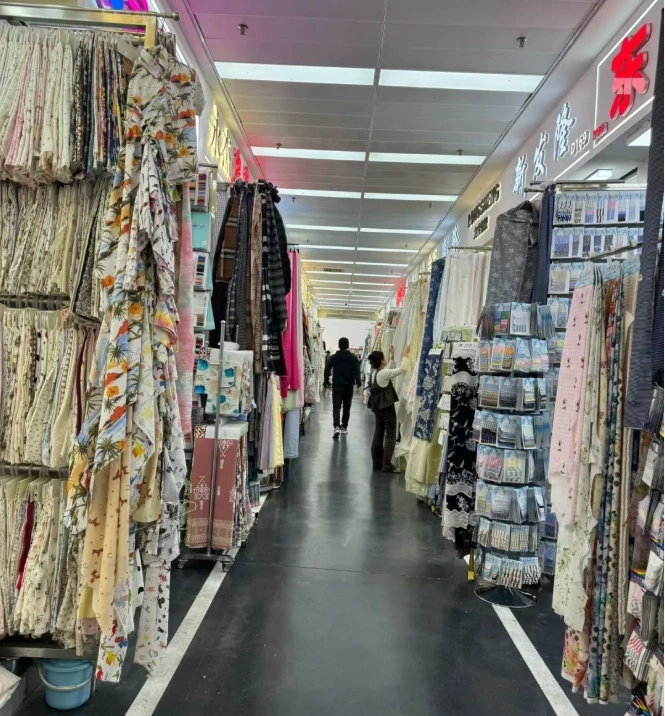
Guangzhou Zhongda Fabric Market
3.What is the minimum order quantity (MOQ) for apparel sourcing in China?
MOQs vary by factory and product. Standard MOQs typically range from 100 to 500 pieces per design, but many suppliers now accept orders as low as 50 units—especially in fast-fashion hubs like Guangdong and emerging hubs like Henan. As our Australian client’s case shows, even high-end silk with only 30 units per style can be successfully produced with the right factory and local coordination.
4.How fast can I get apparel manufactured in China?
Lead times vary by product complexity and order size. Basic garments can be produced in 30–45 days, while complex designs with custom fabrics may require 60–90 days. Fast-fashion hubs in Guangdong can turn around small batches even faster—sometimes within 2–3 weeks from sample approval.
5.How is technology changing apparel manufacturing in China?
AI-powered tools are transforming every stage of production: fabric-sourcing robots match samples in minutes, intelligent design software generates multiple variations from simple prompts, and smart systems enable small-batch, fast-response manufacturing. These technologies are central to China’s continued competitiveness.
6.Can I verify a clothing supplier in China before ordering?
Yes. Conduct background checks through platforms like QCC.com, request third-party audit reports (SGS, Bureau Veritas, QIMA), order pre-production samples, and ask for client references. If possible, conduct a virtual or in-person factory audit. At SourcingYuan, we perform on-site factory verification for every shortlisted supplier before making recommendations.
7.What are the best apparel wholesale markets in China?
Guangzhou is home to major markets including Baima, Shisanhang, and Shahe, each serving different buyer types. The Yiwu clothing wholesale market (420,000 square meters) is another major destination, offering both wholesale and retail options with 26.3% of sales going to export markets. For fabric sourcing, Shaoxing textile sourcing centers around the China Textile City, the world’s largest textile distribution hub.
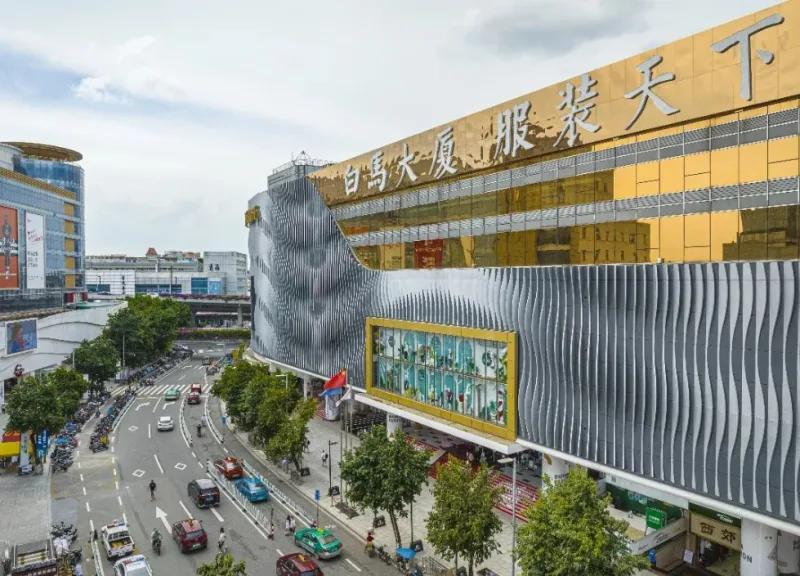
Guangzhou Baima clothing market
8.Can a local sourcing agent help with apparel sourcing?
Yes. A Guangzhou clothing sourcing agent can bridge the language and cultural gap, coordinate factory visits, and manage quality control on your behalf. At SourcingYuan, our team in Guangzhou does exactly this—and we’re among the top apparel sourcing companies in China helping brands from the US, Europe, Australia, and beyond navigate the local market.
9.What should I do if I’m sourcing from multiple apparel suppliers?
Consider working with a local partner who can coordinate across factories, inspect quality, consolidate shipments, and manage logistics. A team on the ground can help ensure you receive one complete, on-time shipment rather than managing multiple suppliers yourself. At SourcingYuan, we help brands with apparel sourcing in China by turning complex multi-supplier projects into a single controlled outcome—as outlined in the 6-step process above.
For apparel brands—whether launching a first collection or scaling a global line—China remains the world’s most capable sourcing destination. The country’s vertically integrated industrial clusters offer unmatched speed, flexibility, and production quality, making apparel manufacturing China the gold standard for garment sourcing worldwide. AI-powered tools and digital transformation continue to enhance efficiency, while emerging hubs across Hunan, Hubei, and Henan provide new opportunities for cost-effective, scalable production.
For brands that want to navigate this landscape with confidence, working with a local partner based in Guangzhou can bridge the gap between concept and finished product—turning China’s manufacturing power into a competitive advantage.
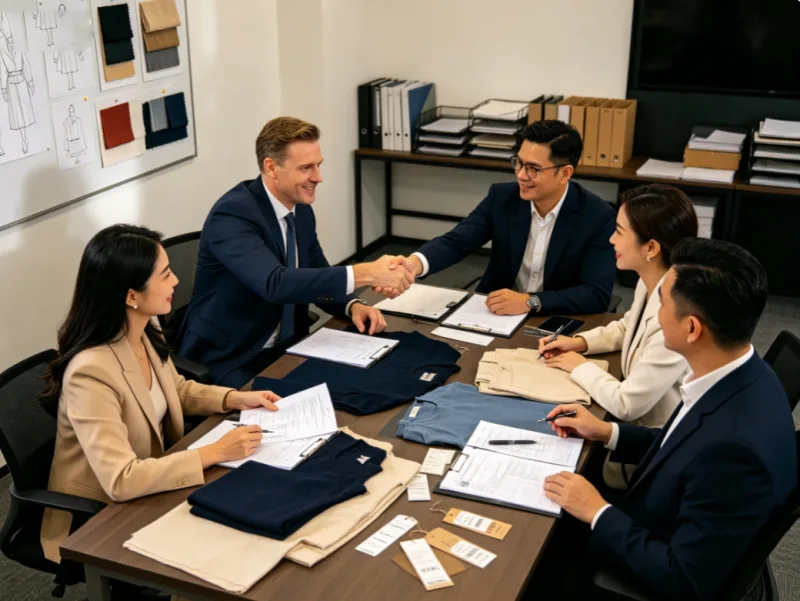
End-to-end partnership solution for apparel sourcing
About the Author
Jeff Lee
Founder of Sourcingyuan
Jeff Lee is the founder of Sourcingyuan, a China-based sourcing and product development company. He has more than 10 years of experience helping overseas businesses source products, develop new products, identify reliable manufacturers, manage production, and build supply chains in China.
Connect with Jeff: LinkedIn | YouTube
Share This Story, Choose Your Platform!
We connect you with reliable factories, get the best quotes, deliver straight to your door.