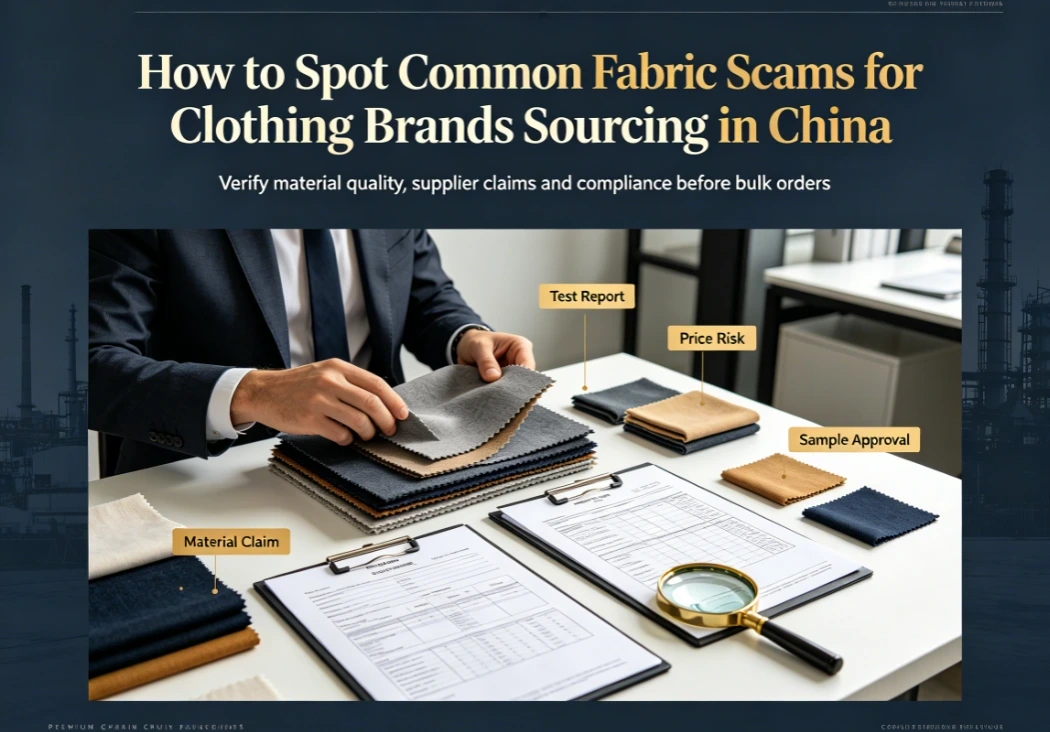
Fabric quality determines the core competitiveness of clothing products. Fabric cost also takes up the largest share of apparel sourcing budgets. For startup fashion brands, boutique labels, and overseas designers, fabric fraud is one of the most common yet easily overlooked risks in China sourcing. Unlike visible stitching defects or size errors, fabric cheating is highly concealed. Most problematic fabrics look normal on the surface but fail in texture, durability, color fastness, or material composition.
Many new buyers suffer huge losses because they are unfamiliar with China’s textile industry rules. Factories may cut gram weight, falsify material labels, replace high-grade fabrics with cheap alternatives, or skip proper post-processing. These scams lead to inconsistent batch quality, high return rates, poor reviews, customs failures, brand damage, and wasted budgets.
China’s textile supply chain is mature and diverse, but it also has irregular practices. This guide systematically breaks down the most common fabric scams in China sourcing. It analyzes factory tricks and shares practical detection and prevention methods. It helps fashion brands identify problematic fabrics, avoid traps, and stabilize long-term product quality and brand credibility.
Fabric Composition Fraud (False Labeling & Material Replacement)
Composition falsification is the most widespread scam in China sourcing. Many irregular factories use fancy fabric names and false ingredient labels to deceive buyers. This is especially common for high-value natural fabrics like cotton, linen, wool, and silk. The core trick is labeling low-cost blended or chemical fiber fabrics as pure natural materials to raise prices. Alternatively, factories mark extremely low natural fiber content as high proportion to match brand positioning.
A typical case is fake linen and cotton-linen blends. Many products labeled “100% linen” or “high-content cotton linen” actually contain 0% or less than 3% linen. The main component is cheap polyester. Similarly, so-called “cloud cotton,” “ice cotton,” and “soft cotton” are not pure cotton. They are modified chemical fiber blends with catchy marketing names. For wool and silk, factories often mix ordinary wool with low-grade recycled wool, or replace real silk with satin polyester while labeling it as pure silk.
How to spot and avoid: Never trust fabric names and label descriptions blindly. Lock accurate ingredient proportions in your contract. Require factories to provide third-party test reports. For key bulk orders, arrange random sampling and professional composition testing. Simple on-site checks also help: pure cotton burns without black smoke and has no pungent odor. Chemical fiber fabrics produce black smoke and hard coking residues when burned.
Gram Weight Cutting & Density Shrinkage (Thinner Fabric Than Confirmed)
Gram weight and weaving density determine fabric thickness, three-dimensional texture, and durability. This scam is extremely hidden and very common in bulk production during China sourcing. Many factories confirm standard gram weight during sampling, but reduce actual gram weight and density in mass production. This cuts raw material costs and boosts profit margins.
For streetwear heavyweight hoodies, casual cotton tees, and tailored outerwear, gram weight deviation destroys product styling. A 380g heavyweight fabric may be replaced with 320g thin fabric. High-density combed cotton may be swapped with low-density loose weaving. The finished products look similar to samples at first glance. But they wrinkle easily, deform, lack wind resistance, and feel thin and transparent. They completely fail to meet boutique brand standards. Buyers who overlook this risk often suffer the most from gram weight cheating in China sourcing.
How to spot and avoid: Lock fixed gram weight and density parameters in your tech pack and contract. Include penalty clauses for insufficient gram weight. Before bulk shipment, use a professional gram weight tester for random inspection. Compare the hand feel, thickness, and drape of bulk fabrics with confirmed samples one by one. This eliminates batch cutting corners.
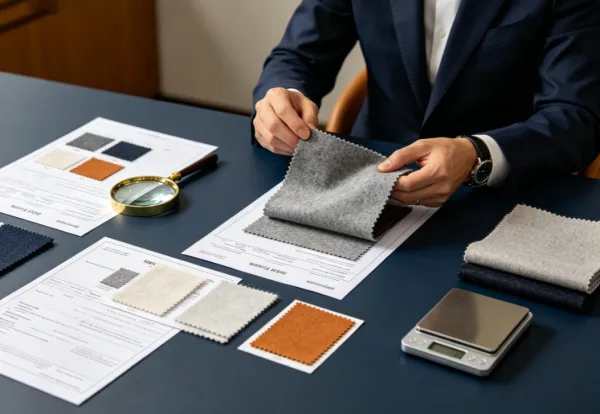
How to Spot Common Fabric Scams for Clothing Brands Sourcing in China
Old Stock & Recycled Fabric Disguise (Stale & Unstable Materials)
To reduce costs, many small and medium factories buy overstocked old fabrics, defective bulk materials, and recycled leftovers from large textile mills. They process them through re-dyeing, re-softening, and finishing to disguise them as new qualified fabrics. This is a high-risk scam that often causes widespread quality problems.
Old stock fabrics have been stored for a long time. Fiber toughness degrades. Color fixation becomes unstable. They fade and lose hair easily after washing. Recycled fabrics have uneven density and mixed impurities. The same batch of garments shows inconsistent texture. Most seriously, old recycled fabrics may contain excessive harmful chemical residues. They fail EU REACH and OEKO-TEX compliance tests. This leads to customs detention and order returns.
How to spot and avoid: Observe the fabric surface carefully. Old fabrics have dull luster, uneven color tone, and tiny floating impurities. Smell the fabric. Long-stored materials have mildew, damp, or chemical odors. New qualified fabrics have no smell. Prioritize factories with fixed supply chains. Explicitly reject recycled and overstock fabrics in your cooperation terms.
Color Fastness & Shrinkage Hidden Risks (Unqualified Post-Processing)
Many buyers only check fabric appearance and hand feel. They ignore post-processing quality. This becomes a key hidden scam. Formal qualified fabrics need complete pre-shrinking, color fixing, and softening processes. But many factories skip high-temperature pre-shrinking and professional color fixing to save time and money.
Fabrics without pre-shrinking shrink severely and deform after the first wash. This creates large numbers of defective finished products. Fabrics with poor color fixing fade and stain during washing. This causes customer complaints and high return rates. The problem is especially common in dark colors, vintage washed fabrics, and custom dyed materials. Most startup brands cannot detect these hidden risks through simple sample observation.
How to spot and avoid: Run simple wet rubbing and washing tests on samples and bulk fabrics. Wipe the fabric surface with a wet white cotton cloth. Serious color transfer means poor color fastness. Require factories to provide shrinkage test data. Strictly enforce pre-shrinking standards in bulk production to ensure stable wash performance across batches.
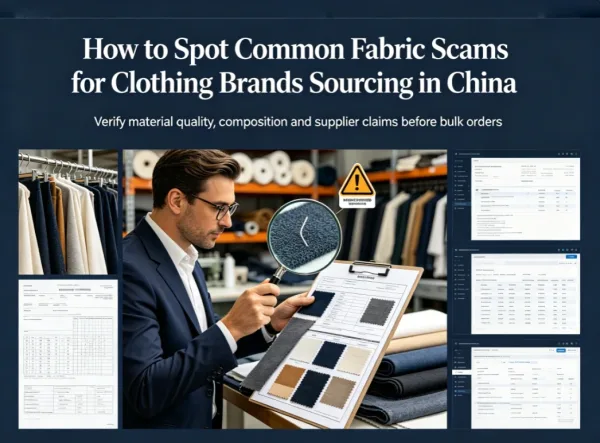
How to Spot Common Fabric Scams for Clothing Brands Sourcing in China
Hierarchical Fabric Replacement (Sample vs Bulk Inconsistency)
Sample-batch inconsistency is one of the most frequent scams in custom China sourcing. Many dishonest factories use high-grade fabrics with standard gram weight, density, and finishing for pre-production samples. This passes buyer inspection. But in formal bulk production, they switch to low-grade cheap fabrics of the same style and similar color. This reduces their costs.
This fraud is highly targeted. Sample quality looks perfect. But bulk fabric texture, thickness, softness, and luster are clearly different. Finished garments have inconsistent style, poor texture, and unqualified workmanship. Brand aesthetics are ruined. Most new brands fall into this trap because they confirm samples but neglect bulk fabric inspection.
How to spot and avoid: Lock the confirmed sample as the sole production standard. Keep sample fabrics for filing and comparison. Arrange fabric inspection immediately after the factory prepares bulk materials, before cutting and sewing. Strictly check hand feel, thickness, luster, and elasticity. Ensure 100% consistency between bulk fabrics and standard samples.
Fancy Fabric Name False Promotion (Conceptual Gimmick Scam)
As fashion trends evolve, many factories use trendy internet fabric names to hype concepts and charge premium prices. This is a common marketing-style scam in China sourcing. Names like “ice silk cotton,” “air layer cotton,” “cloud soft fabric,” and “negative oxygen fabric” are essentially ordinary blends. But they are packaged as high-end new materials to justify higher sourcing fees.
These conceptual fabrics have no industry certification standards. Their actual performance is no different from ordinary cost-effective fabrics. Yet unit prices are 20–40% higher. Many boutique brands chase these trendy concepts to follow market trends, often making costly mistakes in China sourcing. They end up paying more without improving product quality. Profit margins are squeezed.
How to spot and avoid: Ignore fancy marketing names. Focus only on objective fabric parameters: composition ratio, gram weight, yarn count, weaving density, and post-processing technology. Do not pay premium prices for conceptual gimmicks. Match conventional mature fabrics to your brand positioning and style needs. This ensures cost transparency and quality stability.
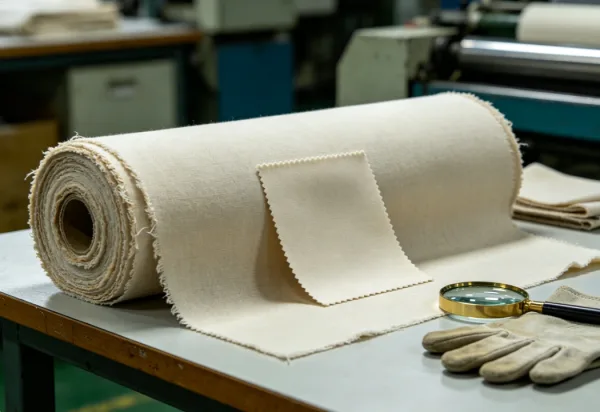
Common Fabric Scams in China Sourcing: A Detection Guide for Clothing Brands
Certification Falsification (Fake Compliance Documents)
For brands exporting to Europe and America, fabric compliance certification is a basic requirement for customs clearance and sales. Many irregular factories forge OEKO-TEX, REACH, GOTS organic certification, and test reports to meet buyer requirements. This creates a high-risk scam. Fake certified fabrics cannot pass official customs inspection or third-party testing. This leads to shipment detention, order returns, and even brand penalty records.
This fraud is hard to detect with the naked eye. Fabric appearance and hand feel look acceptable. Factories can provide complete document templates. But actual raw materials do not meet international environmental and safety standards. They contain excessive harmful chemicals. This brings huge hidden dangers to long-term brand operations.
How to spot and avoid: Verify all certification documents through official inquiry channels. For high-end compliance orders, arrange independent third-party testing before shipment. Work only with long-term verified factories that have complete qualification files. This avoids fake certification risks.
Top Early Warning Signs of Scammed Fabrics
Knowing these red flags in advance helps brands avoid most fabric scams during China sourcing:
The factory offers prices significantly lower than the market average for the same fabric specs.
The factory refuses to provide detailed fabric parameters, test reports, or ingredient lists. They rely only on verbal promises.
The factory delays providing bulk fabric samples for confirmation or repeatedly postpones inspection.
Fabric luster is dull, hand feel is rough, or there are obvious odd smells and floating color.
The factory cannot lock gram weight, shrinkage rate, or color fastness data in formal contracts.
Fabric scams are the most hidden and harmful risk in apparel China sourcing. Most fraud relies on information asymmetry. Factories use false labels, parameter cutting, sample-batch inconsistency, and fake certifications to cheat buyers. For fashion brands, fabric quality is not just about cost performance. It determines brand reputation, customer loyalty, and market compliance.
The key to avoiding fabric traps is to stop relying on subjective judgment. Build a standardized, data-driven, and document-based inspection system. Lock clear fabric parameters and penalty clauses in advance. Strictly verify samples and bulk materials. Complete compliance testing and quality inspection. Eliminate hidden quality risks from the start. Only stable fabric quality can support long-term brand growth and market competition.
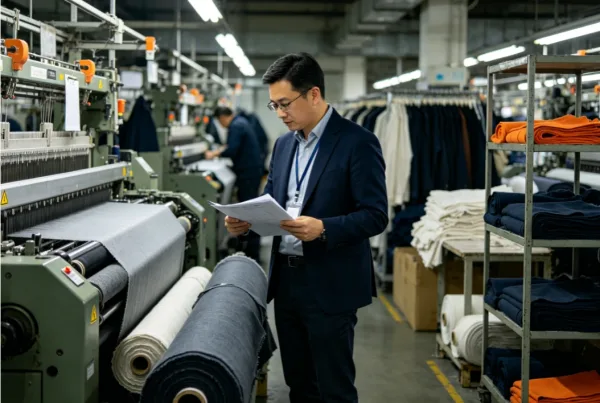
Common Fabric Scams in China Sourcing: A Detection Guide for Clothing Brands
How SourcingYuan Helps You Avoid China Fabric Scams
At SourcingYuan, we help global fashion brands solve fabric quality risks and sourcing traps. We know all the hidden scams and industry tricks in China’s textile market. We provide full-process quality control and risk prevention services for buyers.
We verify factory qualifications and supply chain authenticity one by one. We lock accurate fabric composition, gram weight, density, and finishing standards. We conduct strict sample comparison and bulk fabric inspection. We offer official compliance certification verification and third-party testing. We eliminate old fabrics, fake materials, and unqualified batches.
Whether you need basic casual fabrics, high-end boutique textiles, or sustainable certified materials, we help you achieve transparent, safe, and cost-effective China sourcing. We fully protect your product quality and brand reputation.
Email: lee@sourcingyuan.com
Contact us now to get professional fabric risk inspection and quality control solutions for your next China sourcing order.
Share This Story, Choose Your Platform!
We connect you with reliable factories, get the best quotes, deliver straight to your door.