
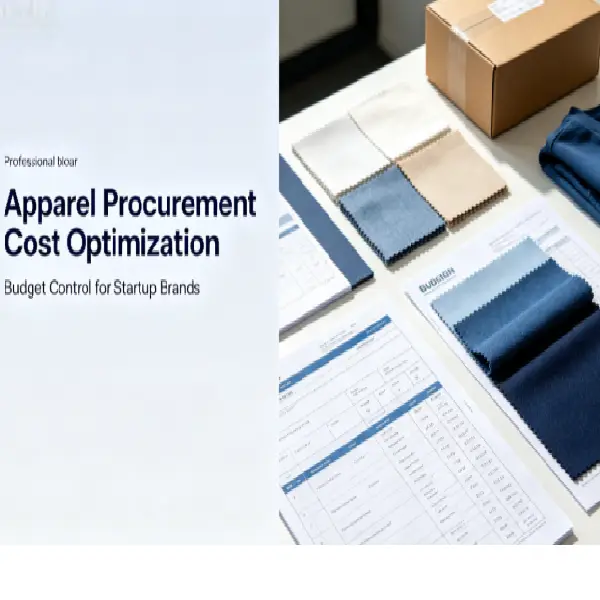
Most overseas startup clothing brands face survival pressure from high operating costs and limited initial capital. Uncontrolled purchasing expenses are the main reason for low profit margins and capital chain tension. Professional apparel procurement cost optimization becomes the most effective way for new brands to reduce risks and improve profitability. Scientific apparel procurement cost optimization and standardized budget control can help start-ups avoid waste, reduce comprehensive sourcing costs, and form stable profit advantages. This article analyzes common budget loopholes for new brands and shares practical apparel procurement cost optimization skills suitable for long-term cross-border operation.
1. Why Apparel Procurement Cost Optimization Determines Startup Survival
Unlike mature clothing brands with stable orders and supply chains, overseas startup brands have small order volume, unstable traffic and limited cash flow. Many new brands ignore refined budget management and simply pursue low unit prices, resulting in hidden costs such as high defective rates, delayed delivery and logistics losses.
Effective apparel procurement cost optimization is not simply lowering factory prices, but controlling the overall comprehensive cost of sourcing, quality, logistics and after-sales. Without systematic apparel procurement cost optimization, start-up brands are easily trapped in low-profit operation, unable to accumulate funds for product iteration and brand promotion, which restricts long-term brand growth.

Importance of apparel procurement cost optimization for new brands
2. Common Budget Control Loopholes in Startup Brand Procurement
In the early stage of brand operation, unreasonable procurement details often lead to soaring comprehensive costs, which are the key obstacles of apparel procurement cost optimization.
Typical problems include blind multi-style trial orders leading to inventory backlog, unreasonable fabric and accessory matching causing excessive unit cost, lack of supplier comparison resulting in premium purchasing, and no reserved budget for inspection and after-sales replacement. These trivial problems continuously increase hidden expenses. Only by sorting out all budget loopholes can brands carry out targeted apparel procurement cost optimization and realize effective cost reduction.

Common procurement budget loopholes for startup clothing brands
3. Precise Sourcing Selection to Reduce Unit Procurement Cost
Selecting matched fabrics, workmanship and supply channels is the core foundation of apparel procurement cost optimization. Start-up brands should avoid over-designing and over-configuring products that do not match market positioning.
In daily procurement and development, brands need to formulate differentiated sourcing standards according to product positioning. For basic best-selling styles, adopt mature mass-production fabrics to reduce material costs; for trendy small-batch styles, choose flexible small-batch factories to avoid MOQ waste. Accurate product matching and channel screening can greatly reduce invalid expenditure, which is the most direct method of apparel procurement cost optimization for start-ups.
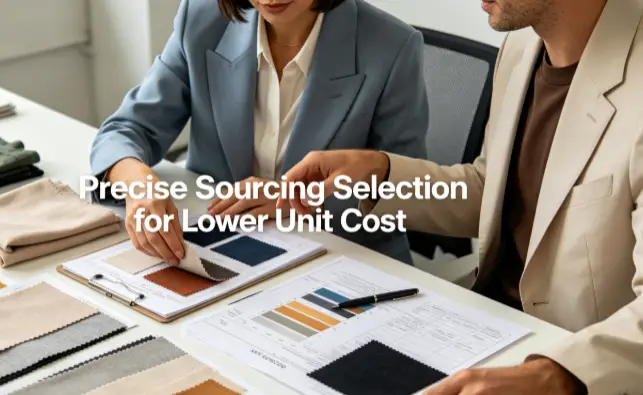
Precise sourcing selection for lower unit procurement cost
4. Flexible MOQ Strategy to Avoid Inventory Capital Waste
Inventory pressure is the largest invisible cost for overseas apparel start-ups, and flexible order arrangement is the key core of apparel procurement cost optimization.
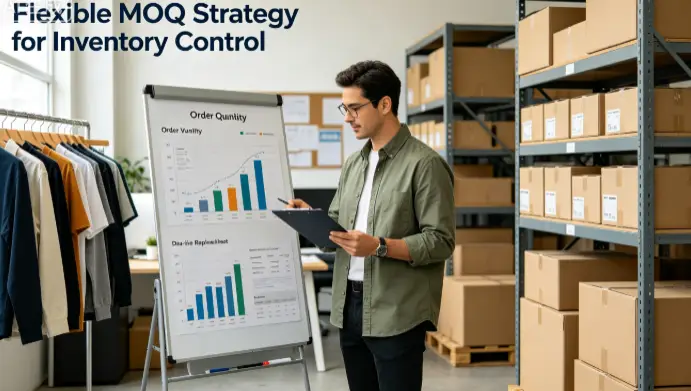
Most new brands suffer from capital stagnation due to excessive stocking of unpopular styles. Scientific apparel procurement cost optimization requires implementing the strategy of “small-batch trial sales + data-based replenishment”. New styles adopt low-MOQ trial procurement to verify market feedback; only hot-selling styles with stable conversion are arranged for bulk replenishment. This flexible model effectively avoids overstocking risks, improves capital turnover efficiency, and realizes lean budget control in apparel procurement cost optimization.
5. Supplier Management & Long-term Pricing Optimization
Short-term sporadic purchasing cannot form cost advantages. Standard supplier resource management is an important part of sustainable apparel procurement cost optimization.
Start-up brands need to establish dual supplier files including mainstream cooperative factories and alternative resources. Through small-batch long-term cooperation, accumulate brand credibility, and gradually negotiate preferential long-term pricing. At the same time, eliminate suppliers with high defective rates and unstable delivery to reduce after-sales loss. Stable supplier cooperation mechanism can continuously reduce comprehensive sourcing costs and achieve long-term apparel procurement cost optimization.
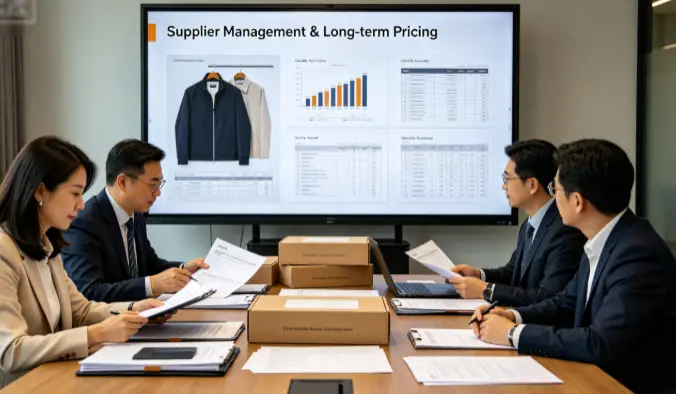
Supplier management and long-term pricing optimization
6. Hidden Cost Control for Quality, Logistics and After-sales
Genuine apparel procurement cost optimization covers the whole supply chain, including quality inspection, packaging, cross-border logistics and after-sales return loss, rather than only focusing on factory prices.
Many brands save costs on pre-shipment inspection, resulting in batch defective goods and high return rates, which bring greater losses. Reasonable budget allocation for inspection and standardized packaging can reduce product damage during transportation. Meanwhile, optimize logistics schemes according to order volume to avoid excessive freight costs. Full-link hidden cost management is an indispensable part of systematic apparel procurement cost optimization.
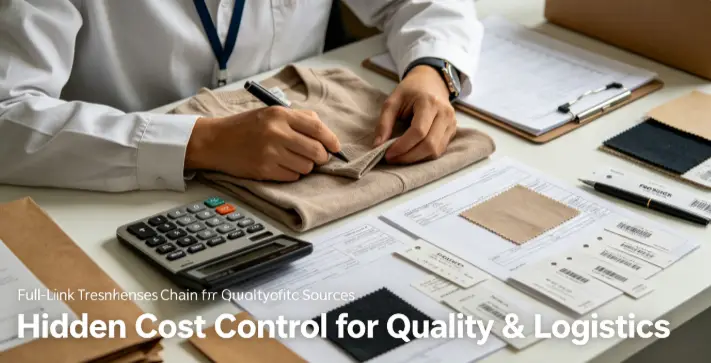
Full-link hidden cost control for apparel sourcing
7. Build Lean Procurement Budget System for Long-term Brand Growth
For overseas start-up apparel brands, temporary cost reduction cannot support stable development. Building a complete lean budget management system is the ultimate goal of apparel procurement cost optimization.
A mature apparel procurement cost optimization system includes pre-purchase budget evaluation, in-process cost supervision, post-order cost analysis and dynamic adjustment mechanism. By recording the procurement cost data of each style, summarizing high-cost loopholes and optimizing sourcing schemes continuously, brands can form standardized and replicable cost control experience. Stable apparel procurement cost optimization capability helps start-up brands improve profit margins, accelerate capital accumulation, and build core supply chain competitiveness in the highly competitive cross-border apparel market.
Share This Story, Choose Your Platform!
We connect you with reliable factories, get the best quotes, deliver straight to your door.