Apparel sourcing is often misunderstood. Many brands treat it as a simple transaction: find a factory, negotiate a price, place an order. But anyone who has worked inside the supply chain knows the reality is far more complex.
The majority of sourcing failures do not occur because factories lack capability. They occur because buyers fail to design, control, and govern the apparel sourcing process correctly.
This guide walks through the most common apparel sourcing pitfalls—from price-driven supplier selection to inadequate capability assessment—and explains how disciplined buyers avoid them.
Price-Driven Supplier Selection
One of the most damaging common apparel sourcing mistakes is selecting suppliers primarily on quoted price. Buyers often assume the lowest price equals the best deal. In reality, it is risk transfer disguised as savings.
When buyers push for the lowest price, factories are incentivized to:
Under-resource production lines
Downgrade materials, trims, and packaging
Compress lead times beyond what is operationally feasible
Subcontract work to unapproved units

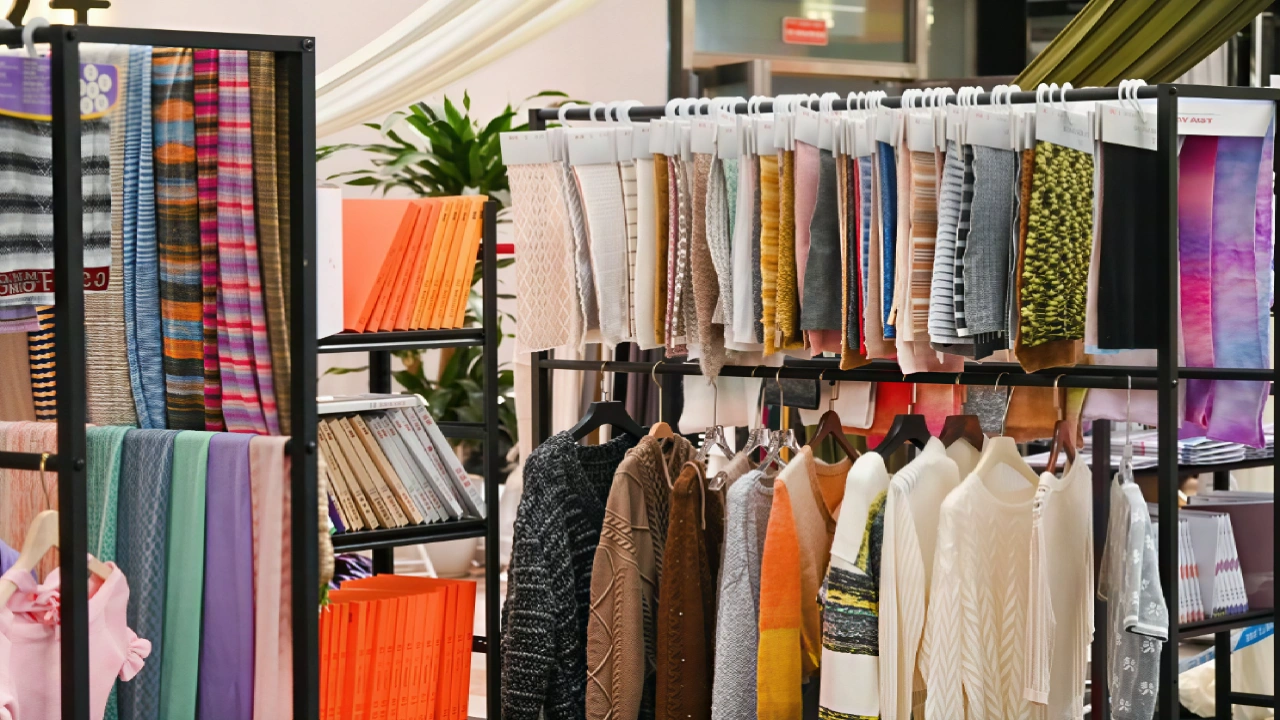
Lee and his customers at the clothing market.
The result is hidden cost leakage through rework, air freight charges, claim disputes, and missed market windows. A low price from a factory operating at 95 percent capacity carries significantly higher delivery risk than a slightly higher price from a factory at 70 percent capacity.
| Mistake | Why It Happens | What It Costs You |
| Choosing the cheapest factory | Sourcing KPIs reward cost reduction, not reliability | Rework, air freight, claims, lost sales |
| Ignoring capacity utilization | Buyers assume all factories can handle any order | Missed delivery windows |
| No risk adjustment in price evaluation | Price treated as standalone number, not consequence of capability | Chronic execution failures |
Why this mistake persists: Sourcing KPIs are often misaligned. Buyers are rewarded for cost reductions but penalized for delivery failures only after the damage occurs. This creates a structural gap where no one truly owns the outcome.
Inadequate Factory Capability Assessment
Many brands mistake compliance audits for capability assessments. A factory can pass BSCI, SEDEX, or WRAP audits—confirming baseline ethical standards—and still be incapable of producing a specific product category at scale.
A proper garment sourcing errors assessment goes beyond documents. It requires category-specific capability mapping:
Machine configuration (e.g., auto-cutters vs. manual spreading)
Operator skill distribution (efficiency on complex operations)
Historical defect patterns (what usually goes wrong?
| Assessment Type | What It Checks | What It Misses |
| Compliance audit | Labor standards, safety, documentation | Production competence, machine capability |
| Capability assessment | Machine configuration, operator skill, defect history | — |
For example, a factory strong in basic knitwear may struggle with structured outerwear, even if both fall under the same compliance certification. Without granular capability assessment, buyers allocate styles to factories that are technically compliant but operationally misaligned.
One critical insight: In Bangladesh apparel sourcing, the factory ecosystem is highly stratified. World-class vertically integrated factories operate alongside smaller units with limited engineering depth. Treating any sourcing destination as monolithic is a fundamental error. Capability assessment must be conducted at the production line level, not at the corporate profile level.
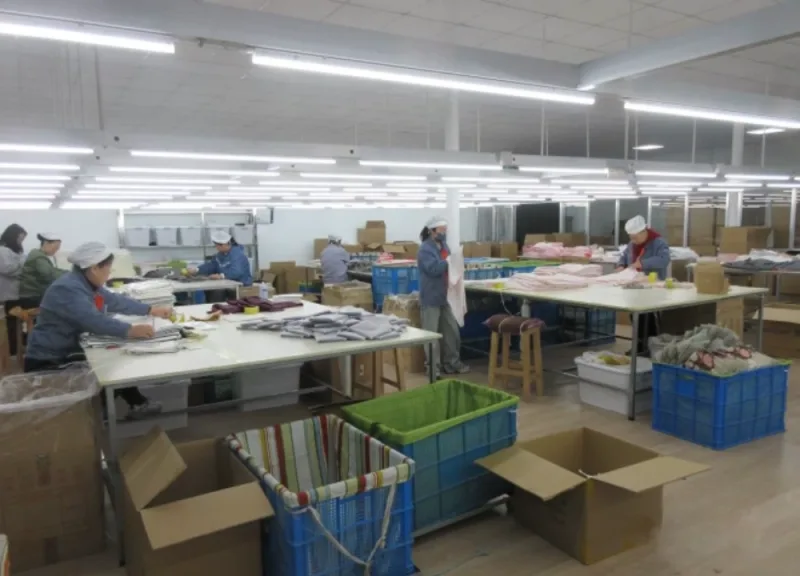
Apparel Sourcing Garment Sewing Line For Inline Production Capability Audit
Weak Process Design and Poor Forecasting
Many brands operate without a formally defined apparel sourcing process. Instead, they rely on institutional memory, individual experience, or ad hoc decision making. This is a recipe for apparel sourcing pitfalls.
A robust process defines decision gates, documentation standards, escalation protocols, and approval authority at each stage. Without this structure, errors propagate silently until they manifest as shipment delays or quality failures.
Common process failures include:
Incomplete or ambiguous Tech Packs
Unrealistic sample timelines
Vague tolerance standards
Undefined responsibility for raw material booking
These are not factory failures. They are process design failures.
Forecasting is another weak point. According to Cascale’s Better Buying Purchasing Practices Index, only 34.5% of soft goods suppliers receive forecasts 120 days in advance. When demand changes late, suppliers are often left to manage compressed timelines, fluctuating volumes, and cost pressures—conditions that contribute to wider social and operational risk.
| Process Failure | Consequence |
| Incomplete Tech Pack | Factory guesses specifications → wrong product |
| Unrealistic sample timeline | Rushed sampling → quality compromises |
| Vague tolerance standards | Disputes over what’s “acceptable” |
| No raw material booking owner | Fabric arrives late → production slot lost |
Ignoring Raw Material Synchronization and Fabric Consistency
A critical, often overlooked clothing manufacturing sourcing mistake is the misalignment between fabric availability and sewing capacity.
Buyers frequently book factory space based on estimated fabric arrival dates. When fabric mills delay shipment—a common occurrence in global textiles—the sewing slot is lost. The factory fills that slot with another order. When the fabric finally arrives, no capacity remains. This creates a “queue jumping” effect where an order is delayed by weeks simply because it missed its entry window by days.
Fabric consistency is another hidden trap. Even when working with the same supplier, differences in dye lots, weave density, or fiber composition can occur. This leads to visible variations in finished products—especially in larger collections.
What effective sourcing requires: Synchronizing the critical path of raw materials with the finite capacity planning of the factory, and verifying batch consistency before bulk orders.

Fabric dye lot color difference in apparel sourcing inspection
Treating the Sourcing Agent as a Broker Rather Than an Operator
Not all apparel sourcing agents operate the same way. The most dangerous model is the broker model—where the agent facilitates introductions and negotiates prices but does not control production execution.
In this model, accountability is fragmented. The factory blames the buyer’s specifications. The buyer blames the agent’s oversight. The agent blames the factory’s performance. No party owns the outcome.
An effective China apparel sourcing partner operates as an extension of the buyer’s sourcing function, including:
Production planning
Inline quality control (DUPRO)
Compliance monitoring
Shipment coordination
| Agent Model | Role | Accountability | Risk Level |
| Broker | Introduces factories, negotiates price | Fragmented, no single owner | High |
| Operator | Controls production execution, QC, logistics | Clear, single accountable party | Low |
When sourcing agents fail: They fail when they are incentivized solely on order volume or commission. This encourages overcommitment, underreporting of risk, and tolerance of marginal suppliers. An agent must be structurally empowered to say no—without veto authority over production allocation, an agent is a messenger, not a sourcing partner.

Two types of apparel sourcing agents: broker vs full operational partner
Overlooking Compliance, Ethical Risks, and Traceability
Compliance failures are often treated as reputational risks rather than commercial risks. This is a fundamental miscalculation.
Non-compliance disrupts production schedules, triggers corrective action plans, and exposes buyers to shipment holds and order cancellations. In garment sourcing, compliance directly affects capacity availability and cost predictability.
The stakes are rising. Enforcement of regulations like the U.S. Uyghur Forced Labor Prevention Act and the EU Forced Labor Regulation is expanding. CEOs and CFOs may face financial and criminal liability in trade fraud and origin misrepresentation cases, even if they are not directly involved in sourcing decisions.
Paperwork alone may not be enough. Oritain’s 2026 Supply Chain Intelligence report found that 90% of brands in 2025 had at least one “risk-consistent” prohibited cotton result—up from 64% in 2024. Moving production to new hubs like Vietnam or Bangladesh does not necessarily eliminate exposure, as many markets remain dependent on imported Chinese yarn and fabric.
| Compliance Approach | Outcome |
| Box-ticking, paperwork-only | High risk of shipment holds, legal exposure |
| Integrated into sourcing strategy | Predictable capacity, lower disruption risk |
What disciplined buyers do: They integrate compliance assessment into supplier selection and production planning, model compliance risk as a capacity constraint, and use physical verification methods (not just supplier declarations) to substantiate sourcing claims.

Problems caused by incomplete tech packs and poor demand forecasting in apparel sourcing
FAQ
What is the most common mistake in apparel sourcing?
Selecting suppliers based primarily on price. It often leads to hidden costs through rework, delays, and quality failures.
Why do brands struggle with supplier capability assessment?
They confuse compliance audits (which confirm ethical standards) with production capability assessments (which confirm the factory can actually make the product). These are fundamentally different evaluations.
How can I avoid fabric quality issues in apparel sourcing?
Request batch consistency checks, perform pre-production testing (shrinkage, color fastness), and verify specifications like GSM and dye lots before bulk orders.
What should I look for in a sourcing agent?
An agent who controls production execution—not just introductions. Ask whether they have authority to reject orders, reallocate production, and conduct inline quality control.
How important is forecasting in apparel sourcing?
Critical. Late or inaccurate forecasts force suppliers into compressed timelines, increasing the risk of quality failures and delivery delays.
Is compliance just a box-ticking exercise?
No. Compliance failures directly affect capacity, cost predictability, and legal exposure. Enforcement is expanding, and penalties can be severe.
How do I verify a supplier beyond documentation?
Conduct on-site or live video capability assessments, review historical defect patterns, check machine configuration, and use physical verification methods like forensic testing for materials.
The Bottom Line
Apparel sourcing success is determined by structural discipline, not negotiation tactics. The most expensive clothing sourcing mistakes to avoid include price-driven supplier selection, inadequate capability assessment, weak process design, ignoring raw material synchronization, and treating sourcing agents as brokers rather than operators.
Buyers who treat sourcing as a strategic operating function—with robust process design, clear governance, and integrated compliance—outperform those who treat it as procurement. In a volatile global supply chain, this discipline is not optional. It is the price of reliability.

Apparel Sourcing Clothing Assembly Sewing Production Line Workshop
About the Author
Jeff Lee
Founder of Sourcingyuan
Jeff Lee is the founder of Sourcingyuan, a China-based sourcing and product development company. He has more than 10 years of experience helping overseas businesses source products, develop new products, identify reliable manufacturers, manage production, and build supply chains in China.
Share This Story, Choose Your Platform!
We connect you with reliable factories, get the best quotes, deliver straight to your door.