What Are China Industrial Clusters and Why Do They Matter for Global Sourcing_

If you’re sourcing products from China, you’ve likely noticed that certain cities and regions specialize in specific industries. Shenzhen for electronics. Quanzhou for sportswear. Luyi County for makeup brushes. Xuchang for wigs. This is not a coincidence—it is the result of China industrial clusters, a deliberate and organic economic phenomenon that has reshaped global sourcing.

This guide explains what industrial clusters are, why they exist, and why they matter for anyone involved in global sourcing.

What Are Industrial Clusters?

An industrial cluster is a geographic concentration of interconnected businesses, suppliers, and service providers in a specific industry. These are not just random collections of factories—they are ecosystems where companies share infrastructure, talent, knowledge, and supply chains.

According to China’s Ministry of Industry and Information Technology, the country has established 80 national advanced manufacturing clusters as of 2025. These clusters are distributed across 26 provincial-level regions, covering six major industries including next-generation information technology, high-end equipment, new materials, biomedicine, new energy, and intelligent connected vehicles. They have aggregated over 2,200 national innovation carriers, led or participated in more than 2,100 international standards, and attracted industrial investment funds totaling 3 trillion yuan .

Key Characteristics of Industrial Clusters

Geographically concentrated manufacturing hubs are the foundation of clusters. For example, the Pearl River Delta region contains thousands of garment manufacturers within a compact area, supported by a massive fabric market that supplies intermediate goods to nearby factories . Similarly, Quanzhou’s modern sports product cluster in Fujian can assemble over 100 production elements—from R&D teams to machinery to skilled workers—within a 50-kilometer radius in just three days .

Supplier ecosystem refers to the dense network of input providers that cluster around manufacturers. In the Pearl River Delta’s garment sector, clustered firms are more likely to outsource inputs rather than produce them in-house, benefiting from the proximity of specialized suppliers . This industrial agglomeration creates economies of scope that benefit nearby buyers.

Localized supply chain means that raw materials, components, and services are sourced locally, reducing transportation costs and lead times. The Zhongda Fabric Market in Guangzhou, for instance, serves 80% of garment manufacturers in the Pearl River Delta, allowing them to acquire intermediate goods quickly and meet tight delivery deadlines .

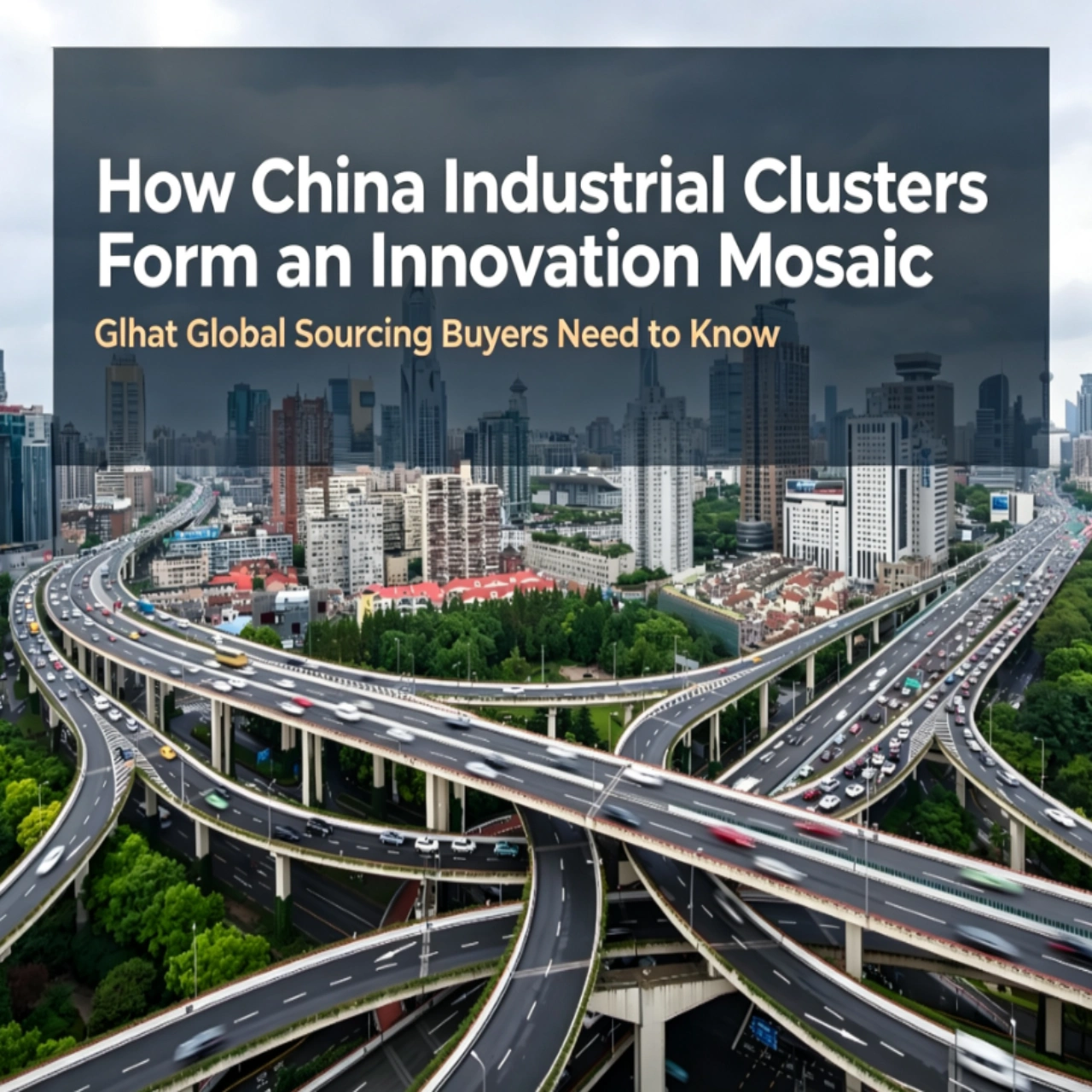
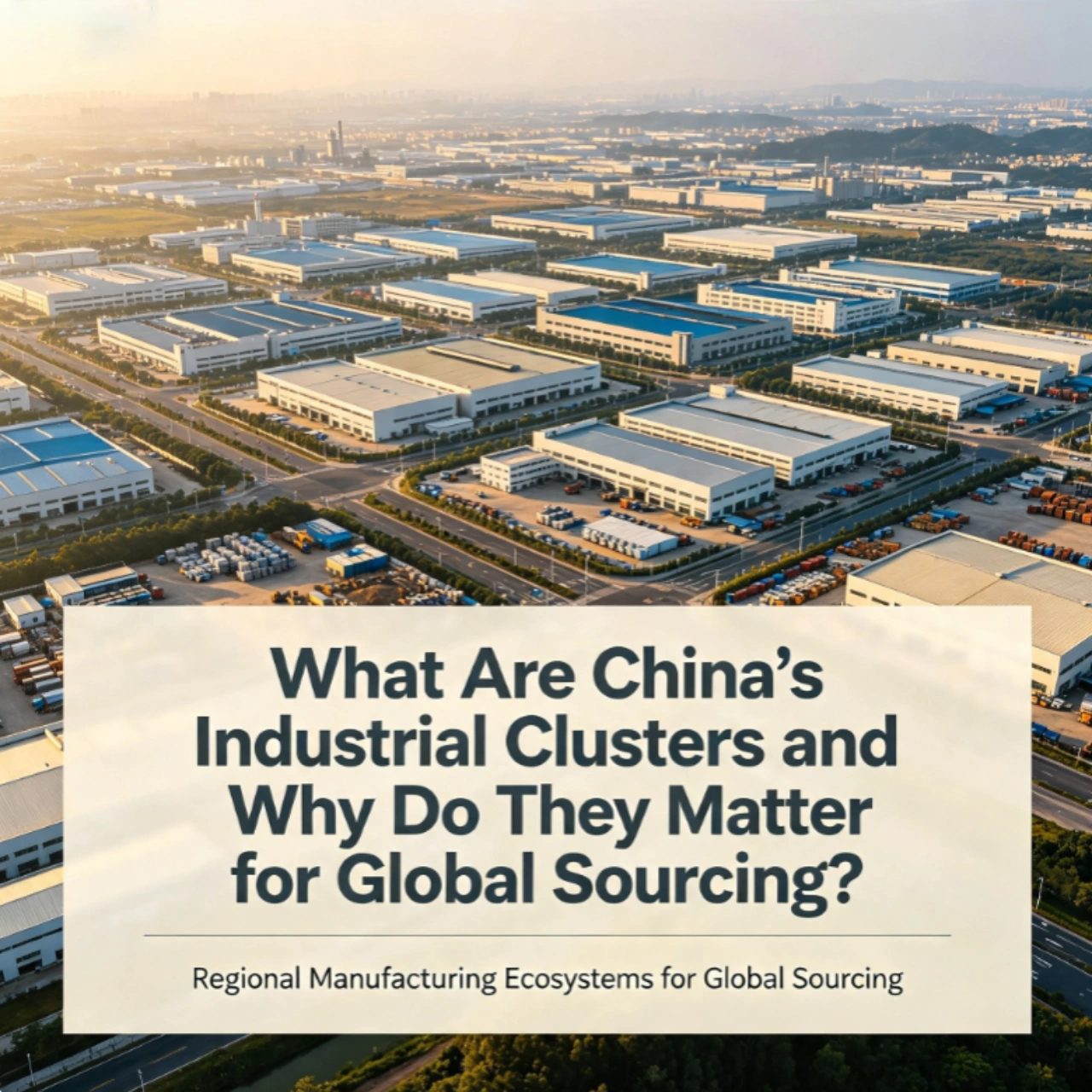
China Industrial Clusters, Aerial View of Manufacturing Industrial Park

China Industrial Clusters, Aerial View of Manufacturing Industrial Park

The Evolution of China’s Clusters

China’s industrial clusters did not emerge overnight. Many started decades ago. Luyi County’s makeup brush industry began in the late 1970s, when local villagers found export value in sheep tail hair . Xuchang’s hair trade, now producing six out of every ten wigs sold globally, traces back to the Ming Dynasty (1368-1644) .

The real acceleration came after China’s accession to the World Trade Organization in 2001. The garment sector in the Pearl River Delta, for example, saw increased spatial concentration and vertical disintegration following WTO entry, as expanded export markets enabled more firms to enter and specialize .

Today, China has established 80 national advanced manufacturing clusters, including 17 next-generation IT clusters covering integrated circuits, smart devices, consumer electronics, and AI . These clusters are distributed across 26 provincial regions and have aggregated over 2,200 national innovation carriers .

Why Industrial Clusters Exist: The Economics of Agglomeration

The economic rationale for clusters is well-documented. Research on the Pearl River Delta garment sector shows that clustering allows low-productivity firms to survive and thrive through supply chain integration. By locating near suppliers, these firms can outsource production stages rather than investing in expensive in-house capabilities.

The “Reverse Sorting” Phenomenon

Contrary to the common view that only high-productivity firms sort into clusters, research reveals that agglomeration can disproportionately benefit less productive firms when the agglomeration force is input sharing . In equilibrium, low-productivity firms tend to cluster near suppliers and vertically disintegrate, while high-productivity firms remain integrated and dispersed .

This has profound implications for sourcing: even smaller or less efficient suppliers can be viable if they are located in a well-developed cluster. They compensate for lower productivity through access to shared inputs, specialized labor, and rapid logistics.

Beyond the Coast: Inland Clusters

While coastal regions like the Pearl River Delta and Yangtze River Delta remain dominant, inland clusters are gaining ground. Luyi County in Henan now supplies over 85% of the world’s artificial makeup brush fiber materials and accounts for over 90% of China’s makeup brush exports . Xuchang’s wig cluster comprises more than 4,000 related companies and directly supports nearly 300,000 jobs .

China Industrial Clusters, Wig Factory Product Showroom Display

China Industrial Clusters, Wig Factory Product Showroom Display

These inland clusters are moving beyond contract manufacturing into brands, patents, overseas warehouses, and direct online sales—a shift that sourcing professionals should watch closely .

Key Industrial Clusters in China: A Regional Overview

Pearl River Delta (Guangdong Province)

Cluster Type Key Locations Major Industries
Electronics cluster Shenzhen, Dongguan, Guangzhou Integrated circuits, smart devices, consumer electronics, ICT equipment
Textile & Garment cluster Guangzhou, Foshan, Dongguan Apparel, fabrics, accessories
Cross-border trade cluster Nansha (Guangzhou) Supply chain services, blockchain/AI-enabled trade

The Pearl River Delta is China’s manufacturing powerhouse. It accounts for over a third of national sales in ICT equipment, far exceeding other regions . Shenzhen, as a core of the electronics cluster, is not only a manufacturing center but also a major hub for semiconductor packaging and testing .

Yangtze River Delta (Shanghai, Jiangsu, Zhejiang)

The Yangtze River Delta is strong in semiconductors, automotive components, and precision engineering. Shanghai serves as a technology innovation center for the semiconductor industry, hosting leading firms such as SMIC and Hua Hong Semiconductor . This region leads in advanced process technologies, AI chips, and 5G communication chips .

Fujian Province

Quanzhou’s modern sports product cluster, with an output value exceeding 800 billion yuan, is home to seven of China’s top ten sports brands, including Anta, Xtep, and 361 Degrees . The cluster integrates textile footwear, apparel, petrochemical fibers, machinery, and sports services.

China Industrial Clusters, Quanzhou Sneaker Manufacturing Factory Production Line

China Industrial Clusters, Quanzhou Sneaker Manufacturing Factory Production Line

Inland Clusters (Henan, Hubei, Sichuan)

Cluster Location Specialty Target Buyer
Makeup brush cluster Luyi, Henan 85% of global artificial brush fiber, 90% of China’s brush exports Beauty brands, personal care retailers, cross-border beauty sellers, private-label cosmetic tool clients
Wig cluster Xuchang, Henan 6 out of 10 wigs sold globally, 4,000+ companies Wig brands, hair salons, cross-border fashion sellers, film & television styling studios, cultural/religious product purchasers
Semiconductor manufacturing Chengdu, Xi’an, Wuhan Packaging, testing, specialized equipment Electronic device brands, hardware manufacturers, semiconductor solution providers, tech product R&D enterprises
China Industrial Clusters, Human Hair Wig Factory Production Workshop

China Industrial Clusters, Human Hair Wig Factory Production Workshop

Why Industrial Clusters Matter for Global Sourcing

1.Supplier Reliability and Speed

Clusters offer supply chain integration that is difficult to replicate elsewhere. In Quanzhou’s sports product cluster, a brand can source R&D, materials, and manufacturing within days . In the Pearl River Delta, garment manufacturers located near fabric markets can respond to client requests for punctual shipments with minimal lead time .

2.Cost Efficiency Through Localized Supply Chains

Clustering reduces logistics costs and inventory holding costs. The “10-minute industrial cluster” concept—where components can move from factory to assembly line within minutes—is becoming a benchmark for efficiency . This localized supply chain model improves global competitiveness by lowering total landed costs.

3.Innovation and Talent Agglomeration

Clusters concentrate talent and R&D resources. The 80 national advanced manufacturing clusters have attracted industrial investment funds totaling 3 trillion yuan . High-end talent and innovation factors tend to flow toward these clusters, making them sources of product development and process improvement .

How industrial clusters shorten supply chains: from fragmented logistics to integrated local ecosystems.

How industrial clusters shorten supply chains: from fragmented logistics to integrated local ecosystems.

4.Quality and Compliance

Inland clusters like Luyi and Xuchang are moving up the value chain, investing in patents, brands, and overseas warehouses . This means sourcing from clusters often provides better quality control and compliance documentation than sourcing from isolated factories.

5.Diversification and Risk Mitigation

The geographic diversity of clusters—from coastal electronics hubs to inland beauty product clusters—offers buyers options for product sourcing from China that reduce single-point-of-failure risk. If one region faces disruptions, alternative clusters can sometimes step in.

How to Use Cluster Knowledge in Your Sourcing Strategy

Step Action
Identify Determine which cluster matches your product category
Verify Check if your supplier is genuinely located within the cluster, not just claiming to be
Leverage Use cluster advantages (speed, cost, innovation) in your supplier negotiations
Monitor Watch emerging inland clusters for new sourcing opportunities
Integrate Consider working with partners who understand the local industrial ecosystem

Sourcing from manufacturing clusters China offers a significant strategic advantage—but only if you understand how to navigate them. The industrial ecosystem of a cluster can be as important as the individual factory you choose.

China Industrial Clusters, Shenzhen Electronics Factory Clean Production Workshop

China Industrial Clusters, Shenzhen Electronics Factory Clean Production Workshop

FAQ

What is an industrial cluster?

An industrial cluster is a geographic concentration of interconnected businesses, suppliers, and service providers in a specific industry, creating a self-reinforcing ecosystem of talent, knowledge, and supply chains.

How many national industrial clusters does China have?

China has established 80 national advanced manufacturing clusters, distributed across 26 provincial regions, covering industries from next-generation IT to high-end equipment and new materials .

Which regions are the most important manufacturing clusters in China?

The Pearl River Delta (electronics, apparel, cross-border trade) and the Yangtze River Delta (semiconductors, automotive, precision engineering) are the two largest manufacturing regions. Inland clusters in Henan, Hubei, and Sichuan are also growing rapidly .

Why are industrial clusters important for sourcing?

Clusters offer supply chain integration, cost efficiency, innovation, talent concentration, and risk mitigation that isolated factories cannot match. They allow for faster lead times, lower costs, and better quality control.

What is the “reverse sorting” phenomenon in clusters?

Research shows that low-productivity firms often benefit more from clustering than high-productivity firms, because they can outsource production stages rather than investing in expensive in-house capabilities . This makes clusters viable for a wide range of suppliers.

How are China’s clusters evolving?

China is pushing its national clusters toward world-class status, with a focus on digitalization, green manufacturing, and innovation . Inland clusters are also moving up the value chain, developing brands, patents, and overseas sales channels .

The Bottom Line

China industrial clusters are the backbone of the country’s manufacturing prowess. They are not just collections of factories—they are complex industrial ecosystems that offer supply chain integration, innovation, and global competitiveness that individual factories cannot replicate.

For international buyers, understanding manufacturing clusters China—from the Pearl River Delta’s electronics hubs to Henan’s beauty product clusters—is essential for making informed sourcing decisions. The right cluster can mean the difference between a reliable supply chain and a constant struggle with quality, cost, and delivery.

China Industrial Clusters, Quanzhou Footwear Factory Sneaker Assembly Workshop

China Industrial Clusters, Quanzhou Footwear Factory Sneaker Assembly Workshop


About the Author

Jeff Lee

Founder of Sourcingyuan

Jeff Lee is the founder of Sourcingyuan, a China-based sourcing and product development company. He has more than 10 years of experience helping overseas businesses source products, develop new products, identify reliable manufacturers, manage production, and build supply chains in China.

Connect with Jeff: LinkedIn | YouTube

Share This Story, Choose Your Platform!

We connect you with reliable factories, get the best quotes,  deliver straight to your door.

Related articles