For French boutique brands, sourcing in China is a double-edged sword. On one hand, China’s manufacturing ecosystem offers great access to quality materials, skilled craftsmanship, and competitive pricing. That’s critical for boutique brands that care about luxury, uniqueness, and healthy profit margins.
On the other hand, navigating the Chinese supply chain comes with real challenges. This is especially true for French boutique brands that operate on smaller scales, uphold strict quality standards, and need to meet the high expectations of the French luxury market.
Unlike big global brands with dedicated sourcing teams, French boutique brands often don’t have the resources to manage complex cross-border supply chains. Language barriers, quality issues, compliance headaches, and shipping delays are all real risks. But here’s the truth: these challenges are not impossible to solve.
With the right strategies, French boutique brands can use China’s manufacturing strengths while avoiding the common pitfalls. You can keep the elegance, quality, and brand identity that define French luxury.
In this guide, I’ll walk you through the most common supply chain challenges French boutique brands face when sourcing in China. You’ll also get practical, tailored solutions to overcome them. Whether you’re a Parisian boutique sourcing leather goods, a Provence-based brand looking for artisanal fabrics, or a new French label launching your first collection, this guide will help you navigate China with confidence.
The Unique Context: Why French Boutique Brands Struggle with China Sourcing
French boutique brands are not like other small fashion brands. You operate in a market where “French luxury” is a promise—a commitment to quality, craftsmanship, and timeless design. When sourcing in China, this promise becomes harder to keep. The supply chain there is designed to cater to all types of brands, from mass-market to high-end.
French boutique brands face challenges that are specific to their brand identity. These include the need for small-batch production, strict quality control, and full alignment with European compliance standards.
Also, many French boutique brands are family-owned or independently run. That means you have smaller teams and tighter budgets. It’s harder to invest in on-the-ground sourcing staff, navigate language differences, or handle unexpected supply chain problems.
The good news? China’s manufacturing landscape is changing. There are now specialized factories and services that cater to luxury boutique brands. You just need to know how to find them and how to navigate the process.
Challenge 1: Cultural & Language Barriers (and Costly Misunderstandings)
One of the biggest—and most overlooked—challenges French boutique brands face is cultural and language miscommunication. Unlike large brands with Mandarin-speaking teams or local offices, most French boutique owners speak little to no Mandarin. And Chinese factory owners often have limited English, especially smaller, specialized factories that focus on luxury production.
This leads to costly mistakes: misunderstood design specs, wrong materials, delayed timelines, or quality issues.
For example, a French boutique brand asking for “buttery soft lambskin” might receive a lower-grade leather because the factory didn’t understand the exact texture or quality level you wanted. Cultural differences in negotiation styles, communication formality, and expectations around deadlines can also cause friction.
Solution 1: Partner with Bilingual Sourcing Experts
The simplest way to overcome language and cultural barriers is to work with a bilingual sourcing agent (like SourcingYuan) that has experience working with French boutique brands. A good agent acts as a cultural and language bridge. They speak Mandarin and French (or English with a deep understanding of French business culture), and they know how to translate your exact requirements into terms Chinese factories understand.
Look for agents who specialize in luxury and boutique sourcing. They’ll understand the nuances of French luxury standards and can communicate your expectations—from material quality to craftsmanship details—clearly to factories.
Also, ask your agent to provide detailed, written specifications with photos, samples, and Pantone color codes. Instead of saying “high-quality stitching,” give examples of stitch density, thread type, and finish you require.
Build a relationship with your factory through your agent. French business culture values trust and long-term partnerships. Chinese factories respond well to clear, consistent communication. Your agent can help foster this relationship.
French boutique brands
Challenge 2: Quality Inconsistencies (Threatening French Luxury Standards)
For French boutique brands, quality is non-negotiable. French consumers expect luxury products to be well-made, durable, and built with premium materials. Any slip in quality can damage your brand’s reputation.
The problem? Many Chinese factories that offer low prices struggle to maintain the consistent, high-quality standards that French boutique brands need, especially for small-batch orders.
Common issues include inconsistent materials (varying leather textures or fabric thickness), poor craftsmanship (loose stitching, uneven seams), and differences between pre-production samples and bulk orders. Smaller factories often cut corners to keep costs low, or they lack the skills for luxury-grade production. For French boutique brands that rely on their reputation for quality, this can be devastating.
Solution 2: Vet Luxury-Focused Factories & Implement Strict QC
First, prioritize factories that specialize in luxury or boutique production—not mass-market manufacturing. Look for factories with experience working with French or European luxury brands. Ask for case studies or client testimonials, and request samples of their past work to check quality.
If you’re sourcing leather goods, look for factories in Guangzhou or Dongguan that focus on high-end leather craftsmanship and have experience with French-style stitching or embossing.
Second, set up a strict quality control (QC) process from start to finish. Request pre-production samples and inspect them thoroughly for material quality, craftsmanship, and alignment with your design specs.
For textiles, test for durability, color fastness, and texture. For leather goods, check for scratches, uneven coloring, and stitching precision.
Consider hiring a third-party QC service that specializes in luxury goods. They’ll conduct on-site inspections at the factory, making sure every piece meets your standards before shipment. Many sourcing agents (including SourcingYuan) offer integrated QC services with inspectors who understand French luxury standards.
Pro tip: Include quality clauses in your factory contract, with clear penalties for non-compliance. This gives the factory a real incentive to maintain consistent quality.
Challenge 3: Small-Batch Production Constraints (High MOQs & Premium Fees)
Most French boutique brands operate on small scales. You produce limited collections (often 50–200 pieces per style) to keep exclusivity and avoid excess inventory. But many Chinese factories are set up for mass production and demand high minimum order quantities (MOQs)—often 500+ pieces per style. That’s just not practical for small boutiques.
Even factories that offer low MOQs often charge premium fees for small batches, making it hard for French boutique brands to keep profit margins healthy. And small batches can lead to longer production times because factories prioritize larger orders.
Solution 3: Source from Low-MOQ Luxury Factories & Optimize Order Planning
The key is to find Chinese factories that specialize in low MOQ luxury production. Many factories in China’s luxury manufacturing hubs—Guangzhou, Suzhou, and Hangzhou—now work with boutique brands. They offer MOQs as low as 50–100 pieces per style for high-end products. These factories understand small boutiques and are willing to be flexible.
Work with your sourcing agent to find these factories. They’ll have a network of trusted partners that offer low MOQs without sacrificing quality. Some specialize in small-batch leather goods, others in artisanal textiles or handcrafted accessories.
To optimize costs and timelines, consolidate multiple styles into one order. For example, if you’re sourcing 50 leather totes and 50 crossbody bags, order them together. Many factories will lower the per-style MOQ or reduce fees for combined orders.
Also, plan your orders ahead to avoid rush fees. Give factories at least 4–6 weeks for production, especially for small batches that need more attention to detail.
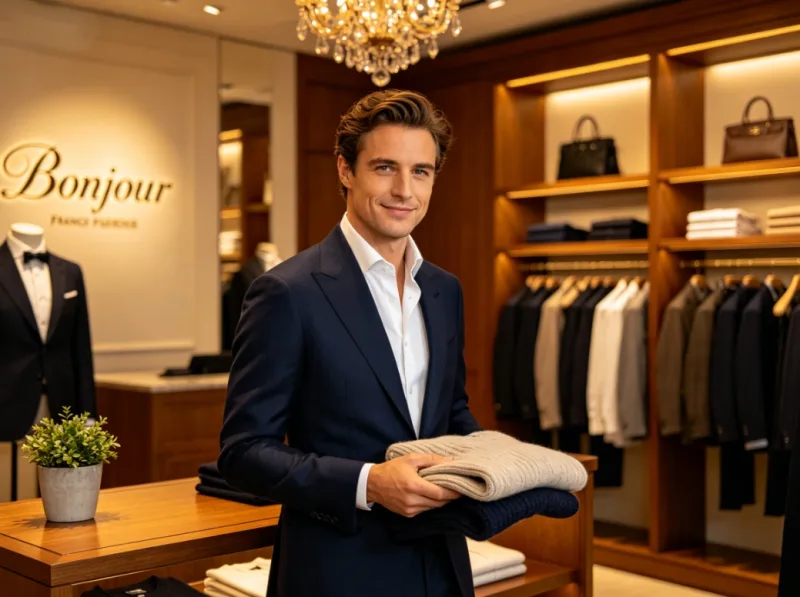
French boutique brands
Challenge 4: Compliance & Regulatory Hurdles (Meeting EU Standards)
French boutique brands must follow strict European Union (EU) regulations when importing goods from China. This includes REACH (for chemicals in textiles and leather), CE marking (for safety standards), and environmental regulations.
Many Chinese factories are not familiar with these standards. That can lead to shipments being held at customs, fines, or even product recalls. This is a major risk for French boutique brands. Non-compliance is costly and can hurt your reputation.
For example, if your textiles contain chemicals restricted by REACH, your shipment may be rejected at the French border. You’re left with unsold inventory and lost revenue. And EU environmental regulations are getting stricter, so compliance matters more than ever.
Solution 4: Partner with EU-Compliant Factories & Verify Documentation
First, only work with factories that have experience complying with EU standards. Ask for compliance certificates (REACH, OEKO-TEX for textiles, or ISO certifications) and verify they’re real. A good sourcing agent can help you vet factories for compliance.
Second, request detailed documentation for every shipment. This includes material safety data sheets (MSDS), compliance certificates, and origin certificates. This paperwork is critical for clearing customs in France and proving your products meet EU standards.
If you’re sourcing sustainable or eco-friendly products (a growing trend in French luxury), look for factories that specialize in sustainable materials like organic cotton or recycled leather. Certifications like GOTS (Global Organic Textile Standard) or B Corp are a plus. This not only ensures compliance but also aligns with what French consumers want.
Challenge 5: Logistical Delays & Cost Uncertainty (Derailing Launches)
Logistics is another major headache for French boutique brands sourcing in China. Cross-border shipping can be unpredictable. Delays from port congestion, customs inspections, or global supply chain problems (like container shortages) can mess up your launch timelines.
Shipping costs can also jump around, making it hard to budget. For small boutiques, these delays and cost swings are especially damaging. You might miss a seasonal launch window or have to raise prices to cover unexpected shipping costs—which can turn off French consumers.
Solution 5: Simplify Logistics with Integrated Services & Forward Planning
Work with a sourcing agent that offers integrated logistics services. They’ll handle everything from shipping to customs clearance, making sure your products arrive on time and within budget.
Look for agents that partner with reputable freight forwarders specializing in cross-border shipping to France, especially those with experience in luxury goods (which need extra care during transit).
To avoid delays, plan your shipments ahead and choose the right shipping method. For small batches, air freight is faster (7–10 days) and more reliable—great for seasonal launches. For larger orders, sea freight is cheaper but slower (3–4 weeks), so plan accordingly.
To avoid cost surprises, ask your agent for a detailed shipping quote upfront, including all fees (freight, customs duties, taxes). Also, consider consolidating shipments with other French boutique brands through your agent to lower per-unit shipping costs.
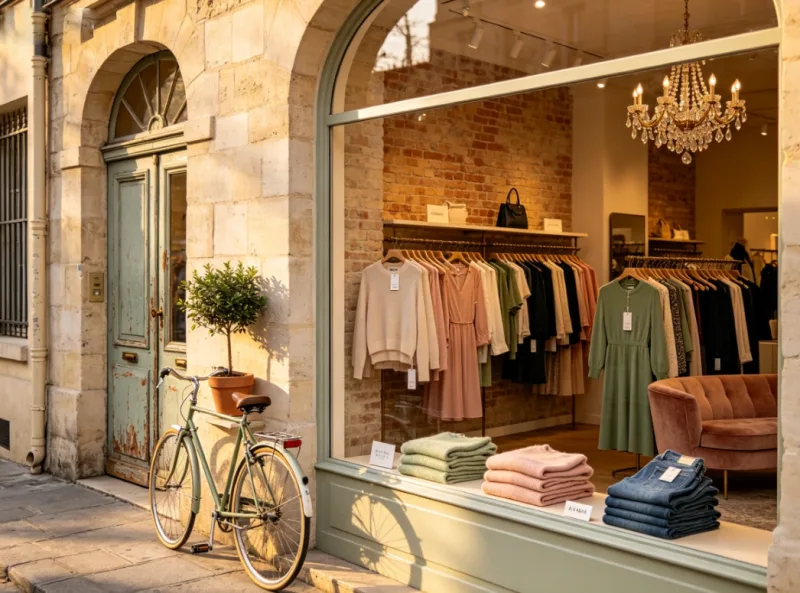
French boutique brands
Challenge 6: Supply Chain Opacity (Failing to Meet French Consumer Demands)
French consumers are increasingly asking for transparency. They want to know where products are made, what materials are used, and whether workers are treated fairly. But many Chinese factories lack transparency, making it hard for French boutique brands to verify their supply chain practices.
This can hurt your brand’s reputation, especially in France’s luxury market where consumers value authenticity and ethical practices. If you market your brand as “ethical” but your factory uses unfair labor practices, you risk backlash from customers and media.
Solution 6: Prioritize Transparent Factories & Communicate Your Values
When vetting factories, ask for transparency reports. Look for information about their production processes, material sourcing, and labor practices. Find factories that are open to site visits (or virtual tours if you can’t travel to China) and can provide documentation to verify their ethical and sustainable practices.
Work with your sourcing agent to find factories that align with your brand’s values—whether that’s ethical labor, sustainable materials, or artisanal craftsmanship.
Once you’ve found a transparent supply chain, tell your customers about it. French consumers appreciate honesty. Highlight your sourcing practices on your website, social media, and product tags. This builds trust and sets your boutique apart from competitors.
Common Mistakes French Boutique Brands Make in China Sourcing
Even with the right strategies, many French boutique brands make avoidable mistakes. Here’s what to watch out for:
Choosing factories based only on price – The cheapest option often leads to quality and compliance problems. Invest in quality to protect your brand’s reputation.
Skipping pre-production samples – Always test samples before approving bulk production. This avoids nasty surprises.
Ignoring compliance – Failing to verify EU standards can cause customs delays or fines. Make compliance a priority.
Not planning for logistics – Underestimating shipping times or costs can ruin your launch. Plan ahead and work with a trusted logistics partner.
Overcomplicating designs for small batches – Complex designs increase MOQs and costs. Keep things simple and focus on quality materials and craftsmanship.
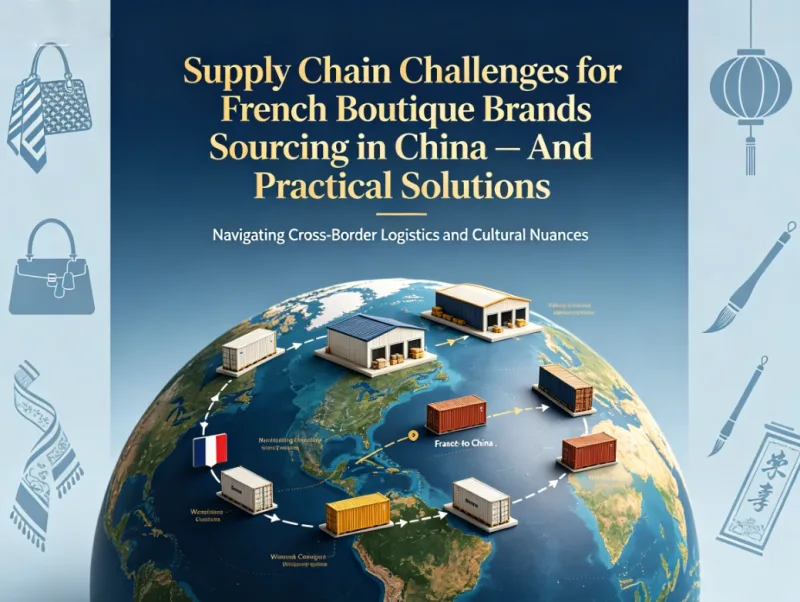
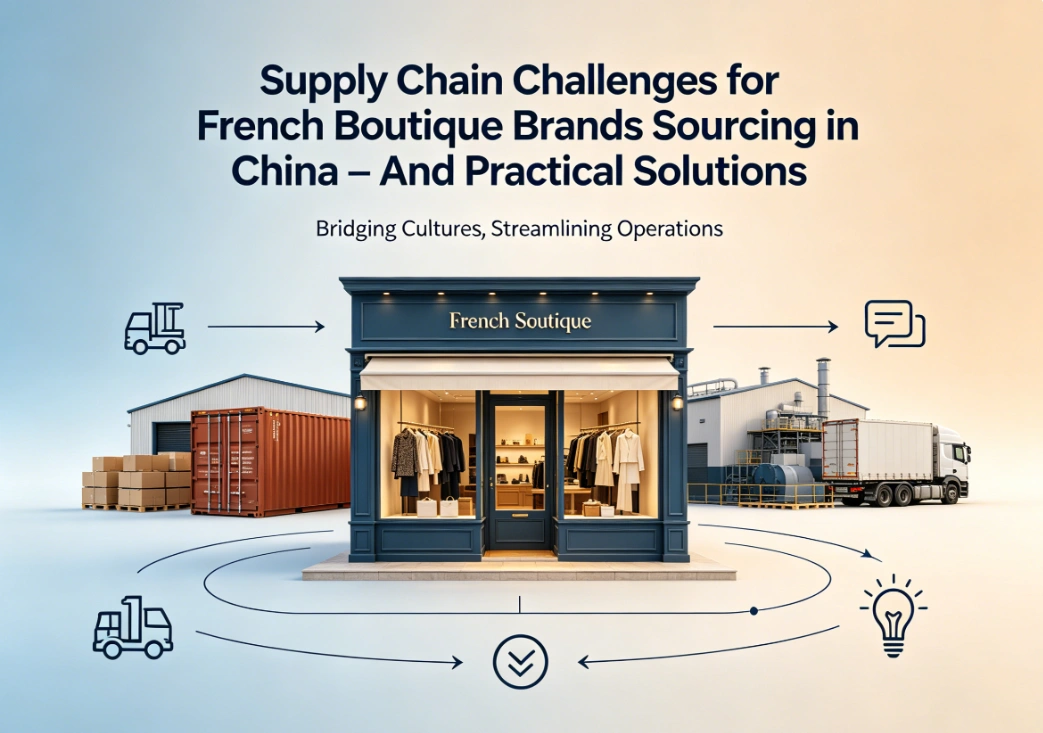
Supply Chain Challenges for French Boutique Brands Sourcing in China – And Practical Solutions
Final Tips for French Boutique Brands Sourcing in China
Sourcing in China can be a great way for French boutique brands to get high-quality, affordable production—if you handle the challenges the right way. Here’s a quick recap:
Partner with a bilingual sourcing agent who understands French luxury standards and Chinese manufacturing.
Vet factories for luxury expertise, low MOQs, and EU compliance.
Set up strict quality control to uphold French luxury standards.
Plan logistics in advance to avoid delays and cost surprises.
Prioritize supply chain transparency and share your values with customers.
How SourcingYuan Supports French Boutique Brands
At SourcingYuan, we specialize in helping French boutique brands navigate the Chinese supply chain. We understand the unique challenges you face—language barriers, quality standards, compliance—and we have the expertise and network to help you overcome them.
Our bilingual team (fluent in French, English, and Mandarin) acts as your local partner in China. We help you find the right factories, negotiate fair terms, implement strict QC, and manage logistics. We work with a network of trusted, compliant factories that specialize in low MOQ luxury production—from leather goods to textiles and accessories.
We handle every step of the sourcing process, from factory selection to shipping. So you can focus on what you do best: creating beautiful, timeless products that French consumers love.
📧 Email: lee@sourcingyuan.com
We reply to all business inquiries promptly. Let’s build a tailored supply chain solution for your French boutique brand—one that fits your budget, protects your quality standards, and helps you succeed in the competitive French luxury market. Whether you’re launching your first collection or scaling an existing line, we’re here to help you navigate China sourcing with confidence.
Share This Story, Choose Your Platform!
We connect you with reliable factories, get the best quotes, deliver straight to your door.