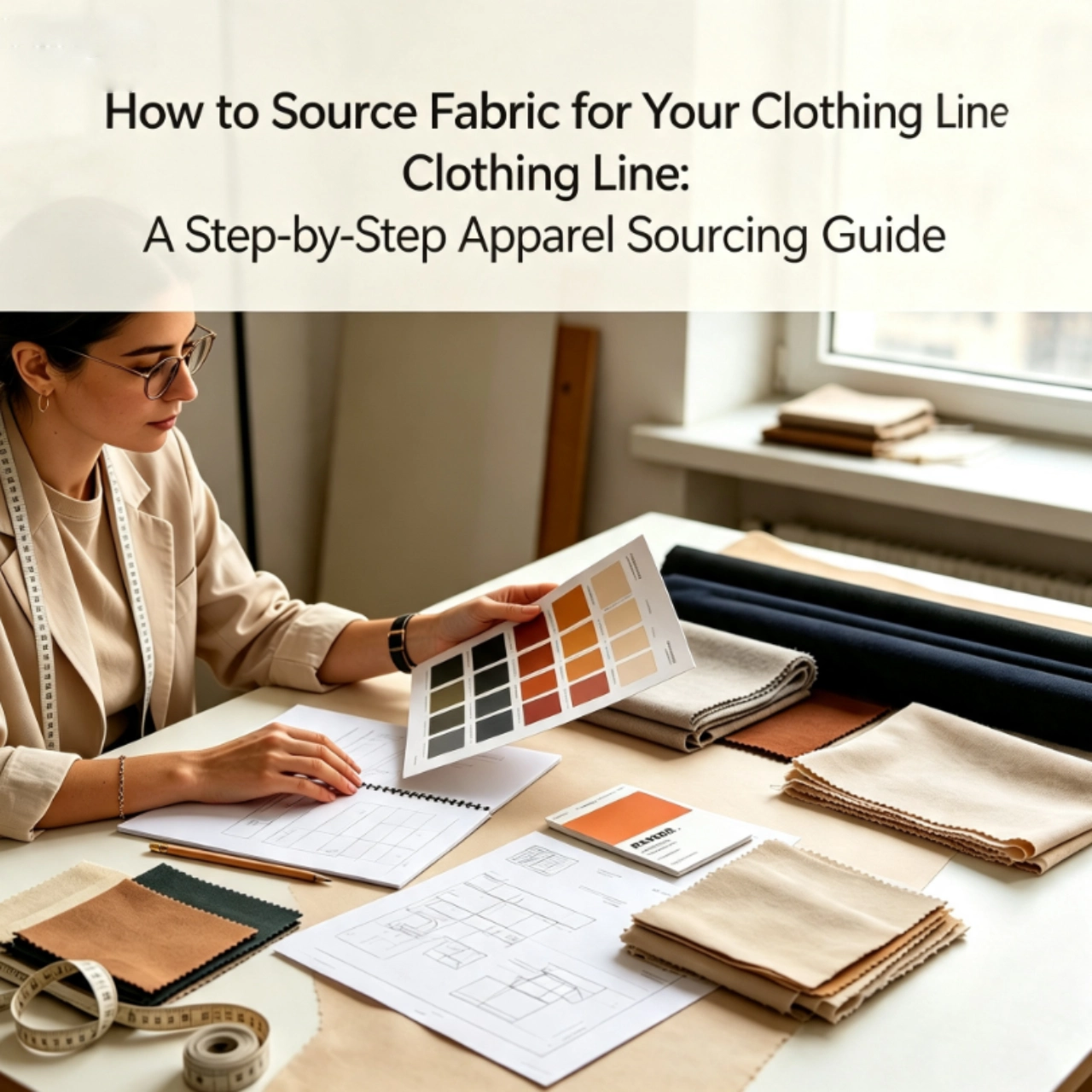
The right fabric can make or break your clothing line. It’s the difference between a shirt customers wear for years and one they set aside after a single wash. For many fashion designers, sourcing fabric is the first step of the design process—and the foundation for everything that follows.
This guide walks you through a step-by-step approach to fabric sourcing, from understanding construction basics to vetting suppliers and placing your first order.
Understand Fabric Basics: Knits vs. Wovens
Before you can source fabric effectively, you need to understand how it’s made and which type works best for your product. Two construction types dominate the industry: knitted and woven.
Knitted Fabric
Knitted fabrics are lightweight, comfortable, and resist wrinkles. They’re made by looping yarns together—either horizontally (weft knit) or vertically (warp knit). Their natural stretch makes them ideal for tops, activewear, undergarments, and loungewear.
Woven Fabric
Woven fabrics are constructed by interlacing two or more sets of yarns at right angles on a loom. They’re generally more opaque, abrasion-resistant, and less stretchy than knits. Higher thread count typically means stronger fabric. Wovens are used for denim, formal pants, button-down shirts, and jackets.
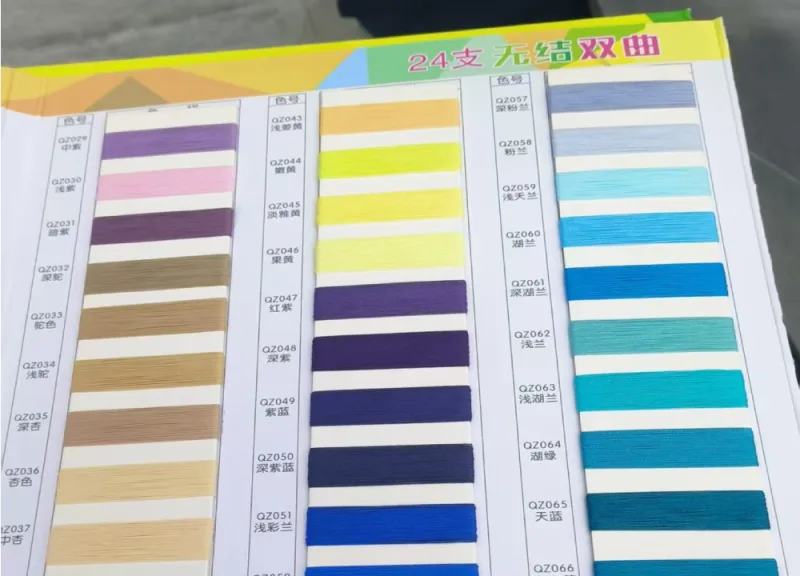
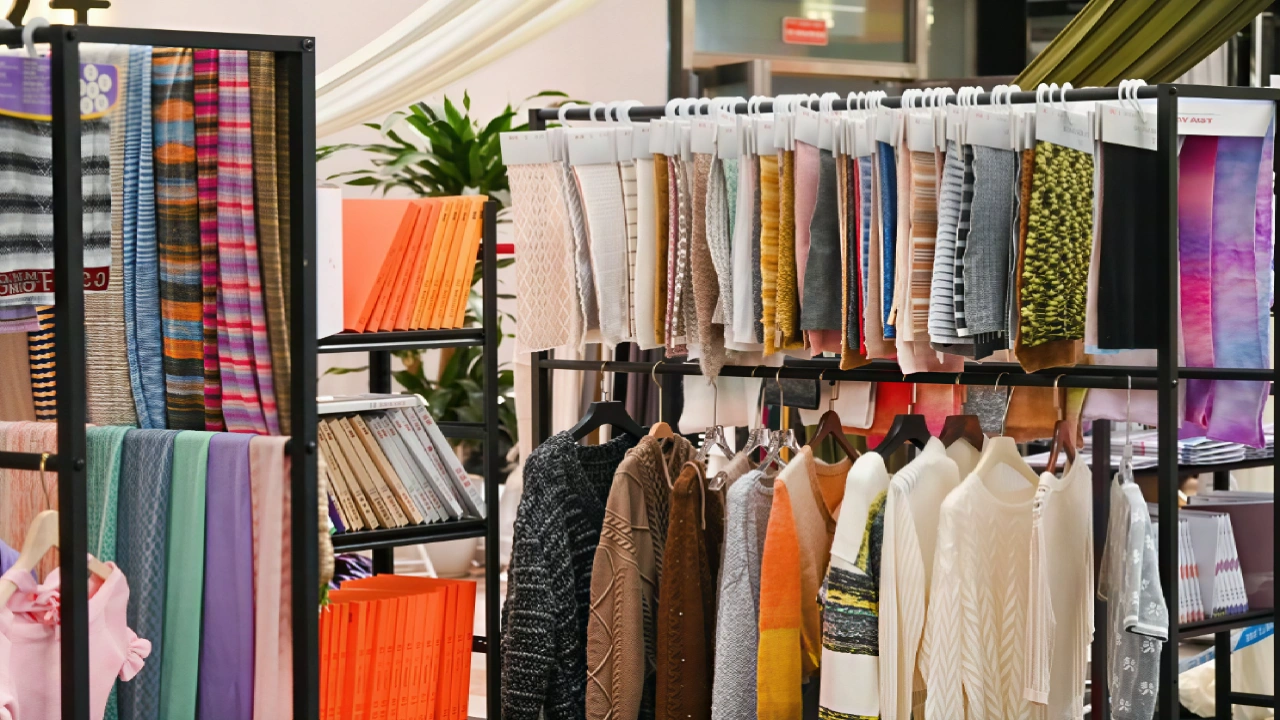
Apparel Sourcing Yarn Color Swatch For Fabric Dyeing Customization
Common Fabric Fibers
| Fiber | Characteristics | Best Uses |
| Cotton | Soft, breathable, easy to care for | T-shirts, denim, basics |
| Polyester | Wrinkle-resistant, fast-drying, inexpensive | Blends, performance wear |
| Wool | Insulating, moisture-wicking, odor-resistant | Premium knits, outerwear |
| Silk | Luxurious drape, smooth | High-end blouses, linings |
| Linen | Cool, strong, crisp | Summer shirts, suits |
| Rayon/Viscose | Soft, silk-like drape | Fluid dresses, blends |
Define Your Sourcing Strategy and Budget
A clear strategy helps you stay on budget and avoid production delays. Start with these three numbers:
Unit cost target: Fabric drives 60-70% of a garment’s total cost. Set a limit per yard to protect margins.
Order volume: MOQs differ by supplier type, country, and production capacity. Order less and the price per unit increases.
Lead-time tolerance: Average production material lead times are around 85 days. Factor in supplier production, shipping windows, and a buffer.
Consider where to source: local mills ship faster but cost more; offshore mills cut costs but have longer transit times and potential import duties.
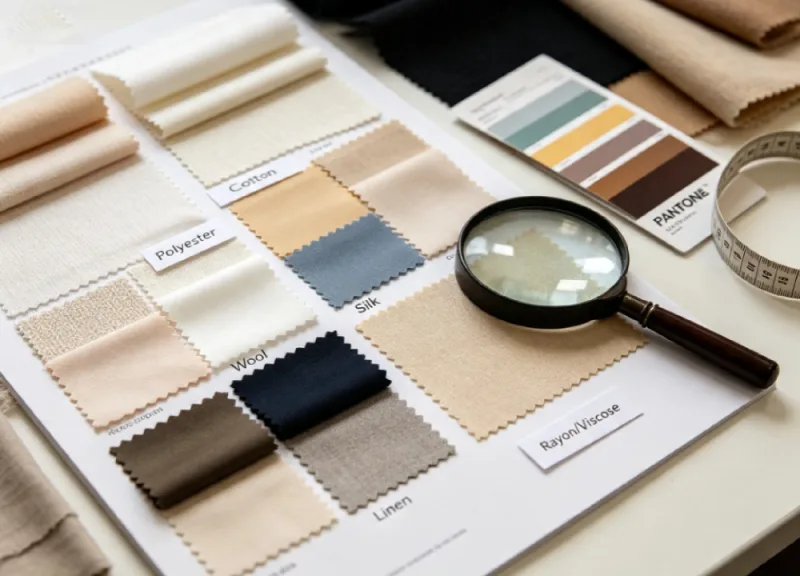
Fabric fiber swatch table showing cotton, polyester, wool, silk, linen and rayon for fabric sourcing in apparel sourcing
Choose the Right Type of Fabric Supplier
Finding reliable partners is critical. There are three main types of fabric suppliers, each with distinct operating models:
| Supplier Type | How They Operate | Best For | MOQ |
| Fabric Mills | Produce fabric from raw materials; often knit/weave and finish in-house | Established brands needing consistent, large-volume orders with full customization | High (one full roll ≈100m per color) |
| Converters | Purchase unfinished (greige) goods, then dye, print, or finish before selling | Brands wanting color/print variety without mill MOQs | Medium |
| Jobbers | Sell leftover fabric from mills and converters at reduced prices | New brands, small runs, limited editions (cannot reorder same fabric) | Low |
A fourth option is working with a sourcing agent who matches you with vetted mills, negotiates pricing, and handles quality control. For brands manufacturing in China, a China sourcing company offers a more comprehensive solution—managing not just fabric procurement but also supplier verification, production coordination, and logistics from a single point of contact.
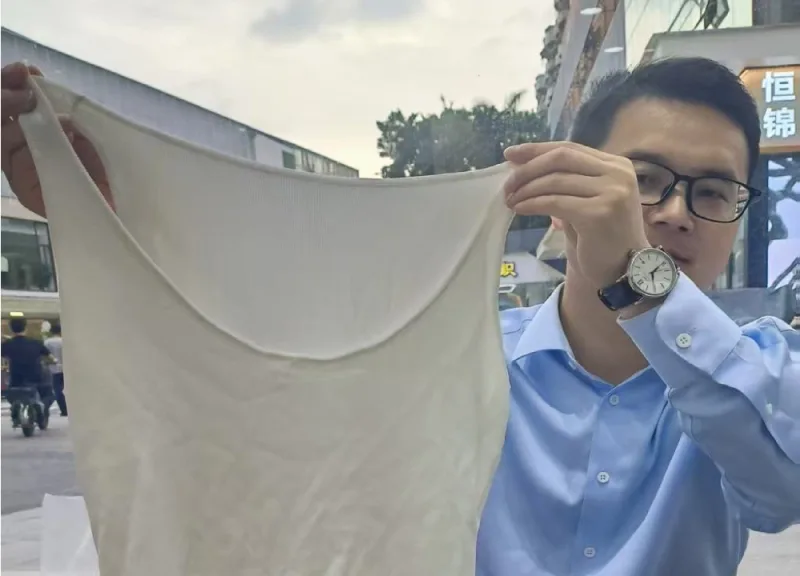
Apparel Sourcing Blank Knit Tank Top Prototype Sample Inspection
Find Fabric Suppliers
You have two main channels for finding suppliers: trade shows and online platforms.
Trade Shows:
Texworld: Major international show with many overseas exhibitors from China, India, and elsewhere.
The Fabric Shows: Better for small quantity orders, with many US-based exhibitors.
Online Platforms:
Alibaba: Connect with global fabric suppliers for everything from wool to silk to bamboo.
Faire: Lists over 100,000 wholesale brands, including many fabric suppliers.
In China’s Fabric Hubs:
Guangzhou’s Zhongda Fabric Market area is a textile district with specialized buildings. The Guangzhou International Textile City offers higher-end fabrics in a structured environment. For bulk options, Changjiang International Textile City is a key player in the Zhongda area. In Zhejiang province, Shaoxing textile mills form one of the world’s most concentrated textile clusters.
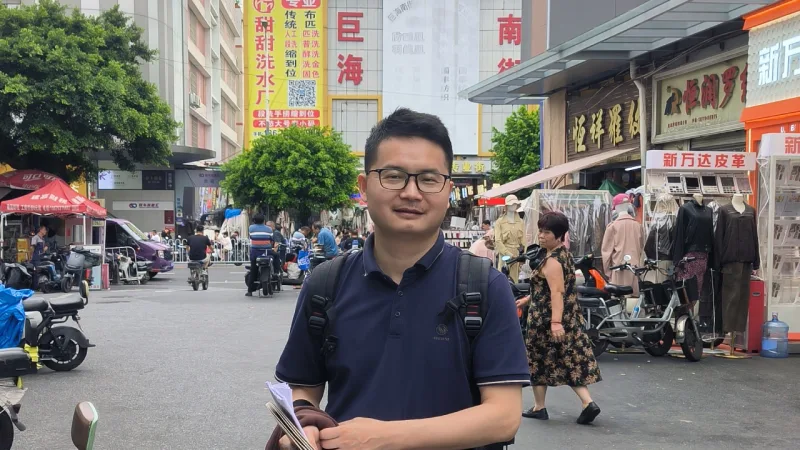
Lee at the clothing wholesale market
Vet Suppliers and Test for Quality
A low price isn’t enough. Suppliers must meet quality, safety, and ethical standards—and be able to prove it.
What to Request
Technical spec sheet: Construction, weight, width, content, finishes
Minimum Order Quantity (MOQ): Per color and per style
Lead time: For lab dips, bulk dye, and delivery
Price basis: FOB mill, ex-works, or landed estimates
Certifications: OEKO-TEX, GOTS, ISO 9001, etc.
Country of origin: Required for labeling and can affect cost
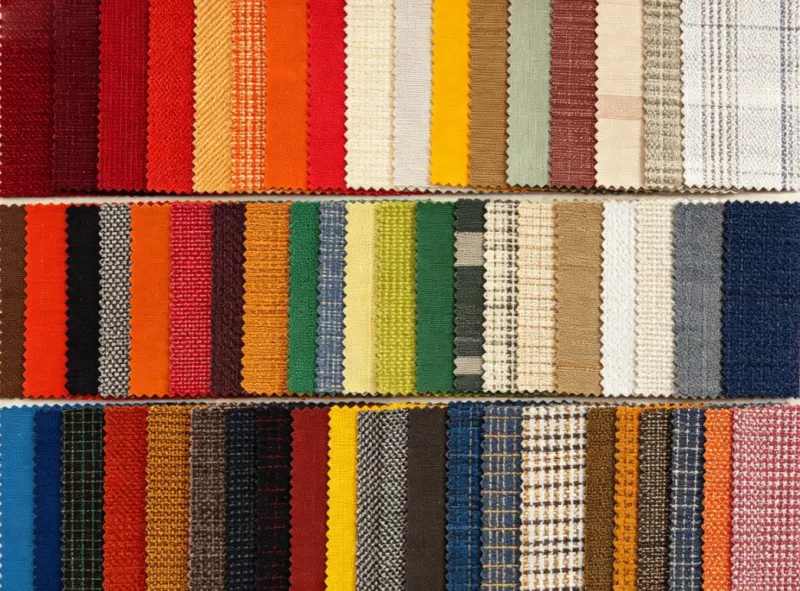
Guangzhou Zhongda Textile Business District
Questions to Ask Fabric Suppliers
What is the fabric article or item number?
What is the fabric weight (GSM)?
What is the fabric content?
What is the fabric construction?
What’s the fabric width (total and cuttable)?
How much does the fabric cost per yard (sample vs. bulk)?
What is the MOQ?
How long is the delivery lead time?
Where is the country of origin?
What are the fabric care instructions?
If you don’t have a team on the ground in China, this vetting process can be challenging. Firms like Sourcingyuan handle exactly this—conducting factory audits, verifying certifications, and coordinating sample testing on behalf of international brands.
Test Before You Commit
Order control samples from a shortlist of suppliers. Test for shrinkage, colorfastness, and tensile strength in a lab. Create a sample garment in your actual pattern—fabric that looks opaque flat may show issues on high-stretch zones.
A real example: A US-based streetwear brand ordered 3,000 units of printed hoodies. They had approved a sample, but skipped bulk fabric testing. When the finished goods arrived, the prints cracked after the first wash—the factory had used low-quality ink that didn’t bond properly with the fabric. The brand had to recall the entire batch, issue refunds, and reorder from a new supplier. The total loss exceeded $25,000—more than 10 times what a simple fabric test would have cost.
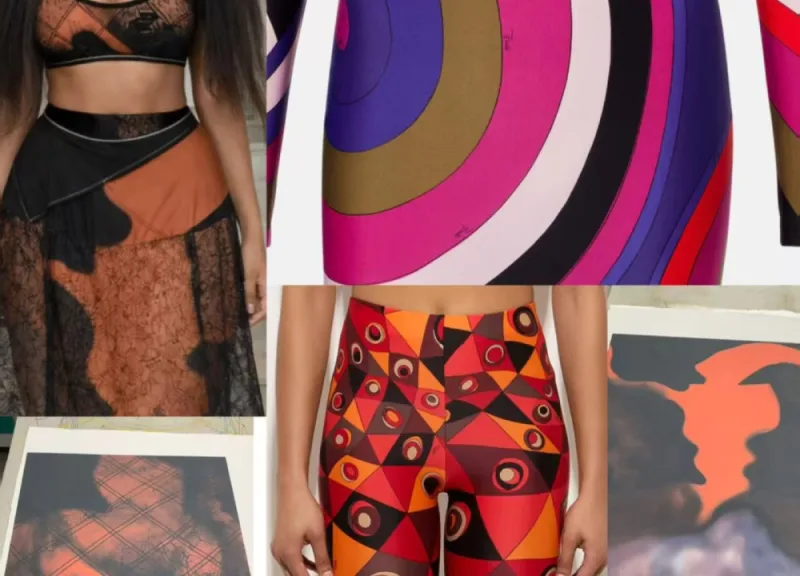
Apparel Sourcing Custom All-over Printed Garment Pattern Development
FAQ
What is fabric sourcing?
Fabric sourcing is the process of finding and procuring the right cloth for your products, including drafting material specs, requesting swatches, negotiating MOQs, and coordinating delivery.
What’s the difference between knitted and woven fabric?
Knitted fabrics are looped, stretchy, and comfortable—ideal for activewear and tops. Woven fabrics are interlaced at right angles, more durable, and less stretchy—used for denim, shirts, and jackets.
What is a typical MOQ for fabric suppliers?
MOQs vary by supplier. Fabric mills often require one full roll per color (≈100m). Converters may offer smaller MOQs. Jobbers have the lowest MOQs but limited reorder availability.
How much does fabric sourcing cost?
Fabric typically drives 60-70% of a garment’s total cost. Sample swatches cost $5-10 each. Sample yardage can cost $3-5 more per yard than bulk pricing.
Where can I find fabric suppliers?
Key channels include trade shows like Texworld, online platforms like Alibaba, and in-person hubs like Guangzhou’s Zhongda Fabric Market or Zhejiang’s Shaoxing textile mills.
How long does fabric sourcing take?
Average material lead times are around 85 days. This includes supplier production, shipping, and a buffer. Sample yardage often has shorter lead times than bulk orders.
How do I verify a fabric supplier?
Request their technical spec sheets, MOQ and lead time details, certifications, and country of origin. Order and test samples for shrinkage, colorfastness, and strength.
What is China’s main fabric sourcing hub?
Guangzhou’s Zhongda Fabric Market is a massive textile district with specialized buildings. The Guangzhou International Textile City is recommended for higher-end fabrics, while Changjiang International Textile City is strong for bulk sourcing. In Zhejiang, Shaoxing textile mills form a dense, vertically integrated cluster.
The Bottom Line
Fabric sourcing is the foundation of successful garment production. Understanding fabric types, defining your budget, choosing the right supplier type, and vetting thoroughly will save you time, money, and frustration.
Whether you work directly with clothing manufacturers China, partner with a china fabric supplier, or engage a textile manufacturer for custom materials, the fundamentals remain the same: define your specs, verify your suppliers, and always test before you commit to bulk production.
For brands engaged in apparel manufacturing China, this disciplined approach is what separates reliable supply chains from costly failures.
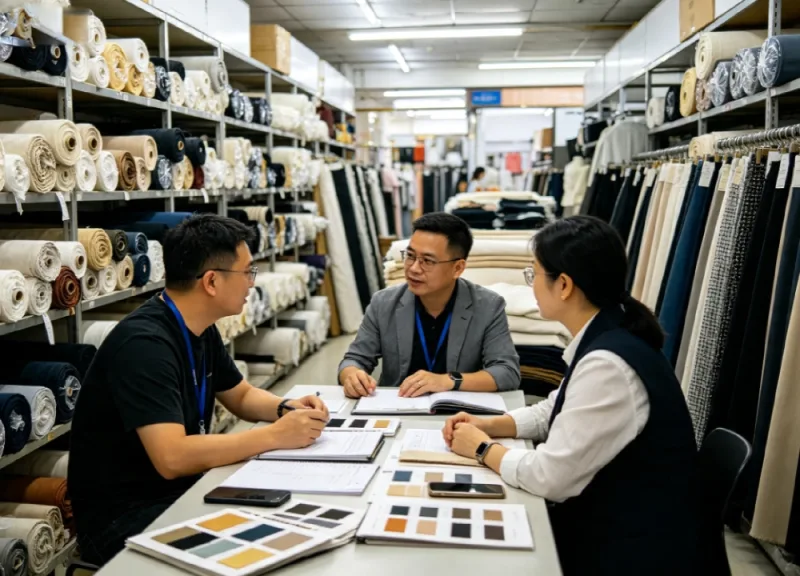
Fabric suppliers communicating with buyers in a textile market during apparel sourcing and fabric sourcing
About the Author
Jeff Lee
Founder of Sourcingyuan
Jeff Lee is the founder of Sourcingyuan, a China-based sourcing and product development company. He has more than 10 years of experience helping overseas businesses source products, develop new products, identify reliable manufacturers, manage production, and build supply chains in China.
Share This Story, Choose Your Platform!
We connect you with reliable factories, get the best quotes, deliver straight to your door.