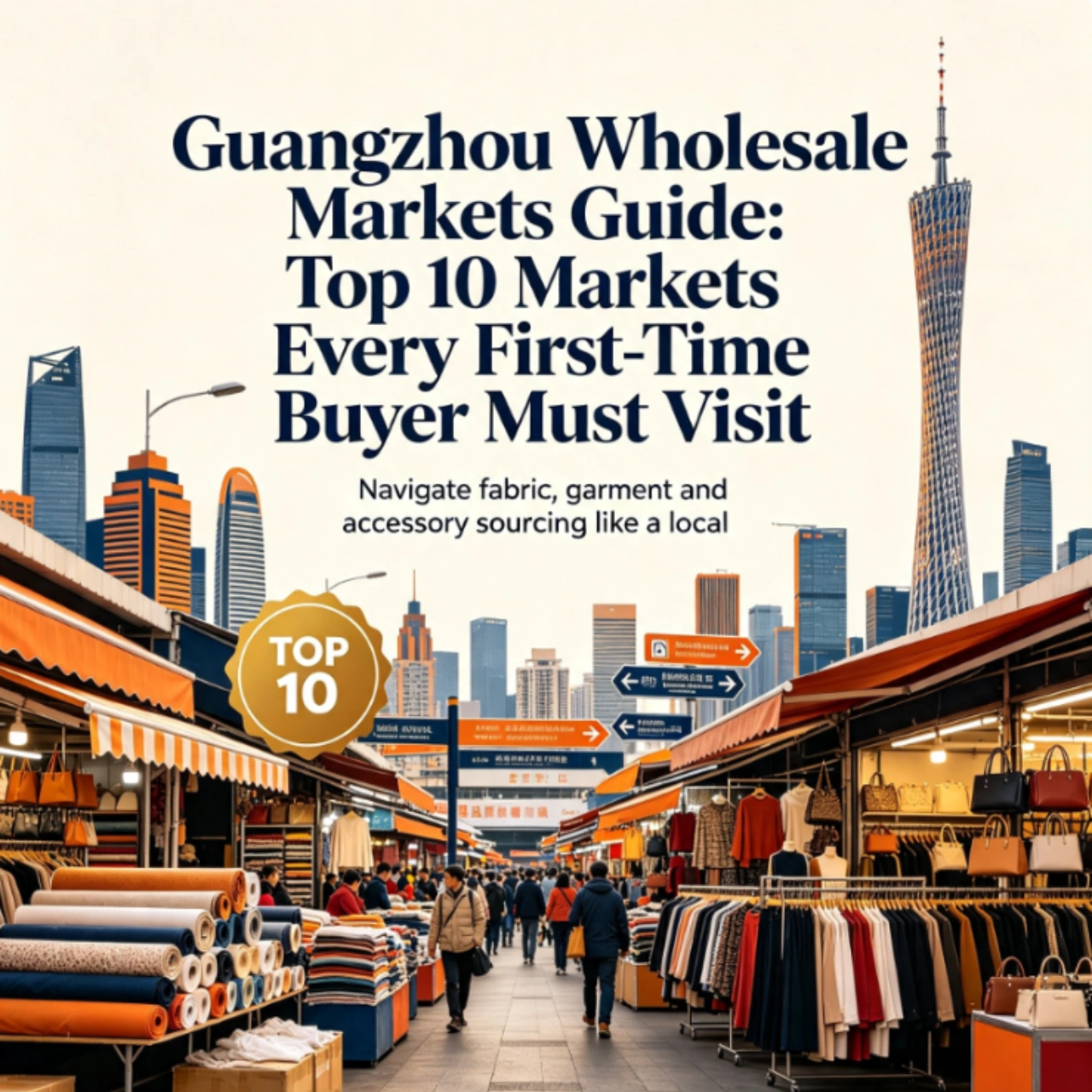
For first-time buyers, Guangzhou wholesale markets can feel overwhelming. The city is home to over 200 specialized wholesale markets, with thousands of stalls spread across multiple districts. Each market has its own specialty, pricing logic, and unwritten rules.
This Guangzhou wholesale guide is designed to help you navigate the city’s complex sourcing ecosystem. Whether you’re a boutique owner, an e-commerce seller, or a brand founder, knowing which market matches your needs is the first step toward a successful apparel sourcing trip.
Why Guangzhou?
Guangzhou is China’s largest wholesale trading city. Unlike trade fairs that run for a few days, Guangzhou’s markets operate year-round. The city sits beside the factory heartland of Dongguan, Foshan, and Shenzhen, meaning many stalls are directly linked to production.
For first-time buyers, Guangzhou offers several advantages:
Massive selection: Dozens of specialized markets clustered by category
Lower MOQs than factories: Markets are ideal for smaller or mixed orders
Direct factory access: Many suppliers are within a 1-2 hour drive
ODM/OEM services: Many stalls offer customization options
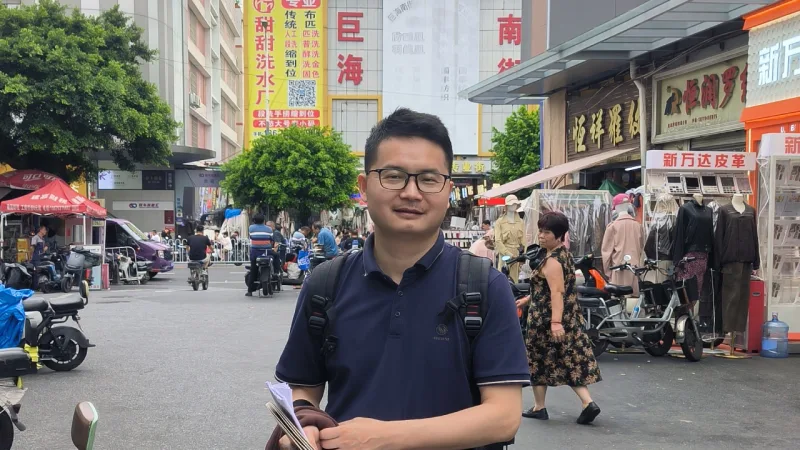
Lee at the clothing wholesale market
Top 10 Markets Every First-Time Buyer Must Visit
1. Baima Clothing Market (白马服装市场)
Location: 16 Zhanqian Road, Yuexiu District (near Guangzhou Railway Station)
Hours: 08:30 – 18:30
Metro: Guangzhou Railway Station (Line 2/5)
Baima is one of Guangzhou’s most established wholesale markets. It focuses on mid-to-high-end women’s fashion and business attire. Unlike the chaotic low-end markets, Baima feels more organized—you can actually walk through aisles without getting knocked over by carts.
Best for: Boutique owners, brand buyers, quality-focused retailers
Price range: Mid to high-end
What to expect: Many domestic brands started here. The market spans multiple floors—upper floors offer higher-end pieces, while lower levels have more accessible pricing. Retail purchases are allowed.
Pro tip: Baima is a “second-tier” market, meaning suppliers here often source from factories rather than owning production. This means prices are higher than first-tier markets like Shisanhang, but you get better curation and service.
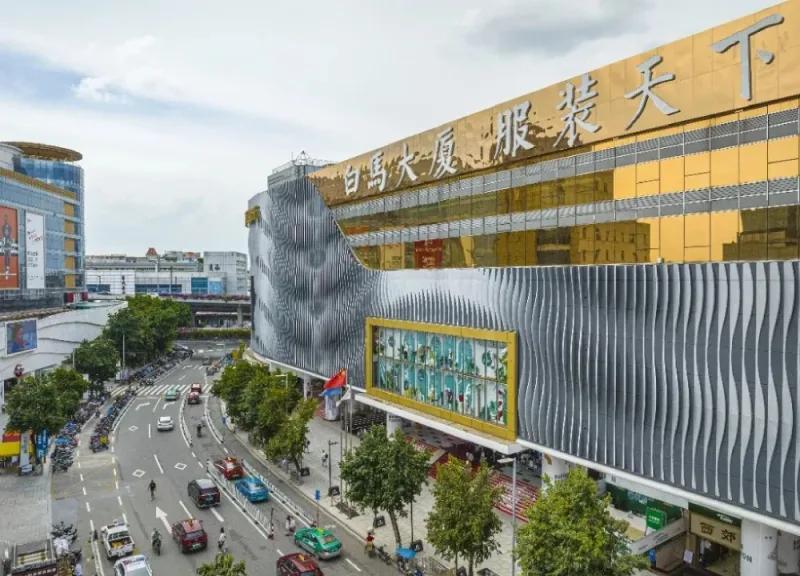
Baima Clothing Market
2. Shisanhang Clothing Market (十三行服装批发市场)
Location: Shisanhang Road, Liwan District (near Yide Road/Shangxiajiu area)
Hours: 08:00 – 16:30
Metro: Cultural Park (Line 6/8)
Shisanhang is one of Guangzhou’s most popular spots for serious buyers. The market is concentrated in the Xinzhongguo Building, with 4-6 floors featuring the highest traffic and strongest Korean-style women’s fashion. Floors 7-9 offer vintage styles and European-inspired designs, while 10-12 focus on plus-size and mature women’s wear.
Best for: Wholesale distributors, online retailers, live-stream sellers
Price range: Mid-range
What to expect: Packed aisles, huge variety, and a fast-paced environment. This is where you see what’s actually trending—not just what factories claim is trending.
MOQ note: Shisanhang is a first-tier market. Most stalls require 5-10 pieces per style per color.
Pro tip: Go early. By 2:00 PM, inventory drops noticeably. Many stalls close by 3:00 PM.
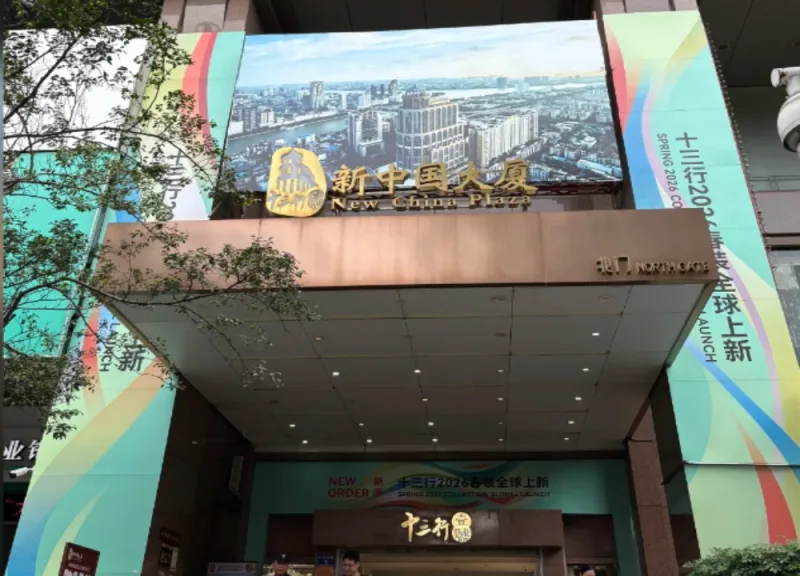
Shisanhang Clothing Market
3. Shahe Clothing Wholesale Market (沙河服装批发市场)
Location: Shahe Dajie, Tianhe District
Hours: Approximately 10:00 – 17:00
Metro: Shahe Ding (Line 6)
Shahe is the budget destination of Guangzhou’s wholesale scene. It is known for mass-market basics at extremely low prices. The market includes multiple buildings: Wanjia (Korean-style womenswear with 11 streets), Jinma (lower prices, more negotiation room), and Nancheng (higher floors with better quality and newer styles).
Best for: High-volume sellers, discount retailers, e-commerce brands
Price range: Low-end to mid-range
What to expect: Bulk-focused. If you’re buying 50+ pieces of a single style, you can get prices that online platforms can’t beat.
MOQ note: Shahe typically requires 5 pieces (mixed colors/sizes) to get the wholesale price.
Pro tip: Shahe has the most budget-friendly format in Guangzhou. Quality varies significantly, so inspect everything before paying.
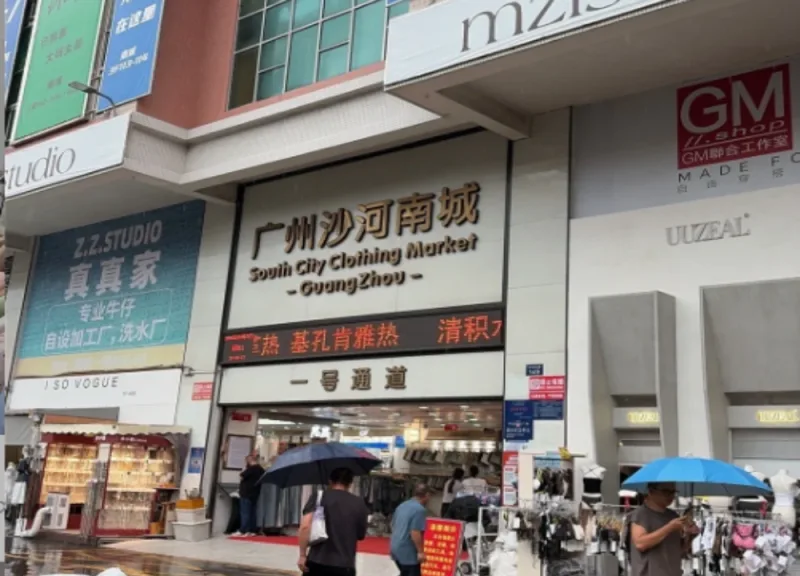
Shahe Clothing Wholesale Market
4. Zhanxi Garment Market (站西服装批发市场)
Location: Zhanxi Road, Yuexiu District (near Guangzhou Railway Station)
Hours: Approximately 09:00 – 18:00
Metro: Guangzhou Railway Station
Zhanxi is known for super cheap clothing and streetwear. It focuses on men’s fashion, urban wear, and youth brands. If you’re looking for T-shirts, jackets, or shoes at the lowest possible prices, this is where to go.
Best for: Deep-discount retailers, streetwear brands, budget buyers
Price range: Ultra-low to low-end
What to expect: Fast, cheap, and trendy. Quality is hit-or-miss—you get what you pay for.
Pro tip: This market has many “showroom” stalls that may not hold inventory. Always ask if they have stock before negotiating.
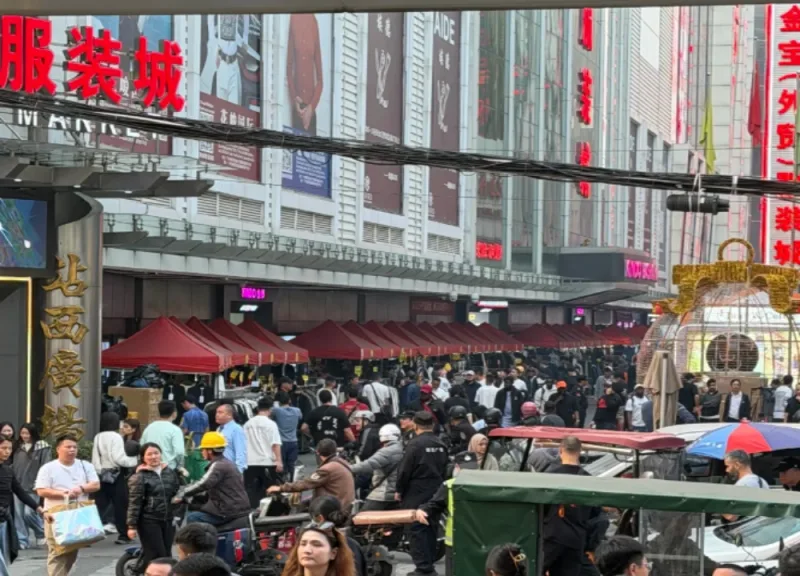
Zhanxi Garment Market
5. Zhongda Fabric Market (中大布料市场)
Location: Zhongda, Haizhu District
Hours: Approximately 10:00 – 19:30 (shops open later here)
Metro: Zhongda (Line 8)
Zhongda Fabric Market is Asia’s largest fabric trading center. It is essential for brands developing their own designs, with specialized zones for different materials: Guangzhou International Textile City (flagship), Changjiang Fabric City (woven fabrics, chiffon, velvet, wool), Jiuzhou Textile Square (fashion fabrics for women’s wear), Ruikang Lace World (lace, trims, ribbons, buttons), and the Leather City (genuine leather, PU, faux fur).
Best for: Brands developing private label clothing, designers, manufacturers
Price range: Varies widely by material
What to expect: An active wholesale district with fabric rolls everywhere. This is not a tourist attraction—it’s a working market with delivery trucks and handcarts moving constantly.
Pro tip: You can buy 1-2 meters at a slightly higher price than bulk rates. Ask for free samples—they’re usually available.
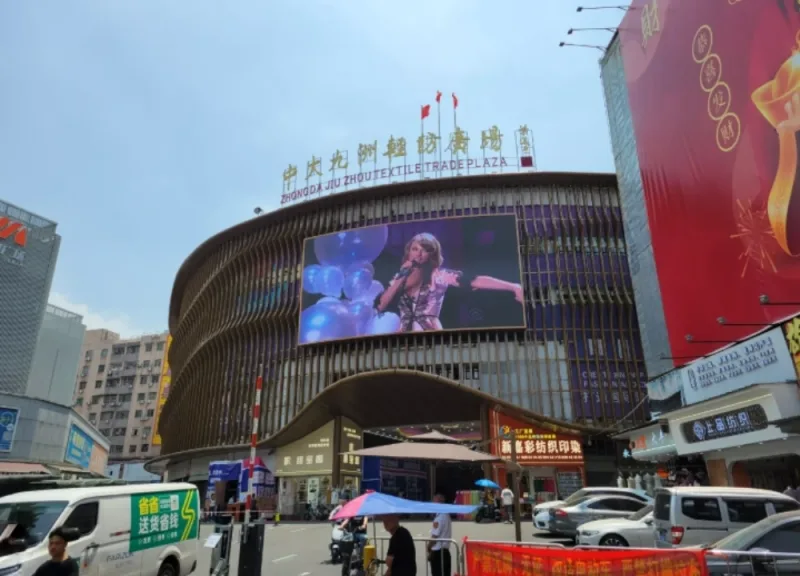
Zhongda Fabric Market
6. Guangzhou Railway Station Market Cluster
Location: Around Guangzhou Railway Station
Hours: Varies by market
This area includes multiple markets in one district: Baima (covered above), Zhanxi (covered above), Liuhua (export-oriented fashion cluster), Hongmian International Fashion City (mid-to-high-end, floors 1-2 Korean womenswear, floor 4 original designer pieces, floors 5-9 menswear), and UUS and APM (retail+wholesale blend, often called the “Korean Dongdaemun” of China).
Best for: Buyers who want to compare multiple markets in one day
Price range: Budget to high-end
Pro tip: This district is the most convenient for first-time buyers—everything is within walking distance.
7. Sanyuanli Leather Market (三元里皮具市场)
Location: Sanyuanli Avenue, Baiyun District
Metro: Sanyuanli
Sanyuanli is one of the world’s largest leather goods markets. It features Baiyun World Leather Trading Centre (high-quality bags, wallets, belts) and Guangzhou Leather City (comprehensive selection with customization options).
Best for: Bag brands, accessory retailers, leather goods buyers
Price range: Wide range
Pro tip: Quality varies massively—from cheap bonded leather to premium Italian leather. Know what you’re looking for.
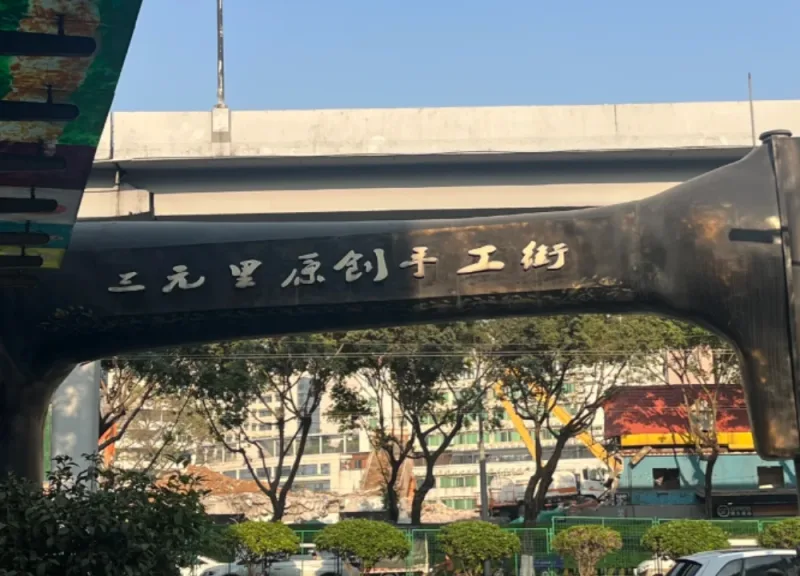
Sanyuanli Leather Market
8. Onelink International Plaza (万菱广场)
Location: Beijing Road area
Hours: Approximately 09:00 – 18:00
Onelink is one of China’s largest toy and gift wholesale hubs. The market includes toys, stationery, party supplies, seasonal goods, souvenirs, and homeware.
Best for: Gift shops, party supply stores, variety retailers
Pro tip: Great for picking up non-clothing items to diversify your inventory. Excellent for seasonal products.
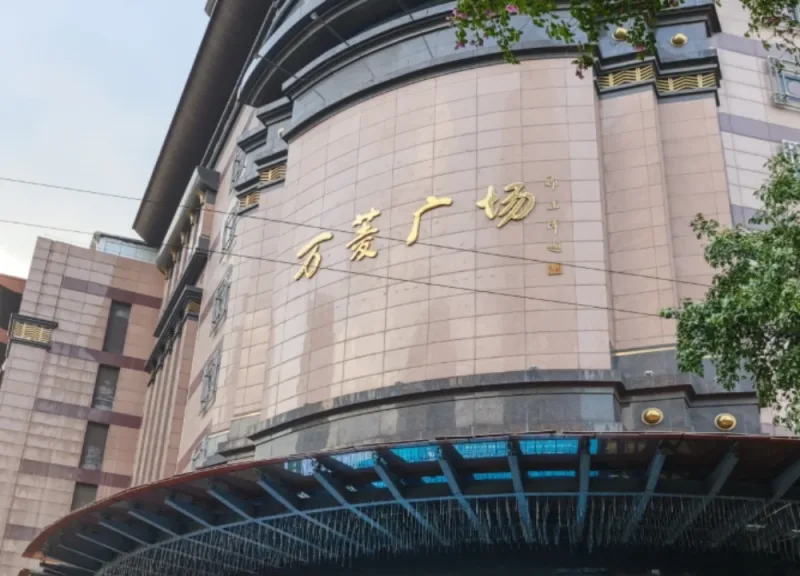
Onelink International Plaza
9. Yide Road Toy Market
Location: Yide Road, Liwan District
Yide Road is one of China’s largest toy wholesale hubs. It is also known for dried seafood and festive goods. If you’re sourcing toys, stationery, or party supplies, this is a key destination.
Best for: Toy retailers, party supply stores, gift shops
10. Guangzhou Leather & Bags Cluster
Location: Guihuagang area, near Sanyuanli
This area extends beyond Sanyuanli into the Guihuagang leather district. Combined with Baiyun World Leather Centre, it forms a massive ecosystem for leather sourcing.
Best for: Handbag brands, luggage retailers, accessory buyers
Pro tip: This is one of the few places where you can get custom leather goods with low MOQs.
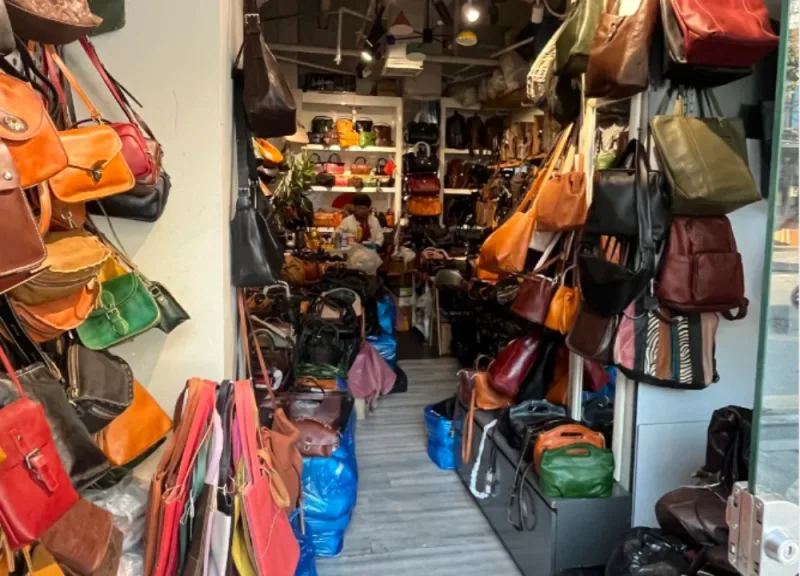
Guangzhou Wholesale Markets Leather Handbag Wholesale Shop View
Quick Reference Table
| Market | Specialty | Price Range | Best Time |
| Baima | Mid-high womenswear | Mid-high | 8:30-18:30 |
| Shisanhang | Fast fashion womenswear | Mid-range | 8:00-14:00 |
| Shahe | Budget basics | Low | Morning |
| Zhanxi | Streetwear, menswear | Ultra-low | 9:00-18:00 |
| Zhongda | Fabrics, trims | Varies | 10:00-19:30 |
| Sanyuanli | Leather goods | Wide range | 9:00-18:00 |
| Onelink | Toys, gifts | Low-mid | 9:00-18:00 |
How to Buy at Guangzhou Wholesale Markets
First-Time Buyer Tips
Do not visit too many markets in one day. Markets are large and spread across the city. Visiting too many places leads to confusion. Focus on one or two key areas.
Compare prices together with quality. A lower price may come from thinner material, weaker packaging, or lower-grade hardware.
Take photos with supplier details. When taking product photos, also photograph the supplier name card, booth number, and building floor.
Do Not Expose Yourself as a First-Timer
Avoid asking “How much is this?” like a retail shopper. Instead, ask “What’s the wholesale price?” in a confident tone.
Common Mistakes to Avoid
1.Not asking about MOQ – Always confirm minimums before negotiating price
2.Paying without checking quality – Samples often differ from bulk orders
3.Forgetting shipping costs – Factor in freight, customs, and handling fees
4.Rushing through the market – Take your time; better deals are often found by exploring
5.Not using a local partner – A sourcing agent can handle negotiations, quality checks, and shipping
Sample Itinerary for First-Time Buyers
Day 1: Understand the Markets
Morning: Shisanhang (see the fast fashion ecosystem at scale)
Midday: Baima (compare mid-to-high-end options)
Afternoon: Zhanxi (see the budget end of the spectrum)
Day 2: Material Sourcing
Morning: Zhongda Fabric Market (for brands developing custom products)
Afternoon: Sanyuanli Leather Market (for leather goods and accessories)
Day 3: Non-Apparel Sourcing
Morning: Onelink International Plaza (toys, gifts, homeware)
Afternoon: Yide Road Toy Market (seasonal products, party supplies)
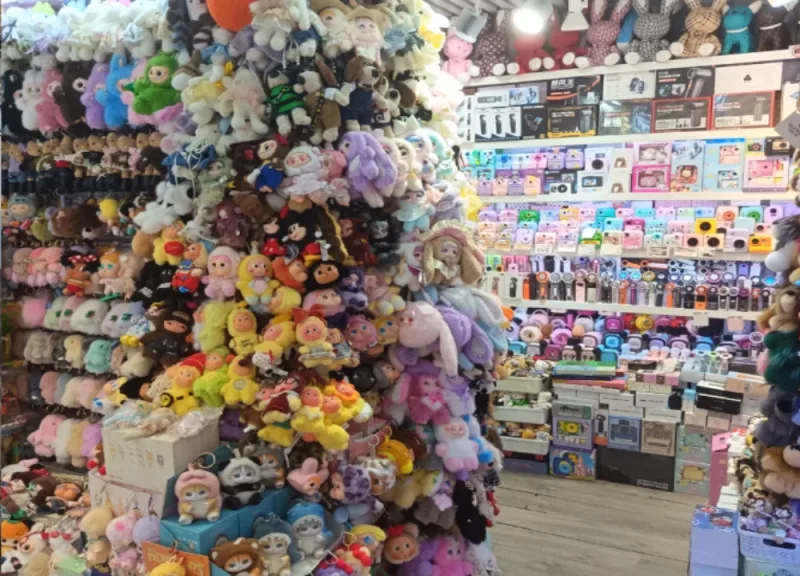
Guangzhou Wholesale Markets Plush Toy & Gift Wholesale Store
FAQ
What is the best time to visit Guangzhou wholesale markets?
Morning is the best time for the widest selection. In the afternoon, inventory drops noticeably. For Shahe, the best time is 5:00-11:00 AM. For Shisanhang, 8:00-14:00 is the peak window.
Do I need to speak Mandarin?
It helps, but many stalls in major markets have basic English. Translation apps work well. A local sourcing agent can bridge the gap effectively.
What payment methods are accepted?
Most stalls accept WeChat Pay and Alipay. Cash is accepted but avoid large cash transactions. Credit cards are less common.
Can I buy samples?
Yes. Most stalls sell samples at slightly higher prices than bulk rates. Some sample fees are refundable against bulk orders.
What is the typical MOQ?
MOQs vary by market and stall. First-tier markets like Shisanhang require 5-10 pieces per style/color. Second-tier markets like Baima allow 2-3 pieces. Some stalls offer smaller orders if you pay a premium.
Are prices negotiable?
Yes. Negotiation is expected. The first price is rarely the real price. Volume and cash payments can get you better deals.
Can I return items?
Usually not. Most markets do not accept returns. Inspect everything carefully before paying.
The Bottom Line
Guangzhou wholesale markets offer unmatched variety and pricing for first-time buyers. But success requires preparation: know your target market, understand the price points of each market, ask the right questions, and inspect before you buy.
A good Guangzhou sourcing guide should not only tell you where to go—it should help you understand what you’re looking at. Whether you’re sourcing from Baima Clothing Market for mid-range fashion, hitting Shisanhang for fast-moving trends, or visiting Shahe Clothing Market for budget basics, the fundamental rule is the same: know your product, know your price, and never stop comparing. These markets are the starting point for most apparel sourcing journeys—what you do after, from sampling to production, is where the real work begins.
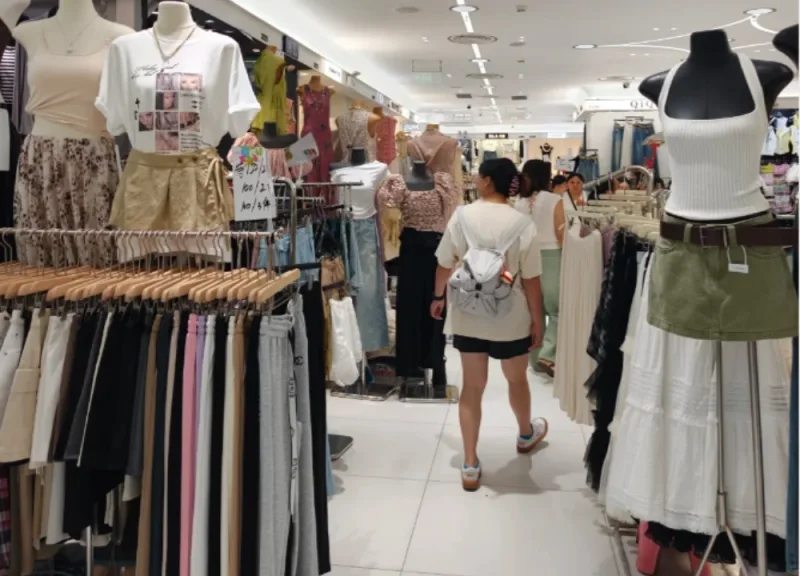
Guangzhou Wholesale Markets Fashion Apparel Shop Interior
About the Author
Jeff Lee
Founder of Sourcingyuan
Jeff Lee is the founder of Sourcingyuan, a China-based sourcing and product development company. He has more than 10 years of experience helping overseas businesses source products, develop new products, identify reliable manufacturers, manage production, and build supply chains in China.
Share This Story, Choose Your Platform!
We connect you with reliable factories, get the best quotes, deliver straight to your door.